Small Grooming Habits That Ease Everyday Cat Care Stress
A quick grooming habit for indoor cats reduces hair buildup on bowls and mats, easing maintenance and speeding up daily resets.
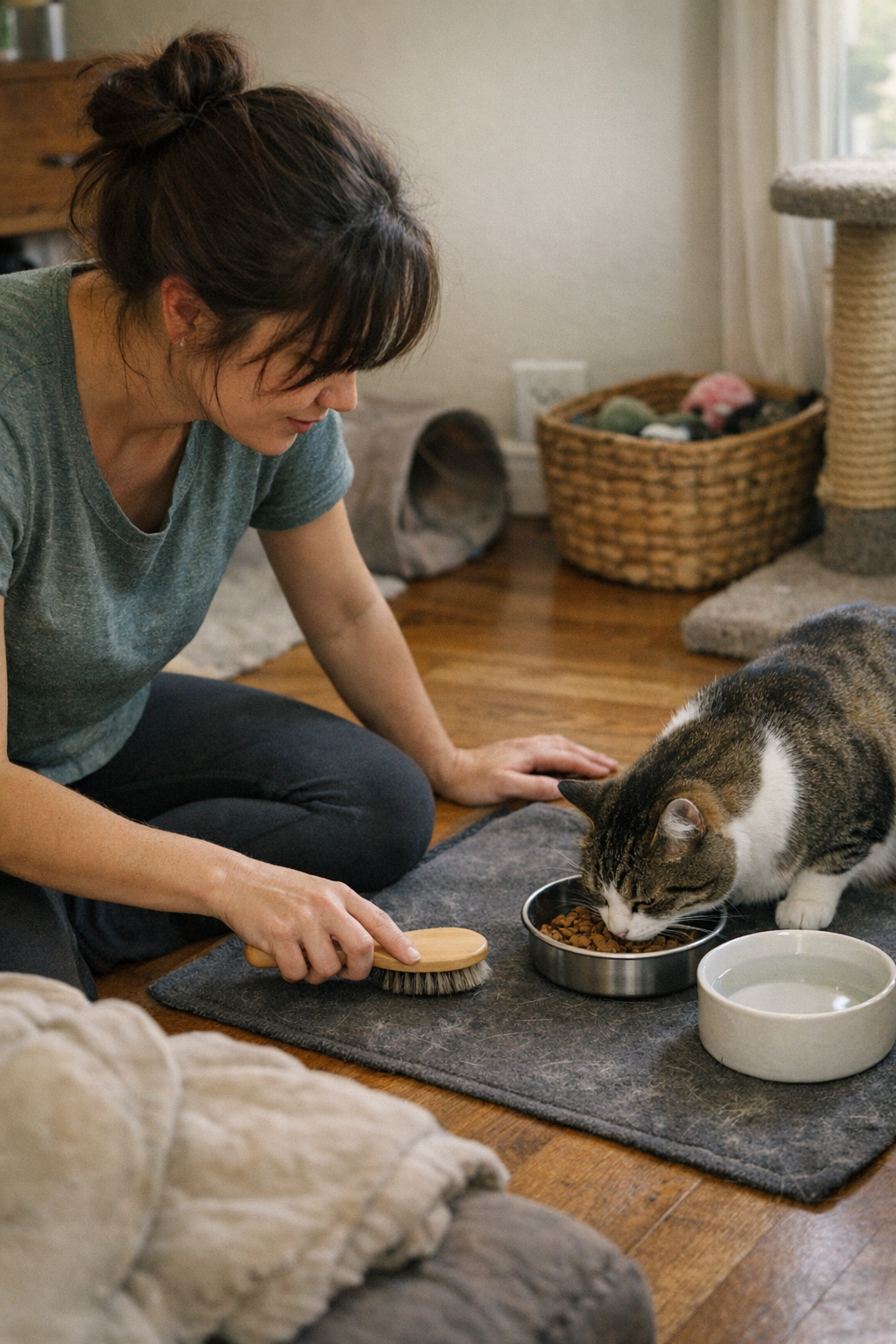
You rarely see it at first. The water bowl stays clear, the feeding mat looks decent, and the cat’s feeding area feels settled—until, quietly, the hair comes back. It doesn’t announce itself all at once. But there it is again: a new shimmer along the rim, a faint dusting on the cushion, a fine scatter across the mat just after you tidied up. A minute or two missed—maybe yesterday or the day before—and suddenly it feels like the room pulses with the same small, multiplying request.
It’s not about a dramatic mess. Instead, it’s the slow build: the small delays that add up, the hair that finds its way back to blankets and bowl edges, the way easy routines quietly slow down. You only start to notice after a few resets.
The Pattern That Slows the Day
At first, everything looked fine. But the difference kept showing where the feeding mat meets the floor: a line of hair drifting and sticking, no matter how carefully the last cleanup went. The first sign doesn’t come as a sudden spill or tangle, but as a slower routine. Wiping the bowl rim takes an extra pause. Another minute snagged before refilling water or food. Each time, the hair returns to the same spot it was last brushed away, quietly asking to be handled again.
This shows up most during a late cleanup—finding an extra step as you grab a toy near the feeding area, or when your hand brushes against a familiar soft dust stuck between mat and tile. That’s the part that keeps coming back.
What Actually Makes Less Work
It’s simple but real: when a short, consistent grooming pattern is kept, cleanup eases up. Every one or two days—a quick round with a soft bristle brush just before or after a meal. That’s all. But the difference is in the rhythm of the day, not just the surface setup.
When brushing slides, even briefly, the work feels doubled. Cleanup becomes more than one pass: it’s lifting, wiping, pausing to shake out the mat. The feeding area stops being a simple reset and turns into two or three connected jobs. You see buildup edging along bedding, hair slipping along the bowl’s side.
But a regular brush—catching the hair before it settles into corners—means less cross-over from cat area to everything else. After a few easy cycles, you begin to feel how much smoother the whole routine becomes.
Living With What Comes Back
None of this is dramatic. Most days, these shifts are so subtle you don’t notice until they stack up—until the living space feels less effortless, or the comfort zone picks up a steady cling of fur that won’t seem to clear away. Surfaces you thought were done keep asking for a correction, and a reset never quite finishes.
The practical insight is clear: the setup never becomes perfect, but brushing—even just a minute or two every other day—turns disruption into a background task, not a stumbling block. It builds its effect over time. You get a little less resistance on each reset, a little less drift into other routines.
On evenings after late cleanups, I kept thinking about how the real difference wasn’t in big resets, but in the rhythm made by smaller, nearly forgettable habits.
If you want to see the kind of space that shaped these thoughts, you can find it quietly here: http://www.stillwhisker.myshopify.com