Small Parts, Big Frustrations in Everyday Lighting Care
Routine lighting maintenance shows flush mounts over work zones cause lost parts; a towel or open fixtures ease repeated use annoyances.
How a Small Lost Screw Changed the Way I Think About Lighting
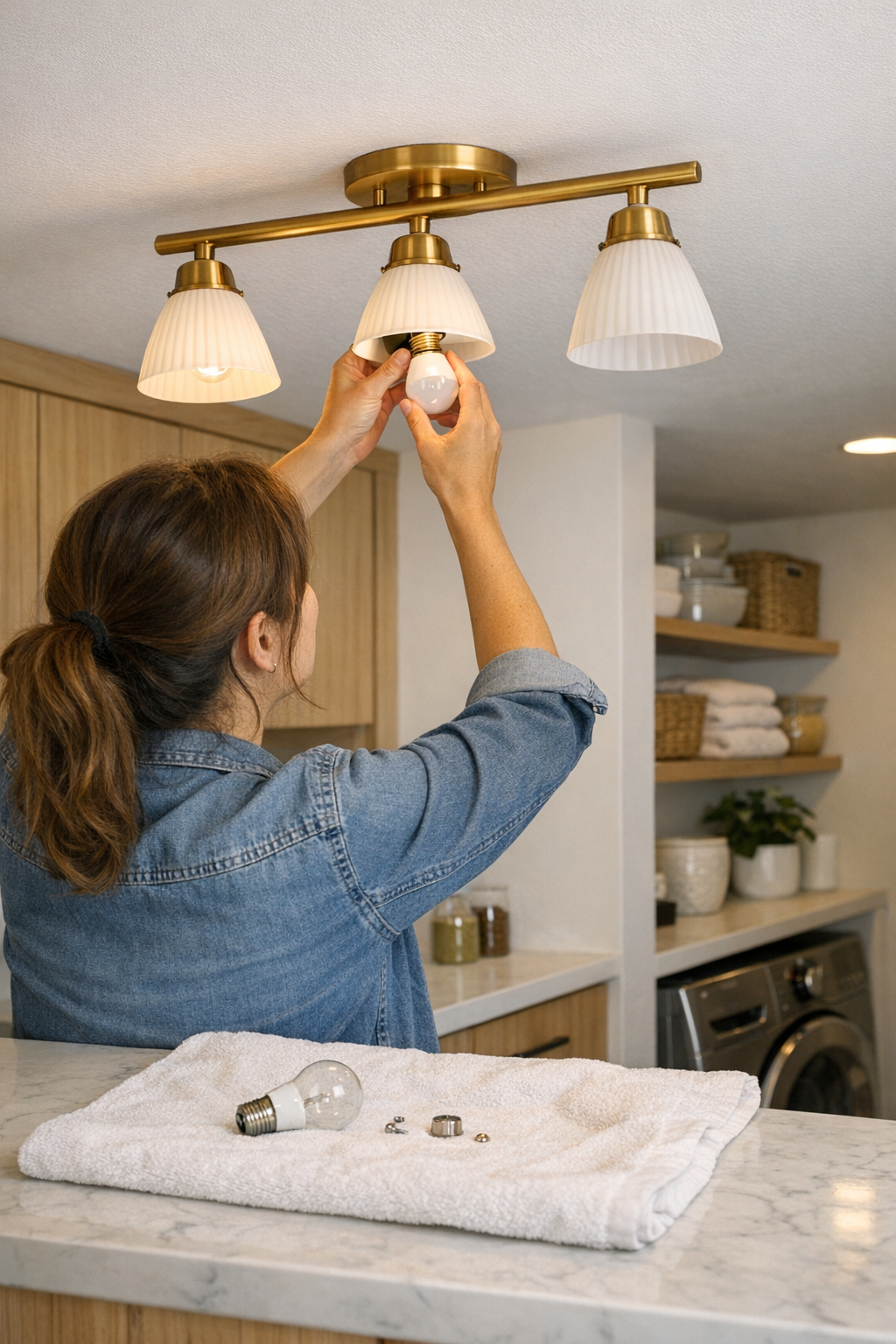
The missing screws started as a minor annoyance—something to mutter about each time I opened the flush mount over the laundry counter again. I wasn’t thinking much about the light itself, just the small pieces vanishing behind machines or landing in impossible corners. But after enough rounds of crawling and retracing my steps, I began to feel the invisible shape of the fixtures themselves. Not just how they lit the room, but how they quietly shaped the energy of every routine, for better or worse.
Lighting is easy to overlook until you need it. It’s that moment in the hallway while juggling a basket, or late at night on the stairs, or reaching for a mirror with wet hands, when you notice—some fixtures cooperate, and some seem built to interrupt you. The lost hardware, awkward reach, or frustrating glare becomes a part of the space just as quietly as the light itself.
Where the Little Things Disappear
Dropped fasteners always find the gaps you forget to seal: under the edge of a counter, behind a mirrored vanity, beneath appliances that haven’t shifted in years. The pattern repeats every time—a tight flush mount, slippery parts, and gravity working overtime.
You don’t notice it immediately.
But over time, you feel it.
It’s not just the bulb that’s hard to reach anymore. It’s the dread that comes with every twist on a lighting cover, expecting another short hunt on your knees. The lighting doesn’t feel like it belongs—it feels like an obstacle accidentally planted there.
Different Fixtures, Different Friction
A flush mount and a semi-flush mount can look the same on a spec sheet—both promise to brighten the room and both say “functional.” In reality, the tiny pinch of extra clearance around a semi-flush changes everything once you’re balancing on a stepstool with a new bulb, working above a packed washing machine, or squeezing beside a narrow corridor wall.
That is the detail I kept coming back to.
More space for your hands doesn’t make the room prettier or brighter, but it quietly removes tension from the smallest tasks. It’s a difference that only sharpens after enough cycles of lost screws and interrupted afternoons. Having room to see what you’re doing keeps maintenance from turning into a mini search party every time.
Learning What Belongs
After too many hardware disappearances, a new routine follows me into every light change. Now, a thick towel goes down before anything opens—especially in those trouble spots above laundry machines or tucked beside cabinets. It catches the little things before they escape. A simple, physical way to make these interruptions a little less routine.
In the background, I find myself noticing other invisible details—a shadow where I wish there was more light, a glare across the countertop, the feel of a hallway that helps navigate night walks without extra thought. The fixtures themselves don’t demand attention, but the experience lingers; the ones that are easy to care for are the ones I want to keep around.
Living with lighting this way isn’t dramatic, but it is quieter.
Sometimes, I read quietly through sites like LightHelper, and let the small details settle in.