Softening Morning Routines with Thoughtful Bathroom Lighting
Standard ceiling bulbs and spotlights create harsh shadows and glare, while linear and panel lights distribute light evenly, improving bathroom routines.
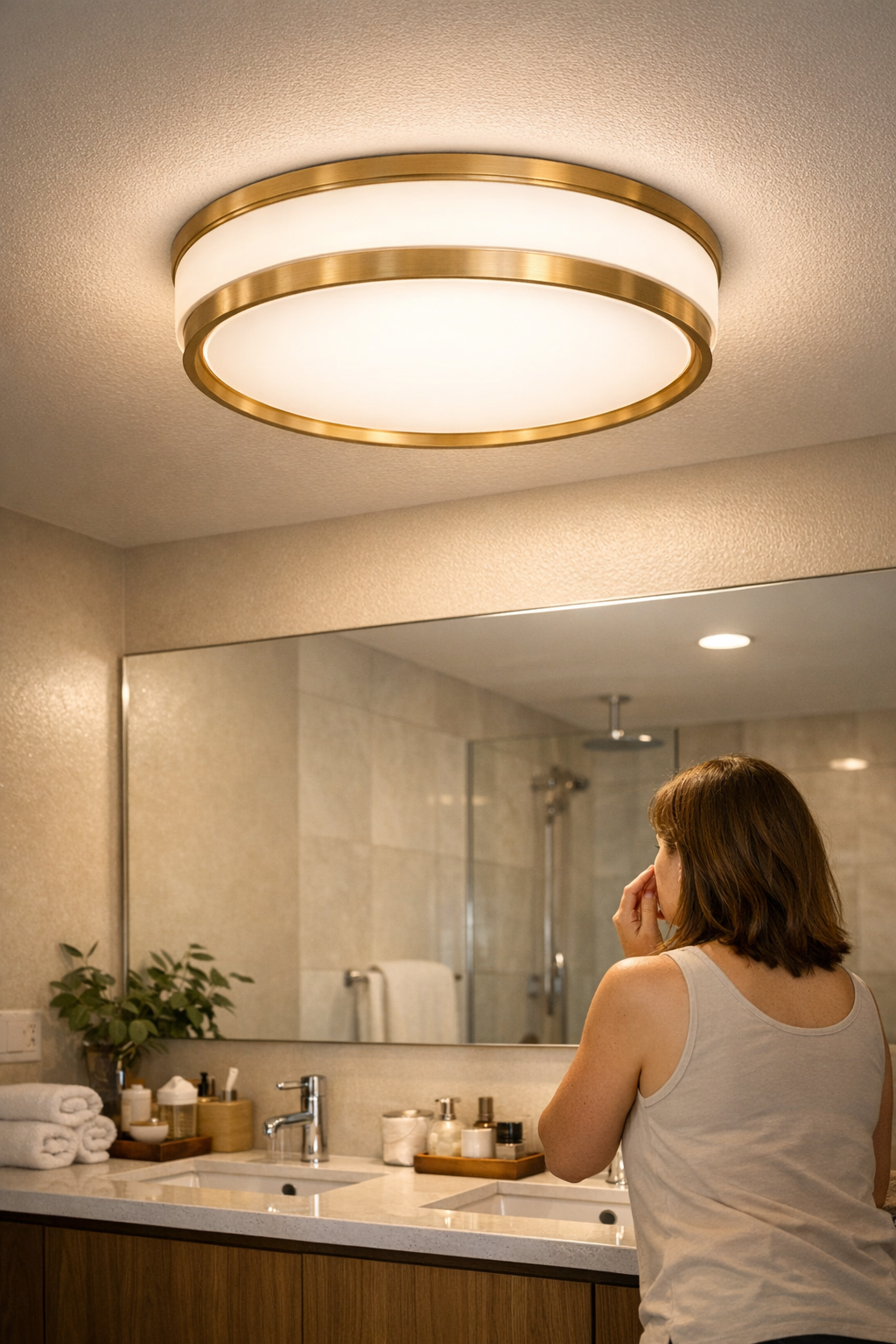
It’s odd how a room can look bright and still feel difficult to use. The mirror in my bathroom doesn’t lie—not about shadows or about routines. At first, every new light install seems like an upgrade. But discomfort can build without warning: one side of your face always just out of sight, patches of glare you learn to avoid. It becomes a small, ongoing negotiation—is this just how bathrooms are, or is something off about how the light falls?
It isn’t obvious at first, but over time you realize that most ceiling lighting—spots or flush bulbs arranged for “coverage”—adds structure but not support. Surfaces look fine, but it’s unclear if the setup was made for tasks or just to look neat. You start leaning in to see better, shifting to catch a shadowless view, realizing cleaning a countertop doesn’t fix how uneven it feels in use.
What lives in the shadow lines
Keeping bathroom lighting tidy sounds good on paper: rows of spotlights across a white ceiling, everything orderly. But the issue isn’t order—it’s what happens at the messy edges of routines: shaving at five a.m., brushing teeth with a child pressed beside you, both trying to see clearly despite sharp-edged brightness and shadows.
You don’t notice it immediately.
But you feel it.
The mirror picks up every harsh line the lights throw down. What looks clean during the day feels patchy as the sun leans in at an angle. Even a double sink—meant for convenience—creates a contest for the best-lit spot, one person nudging into glare while the other fades out in their own reflection.
When “looks fine” and “works cleanly” are miles apart
I was skeptical about panel lights—as with all so-called “upgrades.” But after months of reaching around glare and cleaning streaks that never seemed to matter, swapping three ceiling spots for a wide, flush LED panel felt less like adding something new and more like removing a daily hassle.
Installation was straightforward in this bathroom: the panel fit right into the old ceiling box, with only a quick patch to cover a bracket scar. It wasn’t glamorous, just practical. What changed wasn’t brightness or style, but how silence entered the routine. Fewer reasons to move the soap, fewer moments spent angling for enough light to see a razor’s edge. No more squinting at stray shadow lines or dodging low brackets that always seemed just in the way.
That was the part I kept coming back to.
Light that steps out of the way
Something shifts when the light stops getting in your way. The mirror becomes less about angles and more about clarity. Even with two people in the room—one shaving, one brushing—there’s no contest for the “good spot.” The wide spread eases placement pressure and lets the space work the same way in the haze of morning as in the quiet just before bed.
You start noticing other things then: cables tucked away, brackets not hanging in peripheral view, the countertop quietly holding its contours under soft, consistent light. Decisions made “for neatness” only last so long in real routines. The setups that genuinely help are the ones where you forget the hardware entirely.
Sometimes you feel the difference most clearly in what you no longer have to think about.
If you want to keep following these sorts of thoughts, sometimes I look through options and setups here: http://www.lightsupport.myshopify.com