The Quiet Battle Between Rugs and Wet Shoes
A drip mat prevents damage caused by wet shoes in entryways, making cleanup easier and saving time and replacement costs.
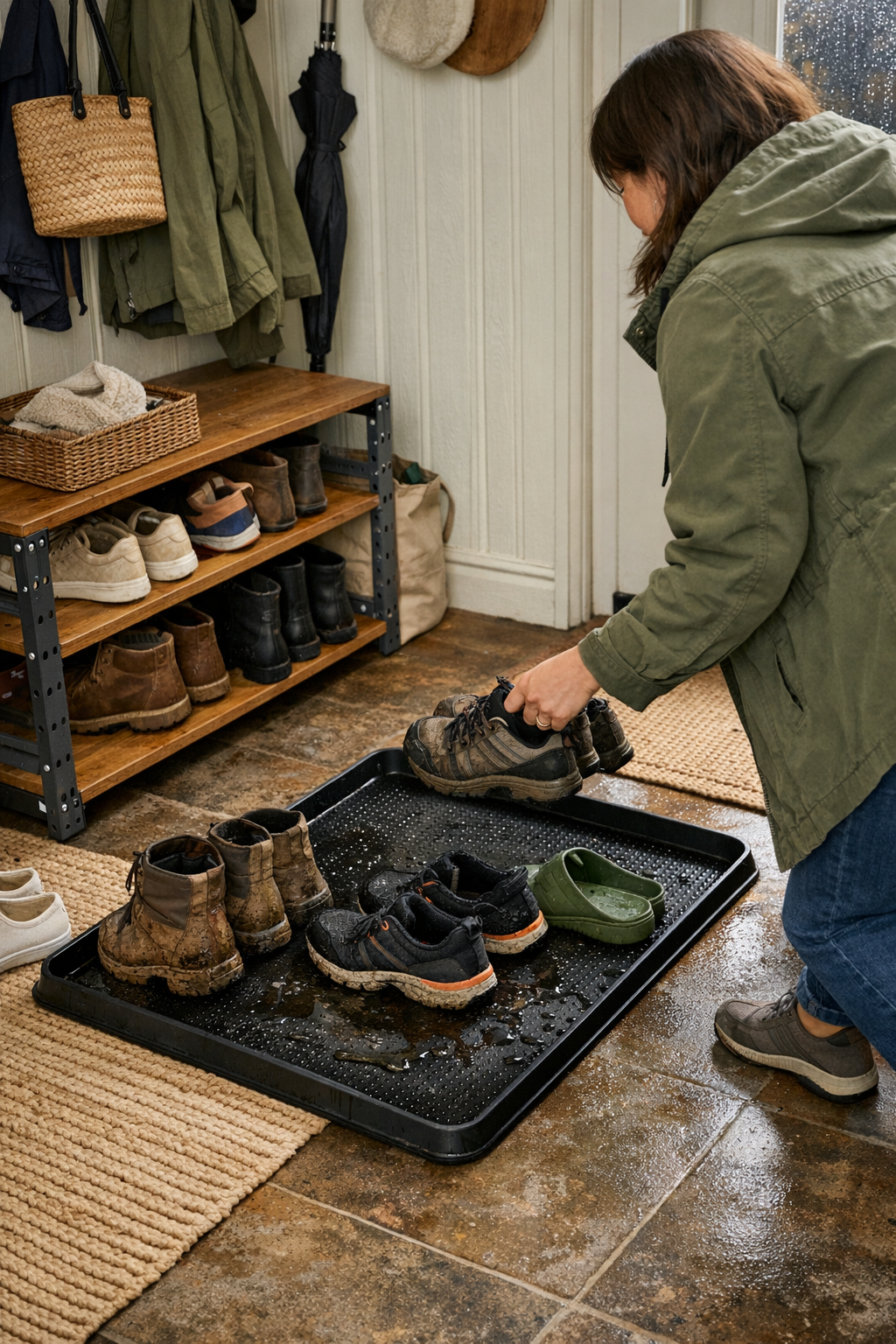
Sometimes it’s easy to overlook the moment of arrival—the threshold, the pause, the slow press of shoes onto old flooring. These small, often uncertain spaces quietly shift as order collapses by degrees. In my own entryway, years passed with the weather edging in every season, the clutter held barely in check by quick straightenings or a rearranged rug. Then, after a string of damp days, I realized the issue wasn’t the clutter itself—the shoes, the bags, the daily muddle—but the slow, silent way moisture crept underneath everything.
The Habit of Arrival and the Drip Mat Question
You don’t notice this immediately. A shoe drops, then another; sometimes it’s a neat row, sometimes a careless heap. A drop zone feels solid, reassuring. But after several days of rain, the old rug folds damp smells into the corner where gear accumulates. You catch yourself sidestepping that patch by the door.
One day it hit me—this wasn’t about neatness or appearances. There’s a difference between absorbing mess and containing it. That’s what I kept coming back to. Control didn’t depend on how lined-up the shoes were but on what was happening underneath.
The Difference You Don’t See at First
Most entry setups begin with promise. The bench sits just right, storage slots line the wall, and for at least a week, everything works. But the cycles build—wet boots, hurried exits, repeated arrivals—and the lines blur. Bags drift onto the bench edge or spill into the shoe row. Dampness soaks into woven fibers, creeping farther into the room than planned.
Eventually, I replaced the regular rug under the main shoe area with a drip mat. It wasn’t a dramatic change anyone noticed, but I felt less worry about what happened below the surface. The unsettled feeling after each group return faded, along with the lingering regret of slow-drying spots in the threshold.
Seeing Reset as Containment, Not Absorption
Restoring order shifted from an ordeal into part of the routine. The drip mat holds. Instead of constant blotting or dragging a soaked rug outside, it’s just a quick lift to spill out tracked-in moisture. The mat’s surface dries faster, easing the tension between looking controlled and being actually usable.
This small change resets the mood each time. Wet shoes stop spreading dampness deeper into the house, and the bench—once a clutter borderland—returns to its purpose: a moment to pause, not a spot to worry over. Over time, the burden seeps away—a quiet preservation of the space that’s always in between.
If this idea resonates, it’s worth exploring what Betweenry has quietly gathered here: http://www.betweenry.myshopify.com