The Quiet Calm of Doors That Close Without Force
Cabinet doors closing smoothly without force improve workspace flow, reduce clutter, and ease daily use through practical adjustments.
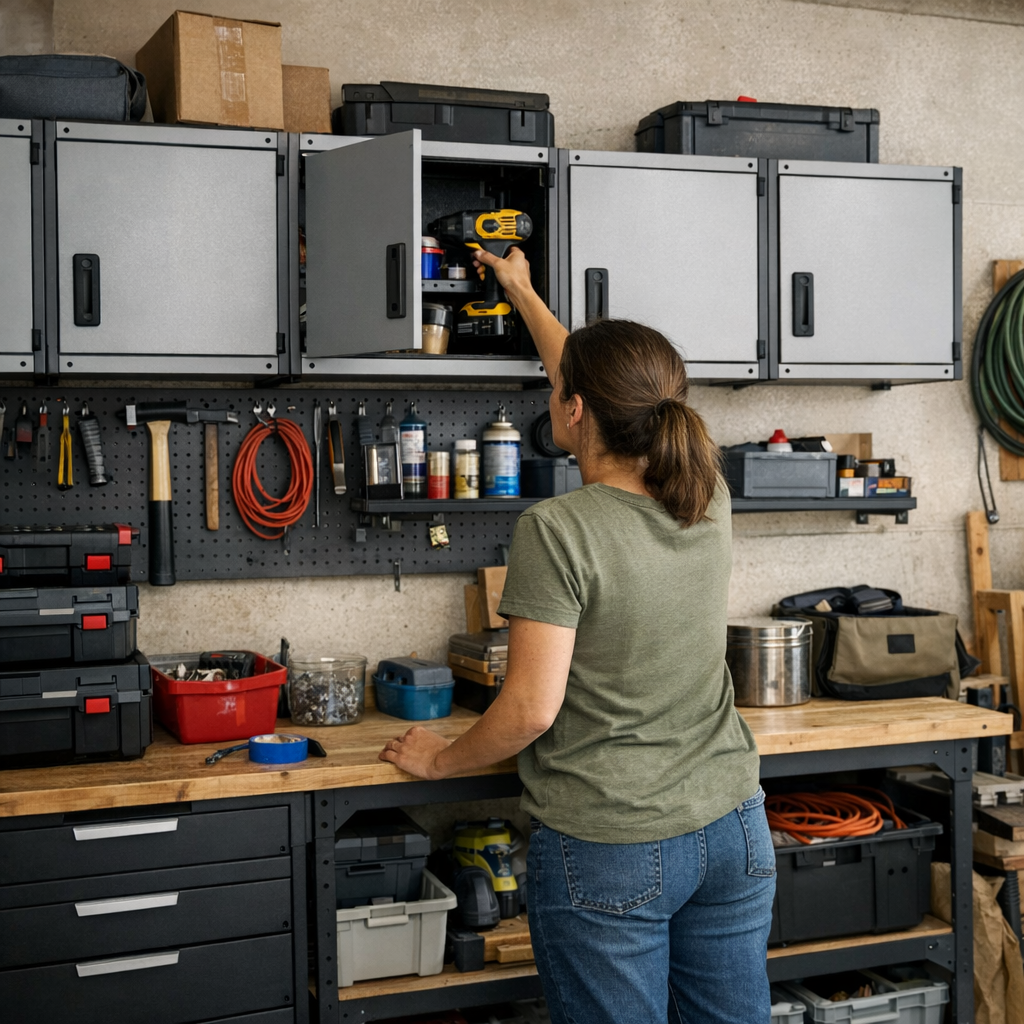
There’s a moment after organizing a workspace when everything lines up and clicks into place. Cabinets are freshly mounted on the wall, handles aligned in perfect symmetry. For a while, it feels like proof—the promise of order fulfilled. You can almost hear the quiet contentment in the stillness.
But real life doesn’t keep things untouched for long.
Soon enough, movement returns: a tool pulled from its shelf, a box of screws put back, a cabinet door quietly swinging open and shut. This is where the true test begins—not in the stillness, but in the gentle push and pull of daily use. Often, the simple act of closing a door or the slight resistance of a hinge signals whether order is built to last.
You don’t notice it immediately.
But you feel it.
Where Order Begins to Slip
At first, everything looks right. Cabinets sit flush against the wall, doors align, and there’s a certain satisfaction in the visual harmony. The space almost cooperates, inviting you to work.
Then, subtle things show themselves. A cabinet door catching ever so slightly on a low shelf. A latch needing just a bit more force than you remembered. Not much—just enough to slow you down or make you hesitate. Maybe something doesn’t close on the first try, or a tool is left out because returning it feels awkward.
It’s barely noticeable. But these pauses, these tiny disruptions, add up. They reveal the difference between a system that only looks good and one that genuinely supports your workflow in a busy garage or small workshop setup.
The Real Test: Moving, Returning, Resetting
I noticed this while swapping out a screwdriver for the third time one afternoon—a faint hitch in the left cabinet door, where a low shelf pressed into its swing. My movement paused, just long enough for the rhythm to change.
Soon, things started stacking up where they didn’t belong. Items meant for one cabinet lingered atop another. What felt like an efficient setup yesterday now showed signs of friction—clutter slowly creeping in.
This is the real work of any modular or wall-mounted storage system: handling the ordinary currents of use, absorbing the small shocks of movement and return without complaint. Order isn’t just about how your setup looks on day one; it’s about how it responds on the third, fourth, or hundredth cycle of use.
Order either renews itself quietly—or it breaks down, little by little.
When the Smallest Fix Changes Everything
Sometimes it only takes a small adjustment to settle everything back into place. I swapped out a stubborn old hinge for a self-adjusting one, mostly out of curiosity. The door, once reluctant, now swung open and shut freely. There was no more nudging, no forced closings—just a smooth, clear click.
What a difference a few millimeters of clearance can make.
After that, resets came naturally again. Clutter lost its foothold. It felt less like fighting the space and more like working with it. That subtle shift—barely visible, but felt deeply—reminds me that functional order is rarely about appearance, but about removing friction in movement and access.
Sometimes, simply opening and closing a cabinet multiple times reveals where the smallest hesitation starts. Addressing these subtle spots—realigning a shelf, changing a hinge, nudging items back—can quietly transform workflow in any garage, backyard utility corner, or raised-bed system.
Order isn’t a fixed achievement. It’s a rhythm that returns every time you interact with the space.
These thoughts came together while adjusting storage in my own little workshop corner.