The Quiet Moment That Calms Dog and Owner Alike
Ignoring the doorway pause stacks tension, making walks scattered; holding this brief hesitation creates calmer, steadier dog-life flow.
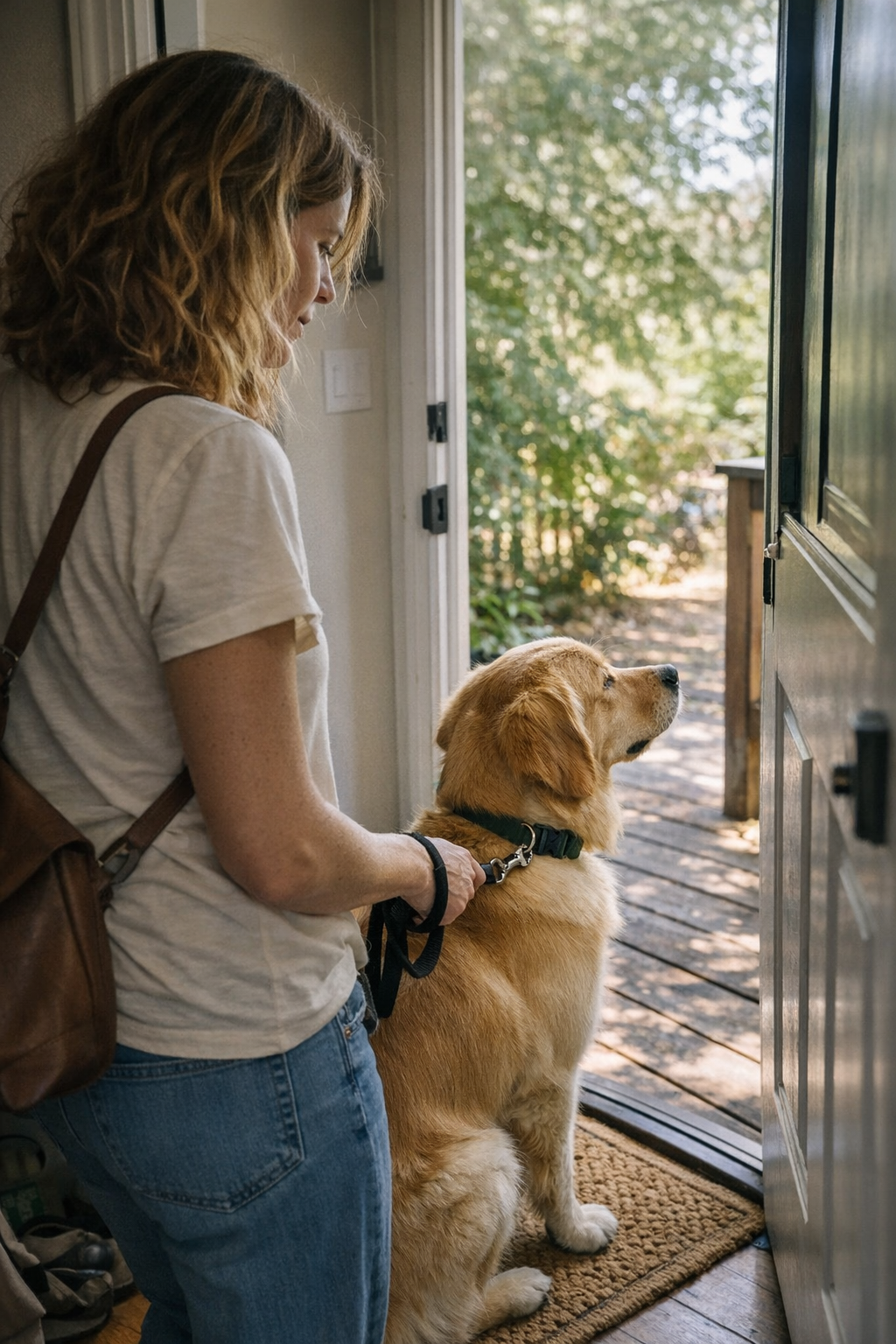
You notice it after a few mornings—how quietly a dog’s things begin to spread across the places you use most. At first, it’s just a bowl nudged slightly from where you set it, a towel left tossed after a rushed bath, or the leash hanging just a bit too long near the door. Each item shifts with purpose—a rest corner expanding, toys forming small clusters across the floor—yet none of it feels wrong until your usual flow stumbles.
That’s when the tension shows. On a busy morning, rushing into the kitchen, your foot catches on a tug toy. You reach for the towel you meant to keep handy, only to find it damp and balled up near the back door. The bowl gets shuffled, toys scattered, towels displaced—individually minor, but together they slow your routine down.
It looked fine at first. The systems you set up made sense. But over days, little overlaps trip you up—the leash tangling with your jacket, the crate used as a pit stop for damp towels, rest spots fluffed but soon splayed open again. When every minute counts, these small disruptions add up.
The Invisible Spill
The problem isn’t an obvious mess—it’s how useful items pool in your daily paths. The bowl, leash, crate, towels—they drift into walkways and corners you pass without thinking until you catch yourself stepping over the same chew toy twice, wondering how it got there overnight. Toys cluster where you actually play, not where you planned. Even the best systems slowly drift off course.
This subtle shuffle of daily fixtures feels like a quiet reminder that tidy doesn’t always mean easy to use.
Reset, Again
You can reset everything at night, putting things where they belong. But by the second walk—or the first muddy paws inside—items have shifted again. Towels go missing or stay soaked by the crate. Leashes get tangled around jacket sleeves. Rest spots you boxed at bedtime appear scattered by midmorning playtime. Each small fix—re-cleaning, re-stacking, straightening—starts to feel like an extra lap.
The disruption is smaller than you expect but persistent—slower trips out for bathroom breaks, delayed feeds while you look for the bowl, scrambling for a towel to clean muddy paws just as your dog waits impatiently at the door.
Eventually, just moving the bowl a few inches or storing a towel on a reachable shelf smooths mornings. There’s real relief in not having to search when muddy paws are circling and waiting.
The Lived-In Pattern
After enough daily resets, you accept there’s no perfect setup. Routines sprawl and contract with the day’s flow. You work around the spots your dog claims and reclaim them yourself in small negotiations: today the bowl moves closer to the wall, tomorrow a bit further to clear the path. The dog doesn’t care. You notice—especially after tripping twice—and decide maybe that towel belongs where your hand lands naturally, not where it looks neat.
A setup that looked tidy on Sunday doesn’t always work by Thursday. The quiet realization is that easier often means placing things more forgivingly, not policing every inch. The change is subtle but steady—you reach for the towel ahead of time, keep the leash always just inside the door, allow one or two toys to spill into the hallway without slowing your step.
No one else would call it organized, but this pattern holds, making the space more livable, even as the arrangement shifts through the week.
Sometimes, that’s enough.