The Quiet Moment That Changed Our Evening Walks
Routine dog walks lose rhythm from a missed turn, causing tension. Pausing at turns eases control and reduces friction for dog and owner.
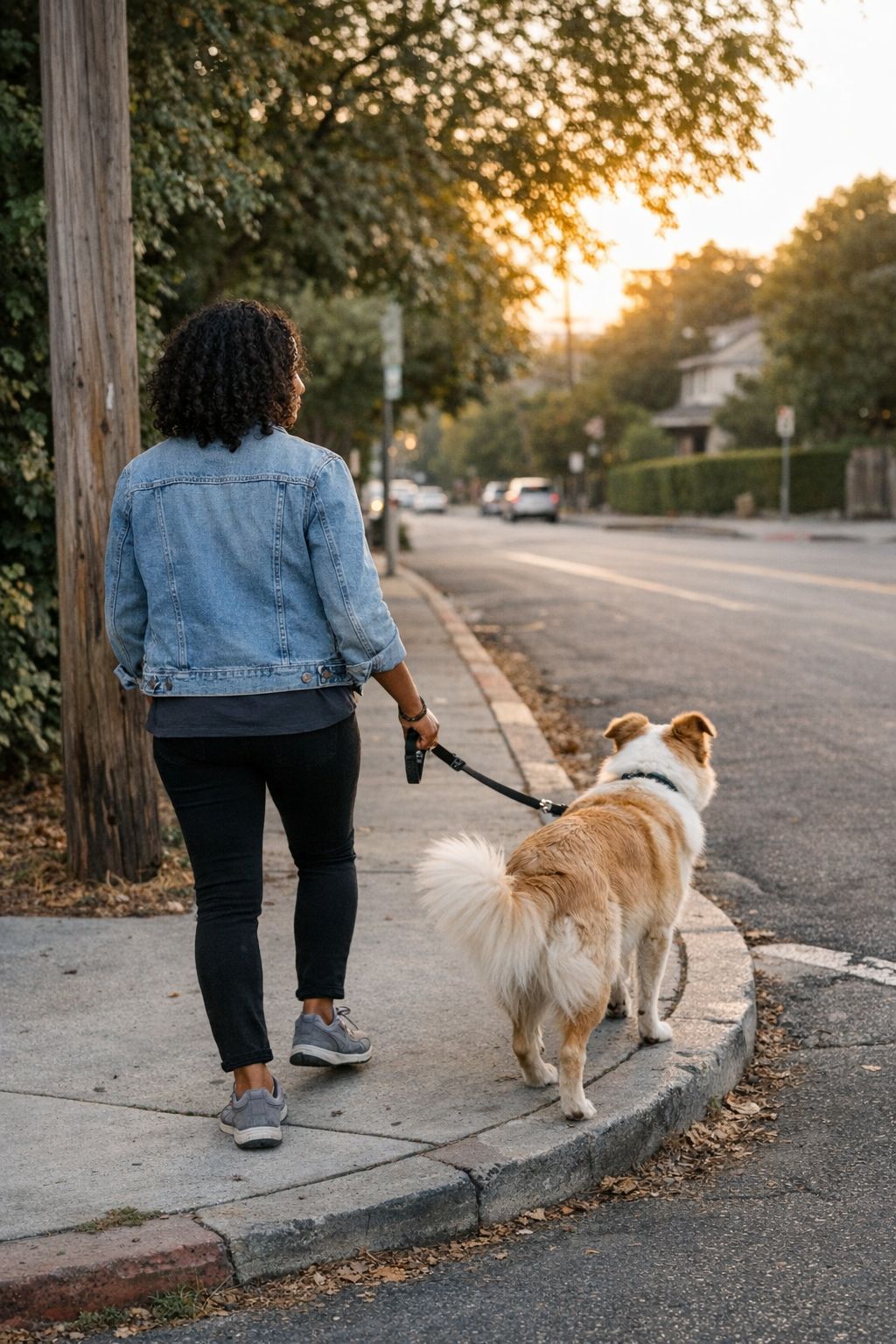
There’s a spot at the far end of my street—just before the main sidewalk narrows and a hedge leans in—where the rhythm of every walk with my dog shifts. For the longest time, I didn’t think much of it. Then, evening after evening, I started to notice a repeated snag right there: a little catch in what was supposed to be an easy routine. Not a rough moment, just the leash pulling a bit tighter than usual, turning our steady pace into a brief shuffle.
You only notice it after a few walks. At first, it feels like nothing. Just me moving a little too quickly, my dog picking up that energy, both of us stretching ahead before we mean to. It’s not exactly a problem, but it becomes a clear signal—the point where the walk loses its natural flow, where slack disappears and doesn’t come back until we’re home. The more it happens, the more it feels like that one missed pause at the turn quietly reroutes the whole walk.
The Second-Guess Turn
For a while, I told myself the restlessness came from other things: stray noises, passing dogs, leftover stress from a busy day. But the pattern kept showing up louder here—just past that hedge where the sidewalk gets tight and the leash shortens an inch too soon.
Every walk had a different excuse, but the signs appeared in smaller ways than I expected. Instead of a smooth loop, there’d be a minute or two of stop-start adjustments. My dog drifted slightly ahead—not running, just testing the space. I found myself saying his name more in this single stretch than the rest of the walk combined.
Past that point, the route would quiet down, but that missed beat lingered. Once we were back inside, my dog paced more in the kitchen. The leash hanging by the door looked more twisted than usual, like the tension settled in and didn’t fully release.
Missing the Pause, Losing the Slack
It looked fine at first. I’d walk through the corner, eyes up, assuming the routine would hold. But the leash always came up short—reminding me I’d hurried the turn again. By then, my dog was already mid-shift: shoulder lower, head forward. It wasn’t dramatic, but the tension carried on through the rest of the walk, never fully resetting.
One small routine, repeated enough time, wears its own groove. A subtle lean at the same spot. An expectation to move before either of us is ready. As that groove deepens, future walks become less fluid. It’s like a tiny stone in a shoe—you can ignore it, but every step ends up compensating.
This wasn’t about correction or pulling hard. Just a small overlooked moment where my setup wasn’t quite right. What I learned was skipping minor friction—even unconsciously—makes everything feel slightly more work than it needs to be.
The Quiet Difference After Slowing Down
One evening, mostly to avoid another tug-of-war tug, I stopped just before the turn and waited an extra heartbeat. My dog stopped, looked at me for the cue. We moved forward together—both a little lighter than usual. This time, the leash slack stayed; it didn’t vanish. It softened for the next few blocks, well past the usual snag spot.
It took a few more walks to realize this small pause—unremarkable as it felt—carried all the way home. Inside, the difference was subtle: a bit more calm. Less pacing. Less shuffling. A steadier return to normal. The routine barely looked different, but the house felt quieter, and I was surprised how little needed changing to make things smoother.
Some habits build up until a small change breaks them. That’s what I remember each time we round that hedge: letting the slack return before the next step—not because it’s strictly necessary, but because living with it is easier.
If you’re curious, there’s more about everyday adjustments to dog routines right here: http://www.dogpile.myshopify.com