The Quiet Moments Between Feeding and Daily Care
Pet feeding routines seem automatic but hide small breakdowns unless essentials are refilled, wiped, and stored within arm’s reach to cut daily friction.
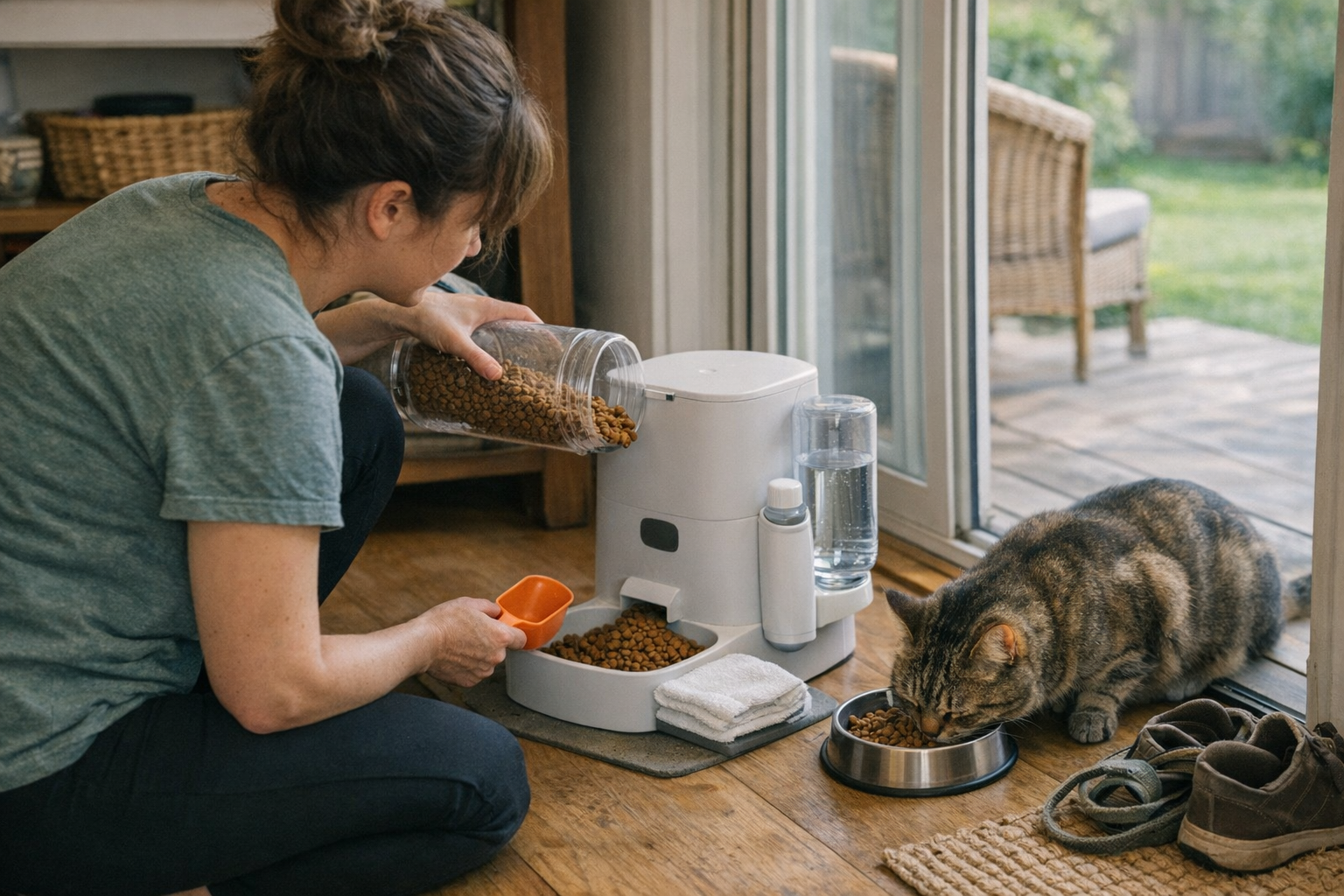
The soft clatter of kibble in the morning can sound like relief—a sign that things are handled, the pets are fed, and the day can move forward. It’s easy to trust that moment, to let the hum of an automatic feeder make the routine feel nearly invisible. But after a few days, if you pay attention, the smoothness starts to fray at the edges. No one talks about how quickly little gaps appear: a sticky bowl rim, the scoop left in another room, water running lower than you expected. The system you thought would run on its own still asks for small moments of your time.
You notice it after a few repeats.
The Small Things That Don’t Feel Like Much—Until They Add Up
At first, having all the pieces in place—the feeder, the bowl, maybe a container for food—feels complete. The initial sense of order is comforting. Yet by midweek, a different pattern sets in: crumbs gather in corners, the water bowl is always half-empty, an extra trip for the scoop that never stays where you need it.
It looked simple at first.
But the difference keeps showing up every time a step is skipped or a tool isn’t where it should be. That extra bend, the walk to another room, the stubborn spot beneath the bowl — none of it feels big enough to rethink things in the moment. Yet together, they wear against the “automatic” promise you were hoping for. You start to feel it in brief pauses during a busy morning, when cleaning or refilling turns into multiple small errands instead of none.
How Routines Lean on What Stays Near
Over time, it becomes clear: the routine isn’t really set by the feeder, but by what’s kept nearby. The days when the water bottle for refills is missing, or the cleaning wipe has wandered off, take the most time. The supposed ease gives way to searching for what should have been right there. It doesn’t take much—a misplaced scoop, a forgotten cloth—and the organized corner of the kitchen looks cluttered again.
That was the part that kept returning, always in the quiet moments after the day’s energy had gone elsewhere.
And yet, a small change can make all the difference: keeping the water bottle clipped to the feeder, or the scoop and towel within arm’s reach. The next feeding happens cleaner, the pause between other routines stays a pause. There’s comfort in knowing you won’t need to hunt for what you need, facing one less interruption.
Less Adjustment, More Ease
There’s something about a setup that doesn’t ask questions with each repeat—where all the parts are close by, in their place, ready for the next cycle. The area stays calm not because of design, but because it’s easy to reset on the spot. You notice you’re wiping the bowl right after use, refilling water before it runs out. The mess doesn’t accumulate, and you aren’t pulled out of your day.
Still, every so often, a bowl sits empty a little longer, or a bit of kibble is pressed into a corner waiting for a minute you don’t have. These things happen. But it becomes clear that real convenience in pet care is rarely accidental. The daily differences feel small, but over weeks, they hold the routine together.
Sometimes I look at the feeder setup and think about all the small pauses it quietly shapes. There’s always another small way to keep things steady.