The Quiet Moments That Shape Our Daily Pet Care
Small, repeat delays in pet-care routines pile up, making upkeep harder. A simple towel or open storage near the care spot keeps cleaning manageable.
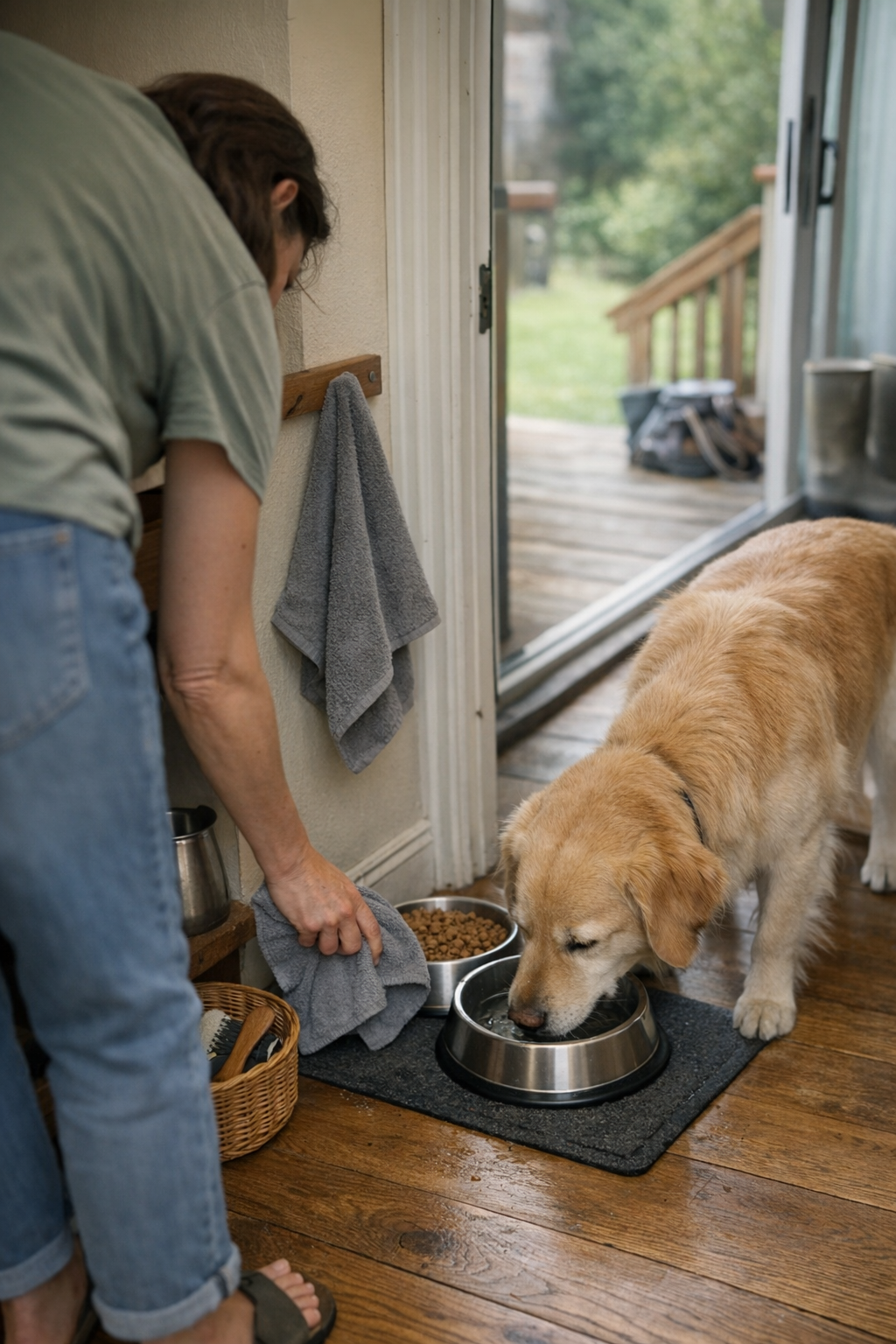
It’s easy to overlook how the small parts of pet care shape the pace of a day—until one starts to stick. The other night, I noticed a faint edge of dried water creeping out from under the dog bowls, a mark left over from the usual spill. It was nothing serious, just out of place in the otherwise clean corner. But once you spot it, the pattern emerges: the tiny tasks deferred, the quick cleanups left for later, collecting almost invisibly around the shared rooms where people and pets move through.
A routine feels calm when it runs on its own. But underneath, most of the daily flow is made up of these quiet resets—the habit of wiping bowl edges, placing a brush back, glancing at the water line before heading out. These gestures are so ordinary they barely register, unless they’re missing. You notice it after a few repeats. What looked like harmless shortcuts—using the nearest hand towel instead of the one by the door, skipping the quick wipe because it's been a long day—slowly turn into thicker patches of effort. Left unchecked, these small interruptions begin to set the rhythm instead of the other way around.
How Routines Drift Apart
It always seems manageable at first. The bowls are filled, a brush is nearby, there’s a towel for muddy paws somewhere—likely tucked behind laundry. But over the week, small gaps open. A dish sits empty too long and gets crusted around the rim. The brush is out of sight when the cat comes running to the kitchen with damp fur from the yard. Each pause adds up, quiet but insistent. That was the part that kept returning: the recognition that small tasks have gravity.
You especially notice it on busy days. When spilled kibble isn’t swept up right away or a damp patch spreads quietly into the hallway, the cleanup returns later—only heavier. There’s a tension between how the setup looks—organized and kept together—and how it actually works by the sixth or seventh use. That difference appears in clutter inching back, or in the way repeated small messes hold up whatever you meant to do next.
A Small Move That Changes the Day
After enough rounds, I found myself hanging a single hand towel on a simple hook within reach of the feeding spot. Not a big deal. At first, it looked almost unnoticeable hanging by the corner, but by the end of the week, the feeling had shifted. The towel became part of the routine—drips got wiped, crumbs didn’t stick, and bowl edges stayed clean without an extra trip across the kitchen. Resetting the space took seconds instead of minutes.
What changed wasn’t just the surface. It was the quiet ease of not hunting for wipes or fighting the same mess again. One small, automatic step embedded where it was needed trimmed the routine down to something that actually felt light. It’s the kind of practical fix that seems obvious until you live through the opposite for a while.
Where the Mess Settles In
You start to see how much a daily flow depends on the details: the brush is in sight, not buried; the water bottle ready for a quick refill instead of missing or awkwardly stored. When a pet comes in tracking clumps from the porch, the turnaround is quick if the basics are handy—and much slower if they’re not.
With every loop, the setup faces real use—traced in dropped kibble, missed wipes, surprise spills before bed. A routine only feels calm if it stays low-friction even on rushed mornings or tired evenings. That’s the moment I kept returning to. Simple, repeated changes in the same place let small disruptions pass by without building up.
These thoughts stayed with me after noticing how one part of the routine kept asking for the same fix, so I’ve kept them here: http://www.calmpetsupply.myshopify.com