The Quiet Pause Before Home Feels Like Home
Routine hesitation at walk’s end signals a poor transition home; a focused adjustment can ease the friction for a smoother return.
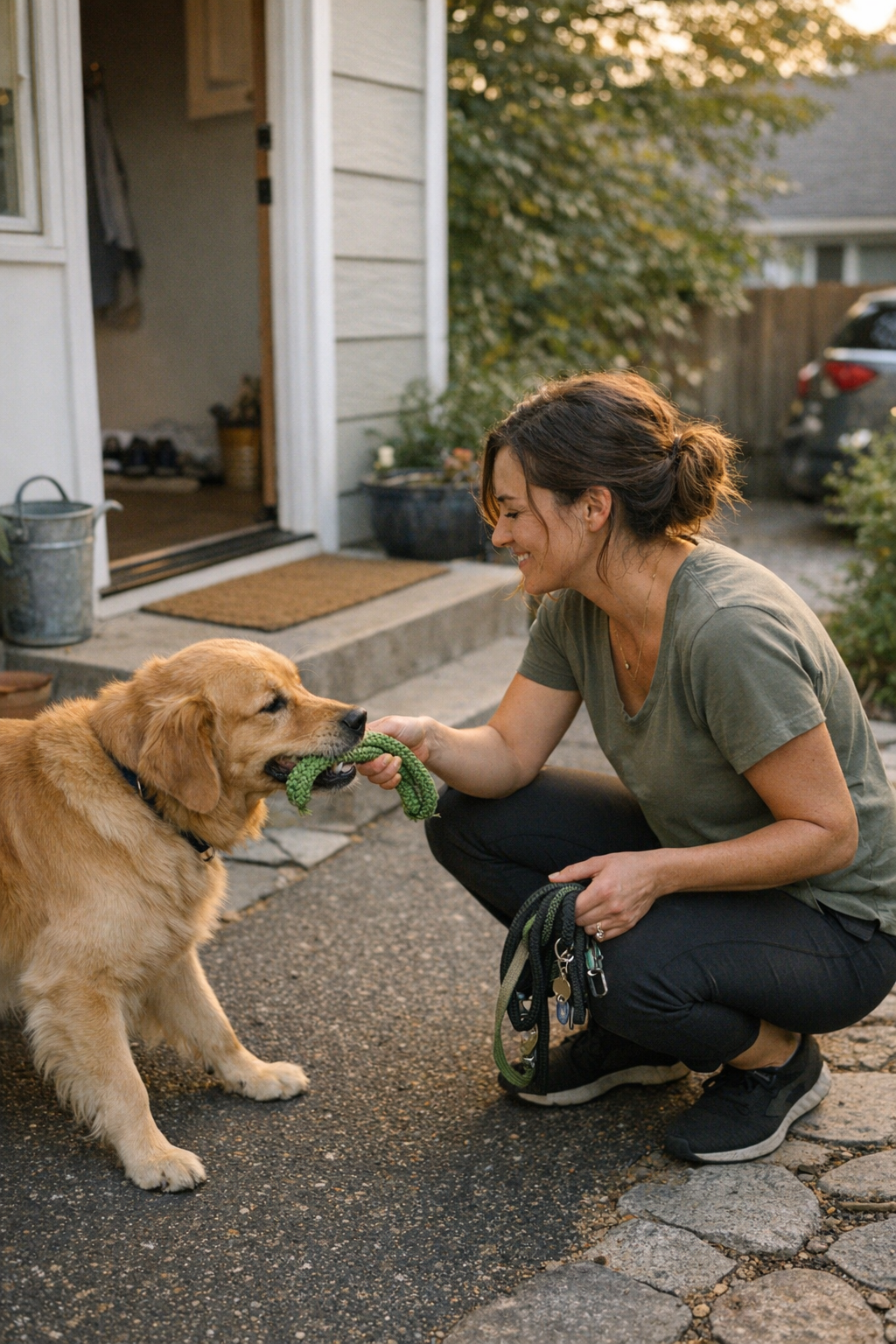
There’s a part at the end of every walk that keeps pulling me back. It’s never dramatic—just a quiet hitch, almost invisible, that seems harmless until you notice how often it repeats. Instead of rolling inside with a clear sense of “done,” we hang there: leash slack, dog pausing, keys clattering to the hall table. At first, I thought nothing of it. But over time, it added up—a subtle interruption stretching the gap between being out and truly settling in. The moment when the walk should resolve into home life is exactly where things tend to get stuck.
It’s not unique to me, I suspect. Many of us have tidied the rest corner, wiped paws at the door, even thought about reorganizing the toy basket, all aiming to smooth the flow. But a calm return depends on more than clever storage or cute bins. The test is in the small moments: whether the leash slips off without awkward twisting, or if the water bowl needs refilling before you’re all the way inside. That’s where routines betray us—looking solved at a glance but showing frayed edges in daily use.
You notice it after a few mornings. The dog waits almost insistently by the same patch of floor. You untangle the leash, but something hesitates. Feeding gets pushed back, towels suddenly seem out of reach, and every reset takes a fraction longer than it should. These aren’t big issues, but they build friction—a blurring of the boundary between outside and rest.
The Difference Shows Up Slowly
It looked fine at first. Hooks by the door, towels folded nearby, bowls refilled at night. I’d pat my pockets, double-check, and open the front door each morning like I’d solved it. Yet the return kept feeling slightly off—like we were improvising through a space that was supposed to feel automatic.
What’s strange is how the slowdowns don’t announce themselves. It’s not a major stumble or a destroyed mat. It’s the leash grinding between bags, a bowl just slipped out of reach, or finding yourself cornered in the hallway with a muddy paw before you’ve set down your keys. The routine looks tidy in daylight, but these transitions expose its weak points.
That was the part that kept returning. Routines don’t truly belong to us until they bend around the particulars: the way your dog waits at the door, the direction you move to hang the leash, the route your bag takes from hand to hook. The repeated pause made it clear something invisible was stacking up, right at the entry.
Small Adjustments Settle the Loop
I tried small changes before I noticed the benefit. Moving the bowl closer to the entryway wasn’t a grand fix—but it meant water was ready as soon as we stepped inside. Sliding the towel bin a foot nearer lowered the chance I’d miss the mudprint at the first pass. Setting down my bag before reaching for the leash—automatic now—keeps my hands free and makes the dog’s welcome less frantic.
The difference showed up in smaller ways than I expected. Instead of pacing or circling, my dog started heading straight for the bowl. The pileup of gear by the door softened a bit. Resetting the rest corner late at night became routine, not a struggle. We weren’t just tidier; the flow simply felt less gridlocked.
There’s a quiet relief in not constantly reaching for solutions. The mundane repetition—walk, pause, towel, water—finally feels calm. Instead of a performed routine, it belongs to both of us, shaped by small corrections and the memory of all those slowdowns.
Routine Keeps the Space Human
Living with a dog means accepting these minor reroutes. Every day brings its spills and stalls—rest corners getting rearranged, toys creeping into walking space, bowls shifting out of reach, towels always a stretch away until they aren’t. There’s comfort in realizing that a routine doesn’t have to look perfect to work well. What matters is whether it reduces friction in everyday use. Calm settles only when the flow of movement matches your real habits, not just the snapshot you wish for.
The repeated-use places—the entry mat, the towel reach, the rest spot near the window—grow defined only with time. A setup that looks right isn’t always easy to live with. But if you keep adjusting, the difference—less pacing at the threshold, fewer tangled leashes, a dog that moves forward instead of hovering—finally becomes clear.
Somehow, in the repetition, you stop fighting the routine and start seeing the edges where life actually happens. And that’s where things finally get easier for both of you.