The Quiet Power of Empty Shelves in Busy Homes
Allowing cabinets to stay slightly empty prevents overflow and blocked movement as routines intensify, keeping returns smooth and reducing clutter.
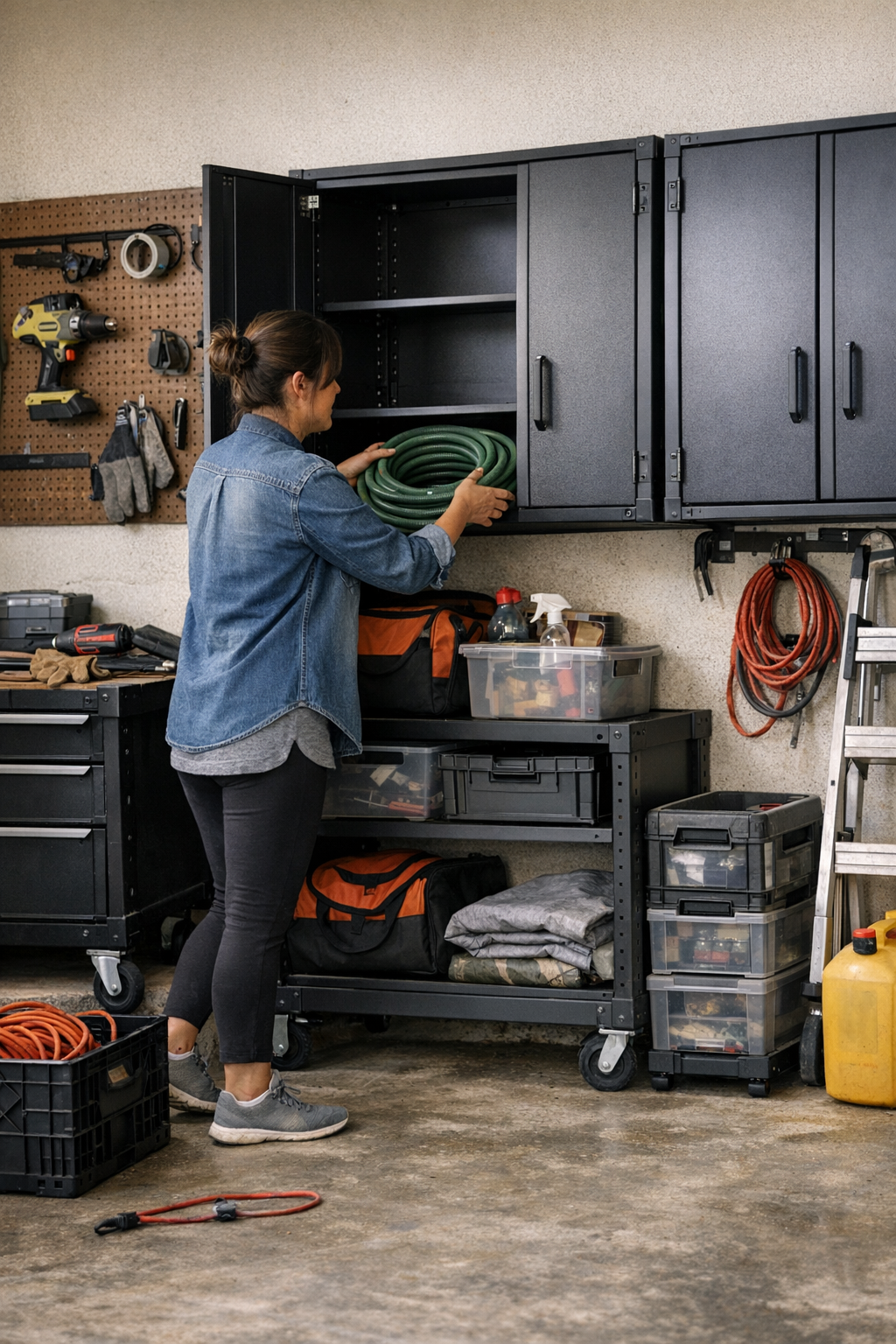
It’s funny how a storage setup can look perfect at first glance, but slowly reveal its flaws once you start living with it. A new modular cabinet—pristine, shelves lined up, every box and tool in just the right place. You admire the order, convinced it will last. Then a busy weekend passes, and suddenly the ease you felt is gone. Movement stalls. There’s a silent friction no one warns you about.
Storage often seems straightforward—a place for your things, a promise of order. But what you don’t see on day one is how each cabinet, shelf, or wall-mounted unit absorbs the flow of daily routines. And how that flow, if blocked, leaves its mark.
The Quiet Weight of Too Much Order
At first, completely filled cabinets look efficient. You close the doors on a neat grid of bins and tools and feel a brief satisfaction. It feels like problems have been solved.
You don’t notice it immediately.
But as weeks go by and habits set in—grabbing a wrench, returning holiday lights, repacking a box for next season—stress shows up in subtle ways. Odd items crowd the floor near your workshop setup or garage wall. Returning tools takes longer, just a bit more effort every time. It’s barely noticeable, until it’s all you can see.
The Subtle Value of Leaving Space
This is where a small shift makes a big difference. A cabinet left with room to spare—a shelf or two almost empty—feels at first like a luxury or a missed opportunity to “maximize efficiency.”
But that emptiness is not wasted. Instead, it offers flexibility that tight order cannot. Items return quickly, overflow finds a home, nothing lingers outside the designated footprint. With every surge of activity, the system breathes more easily.
You feel it—the difference between a layout that demands constant shuffling and one that quietly accommodates life’s irregular pace.
Learning Through Slow Repetition
The lesson often comes slowly. One spring, in a shared garage full of wall-mounted storage and floor-based units, overfilling cabinets revealed its cost. After just a few full weekends, neatness broke down; clutter surfaced at the edges—not from mess, but from systems too crowded to reset smoothly.
Leaving a shelf open turned out to be the gentle fix. Not dramatic—just enough to keep things moving. There’s relief in returning an item with no search for an open spot. That small buffer quietly clears the path for life to continue without friction.
An empty shelf often feels wrong at first. But sometimes, what’s missing is exactly what holds it all together.
These quiet observations settled in while straightening up an old garage for spring, working with modular and mobile storage solutions that stack and shift with changing needs.