The Quiet Relief of a Well-Organized Travel Bag
Poor carry-on organization slows travel with repeated retrieval delays; structuring for quick access reduces friction and eases your flight experience.
There’s always that illusion, just before leaving, that this time the bag is exactly right. Everything lined up, packing cubes stacked, cables coiled, zipper closing without resistance. It feels satisfying, almost like a launch moment before the inevitable motion and small hassles begin. But I keep noticing—especially after weeks of repeated flights and mid-transit grabs—that order at home barely counts. What really matters is whether the bag keeps its promise while you’re moving.
You don’t see those pressure points until the second or third retrieval—shuffling past people, reaching for a document, or fishing for headphones just before takeoff. That’s when neat packing cubes reveal their limits. Something always ends up in the way. The cable pouch nudges aside the toiletry bag, which blocks the spot where the snack or boarding pass lives. What looked precise at the start suddenly demands a small workout every time quick access is needed. That friction kept coming back.
Pressure Points Don’t Show Up Until You Move
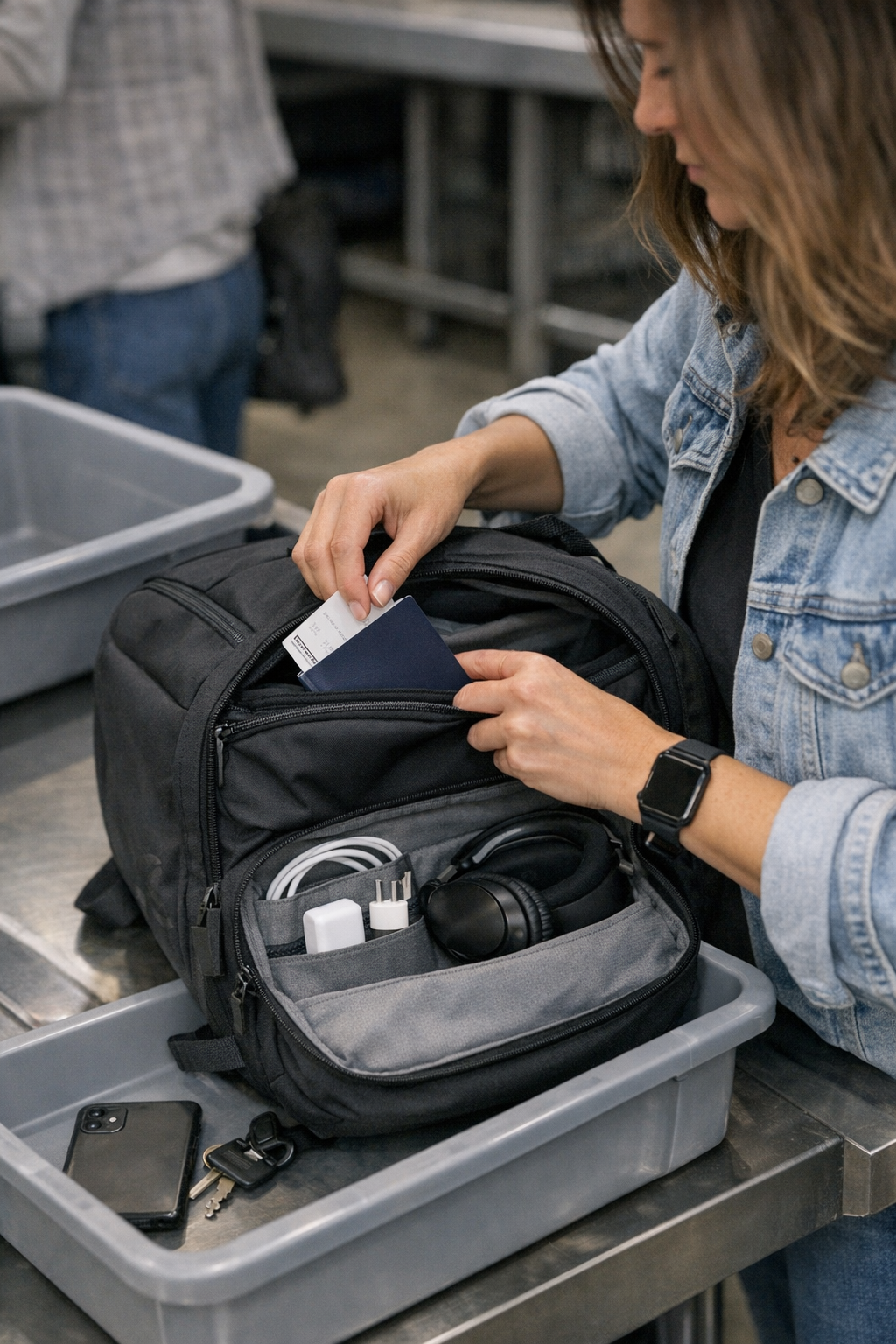
Most bags hide their worst habits until you’re moving through the airport or train. You notice it after a few transitions: the passport buried two zippers deep, the phone charger tangled in the bottom cube, or the small panic when security asks for a laptop tucked behind a blocking pouch. At first, I blamed myself—maybe if I packed tighter or in a better sequence, I’d be faster.
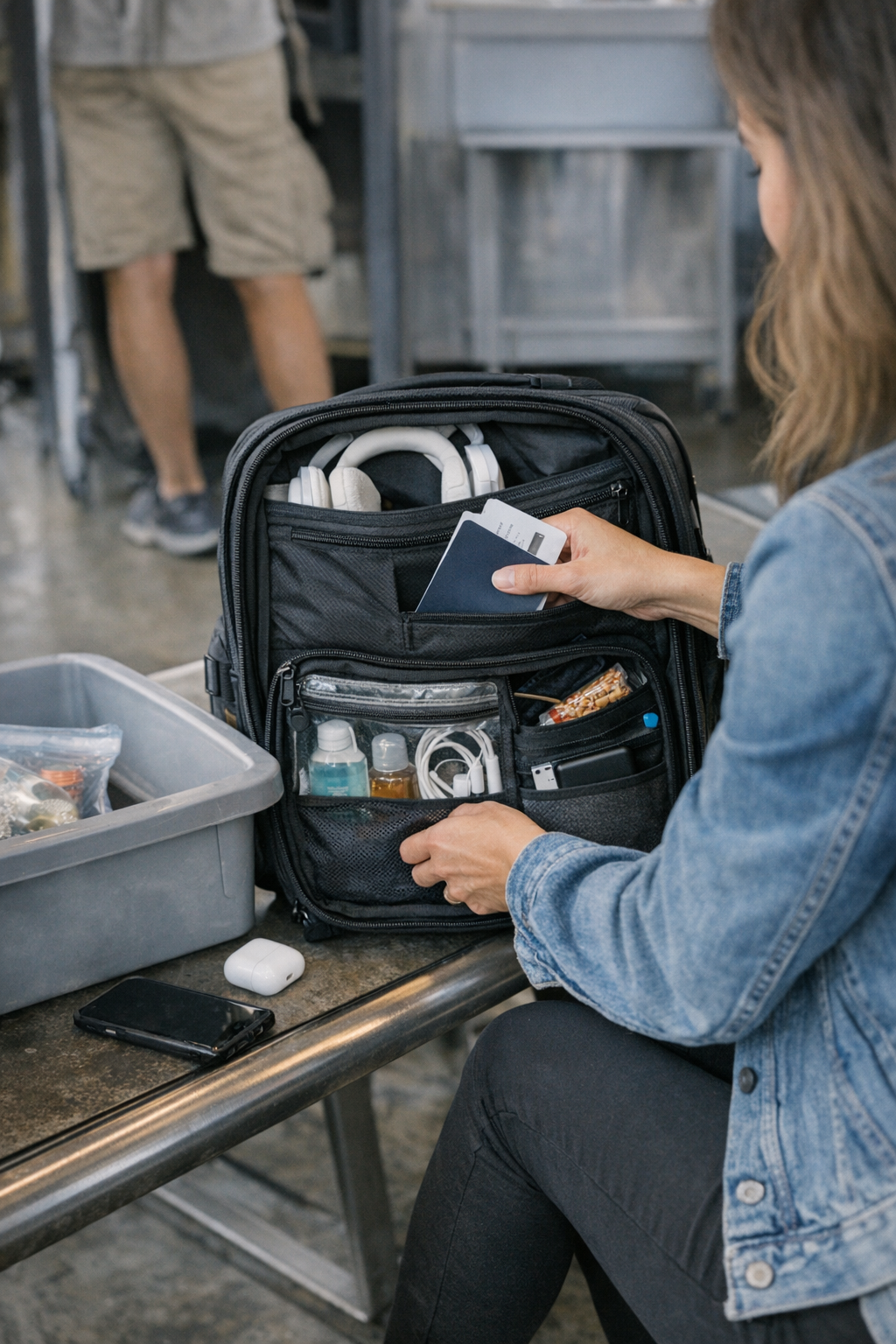
The real shift wasn’t re-stacking inside the bag. It was changing the pattern of access entirely. Moving primary items—the passport, charger, sanitizer—each to their own outside-facing pocket with nothing on top made repeated searching mostly disappear. There’s a quiet relief in reaching for what you need without breaking the rest of the setup just to get it.
Most Routines Happen in Motion, Not at Home
Smooth hotel unpacking means little when airports and train compartments become your daily context. The problem isn’t disorganization—it’s the drag of repeated repacking. Every time a queue forms behind me or I’m jostling at the X-ray trays, old bag habits resurface: an overstuffed outer pocket, a key document wedged under a hoodie, or the kit I need stuck in the wrong compartment again.
It didn’t really matter that things looked neat. If I had to take three actions to get one thing, the bag’s design had failed. A subtle change—dedicating fastest-access space only for what I grab most—meant fewer tray transfers, less blocking the aisle, and a faster return to my seat. The change was almost invisible on the outside, but the drop in friction was immediate.
The Bag You Trust Through Ten Accesses Is Different From the Bag That Looks Ready
Over time, the gap widens. The system that seemed crisp at home ends up costing small tolls—micro-pauses, pocket mixups, brief panic moments—until you finally switch it around. One quiet lesson kept appearing: real comfort comes from a bag whose layers don’t force a reshuffle at every checkpoint. When a cherished ticket or set of keys slips back into place on the first try, the calm comes less from “order” and more from knowing nothing else needs to move for you to keep moving.
It’s a small design question, but it keeps paying off on the road.