The Quiet Relief of Effortless Backyard Order
When outdoor storage is designed for easy returns, clutter decreases. Focusing on return flow creates a reliable, low-effort reset cycle.
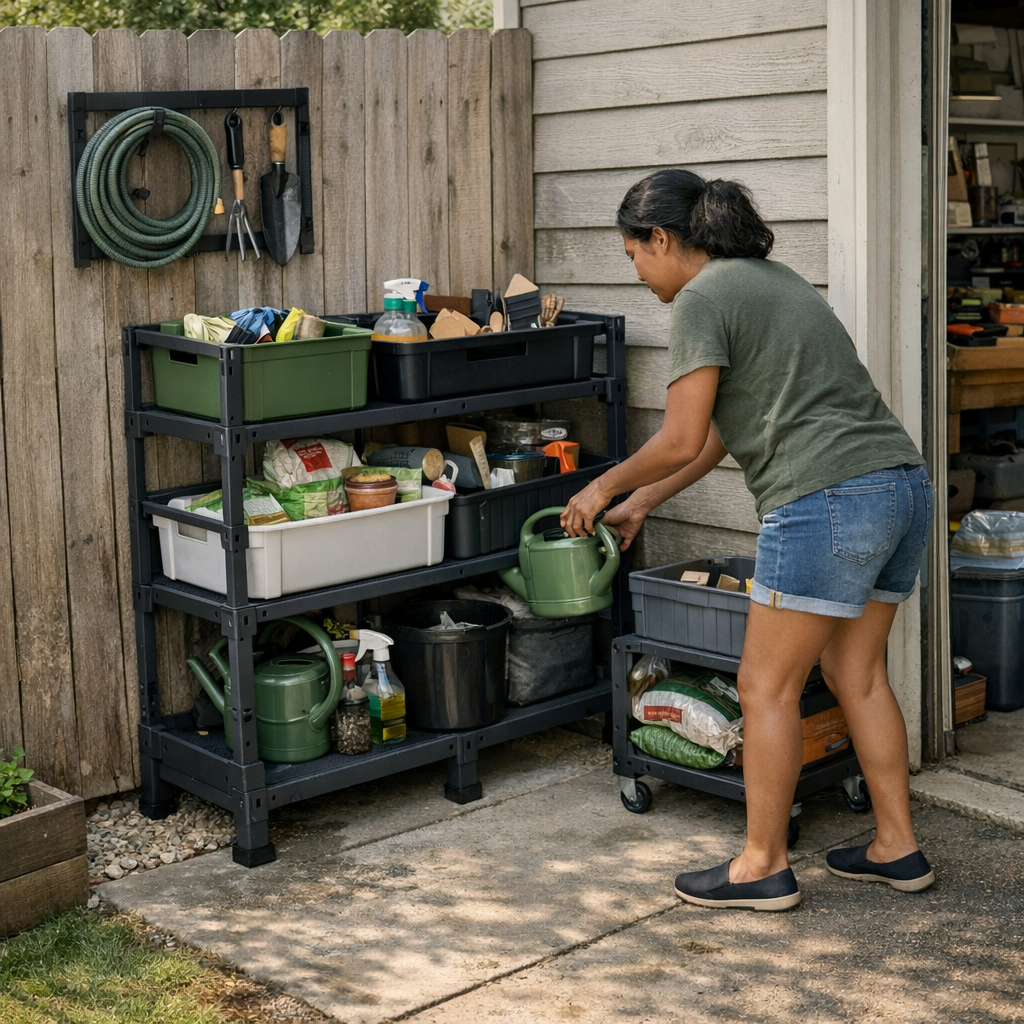
One thing nobody tells you about backyard storage is how quietly the clutter creeps back in. It’s not just about running out of space—even in a small yard, you can usually squeeze in another bin or shelf somewhere. The real challenge happens in those small, in-between moments: when your hands are full of tools, the hose is muddy, or you’re coming back from a long Saturday and just want to get inside. That’s when the ease of putting things away truly matters.
At first, I thought it was about having the right number of bins or making the shed look organized—a place for everything. But what kept happening was this: every time I needed to return something, I felt small resistance. Sometimes it was a stacked lid I didn’t want to lift. Sometimes a pile needed shuffling, or bins were overloaded to the edge. Each little friction became a reason to leave something out “for now.” It doesn’t hit you immediately, but you feel it. That was the part I kept circling back to.
The Subtle Weight of “Good Enough”
When you reorganize your storage area—hooks on the wall, labeled boxes, every ball and glove lined up—it feels optimistic. It works for a few days. But after the first round of weekend use, things start to drift. Passing through the side yard, I’d spot gloves tossed over a handle, empty pots on top of bins, or the hose left wherever it fell. It only took one missed return for the rest to pile up faster. These patterns are quiet but relentless.
It’s easy to think the fix is more storage or tighter organization, but the cycle kept repeating. With each return, it became clearer that physically making it easier to put things back—even carelessly—made more impact than perfect sorting.
How Returns Quietly Change the Space
Eventually, I swapped neat bins for one wide, open-front shelf—simple, just a space where I could toss things on the way by. That small change shifted the rhythm. Even when coming back muddy or distracted, I could drop everything in with almost no effort. Less sorting meant fewer excuses to leave things out, and almost by accident, fewer stray piles creeping into the walkway.
It didn’t make everything perfect. Tools still gather in corners, and sometimes items sit out longer than planned. But the effort to reset shrank to something so small, I stopped putting it off. The space became useful again and stayed that way—even through busy days.
Coming Back to What Stays Simple
Looking at the yard now, I see how the smallest barriers—awkward lids, cramped bins—soften the whole habit of returning things. But when putting things back is almost automatic, order holds through the busiest times. Not perfectly, but enough.
Most of what I’ve realized came together slowly, while rethinking my own storage routines. For setups rooted in small-yard organization, modular wall systems, storage units, or garage-edge utility setups, the way you manage return flow and reduce friction in mixed-use spaces really defines how well your outdoor storage holds up over time.