The Quiet Relief of Effortless Travel Flow
A carry-on’s true value shows when repetition exposes inefficiencies; quick-access outer pockets reduce delays and ease travel flow.
The trouble with most carry-on setups doesn’t show itself right away. You pack at home, smoothing cables and pouches, zipping each section with a quiet sense of satisfaction. It looks right—ordered, intentional, maybe even a little proud. But then comes the first gate change, a boarding call, or the usual moment: standing with one shoe off, sliding a tray away, and suddenly the bag that felt so neat just minutes earlier starts to slow you down.
You notice it over a few transitions. The slow reach for a charger at the bottom of a layered stack, the awkward pause hunting for your boarding pass, the way headphones disappear beneath toiletries no matter how you shift them. It’s not full chaos—just a collection of small delays. Each one chips away at your ease. Soon I realized the problem wasn’t how much I packed, or even what I brought, but how quickly my hand could land on what I needed when everything else was moving.
Where It First Shows: Movement Interruption
Most carry-on bags are designed to look good when fully packed, laid flat at home or in a hotel room. Everything has its place—until it doesn’t. The first time you’re asked to pull out a laptop in line, you’re forced to unzip three compartments, nudging aside toiletries and cords that “seemed organized.” You feel the stares as you rearrange items you don’t want on display.
It appeared fine at first. But the delays kept appearing—the zipper catching, one pouch blocking another just when you needed them quickest. Each extra search made the bag feel heavier, not lighter. The neat little pouches became obstacles.
The Real Shape of Order on the Move
It became clear that organization only works if it eases access when you’re tired, late, or moving quickly. Interior pouch stacking isn’t chaos—it’s that every retrieval unravels your supposed order. Layered compartments force awkward lean-overs in airplane aisles or full unpacking just to grab a passport as you shuffle toward a gate.
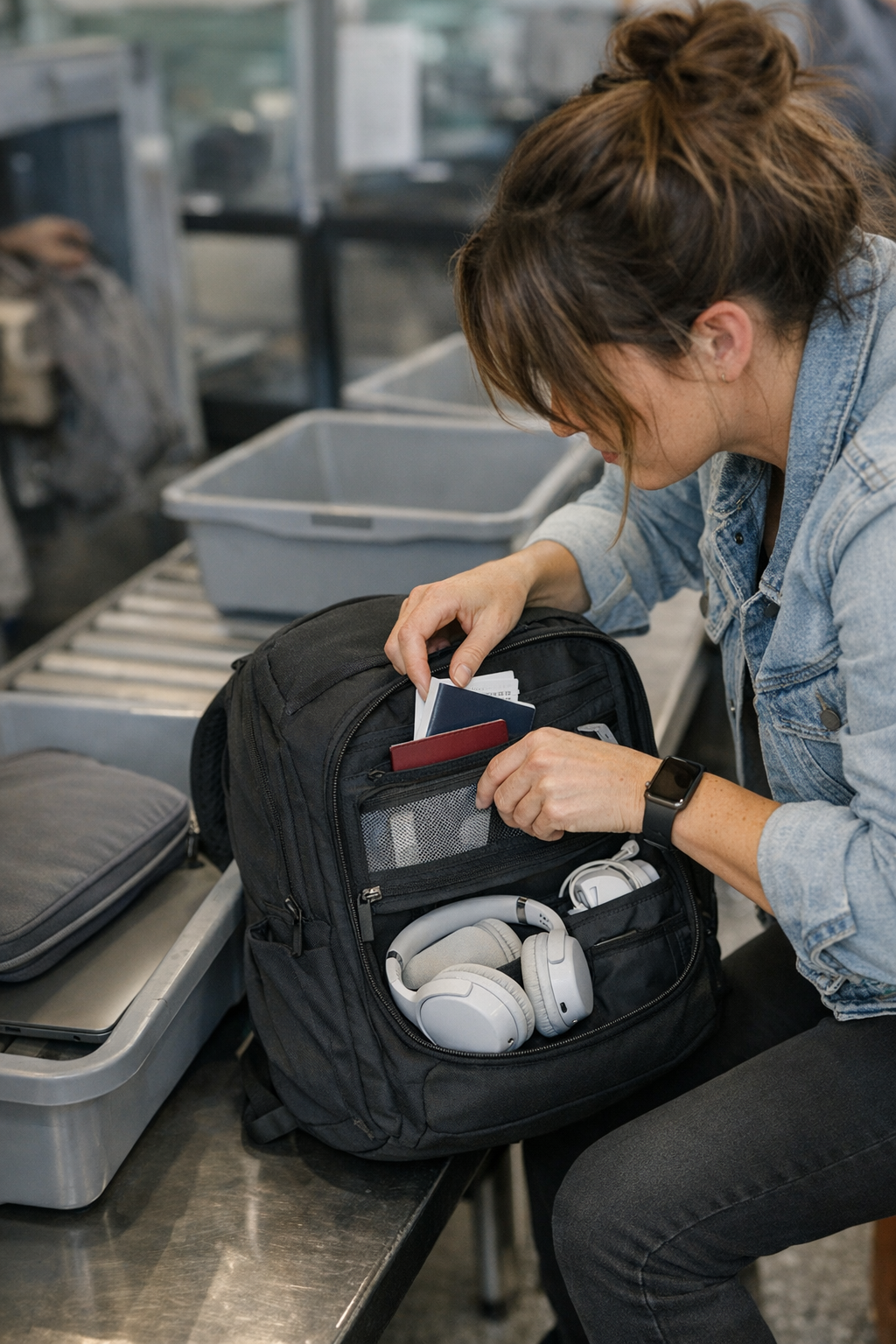
One small shift changed everything. Instead of scattering essentials between multiple zip pockets, I started moving all quick-reach items—documents, headphones, charger—into the outer section that opens fastest. A clear divider keeps it all immediately visible. Now, even when tossed in an overhead bin or squeezed between seats, my hand goes straight to the right place without hesitation.
That’s what kept coming back: not perfect order, but the ability to move without overthinking every reach. Most bags look sorted; very few let you move freely.
Security Lines and the Cost of Missed Structure
If a carry-on’s order doesn’t show up in pressure moments, it’s just for show. Security lines exposed this clearly. Juggling trays—laptop here, liquids there, cords coiled underneath—I found the tightly packed bag working against me. More unzips, more fumbling, while the line inches forward and someone accidentally nudges something out of place.
Repeated travel showed that misplaced divisions and nested pouches multiply the hassle: one pocket blocks another, repacking takes longer, and every hesitation drags out the walk from curb to gate to seat. It becomes clear how much easier it feels when your most-used items sit clear and alone, ready for a one-hand grab.
Results didn’t come instantly, but after enough trips, I saw the truth: calm doesn’t come from more tidiness, but from structure that lets you move smoothly without second guessing.
If you’re curious how these small changes can improve your own carry-on routine, you might find a few ideas here: http://www.carryonsupply.myshopify.com