The Quiet Relief of Empty Spaces on a Tool Wall
Leaving intentional empty spaces between pegboard hooks improves tool access, prevents visual overload, and keeps resets effortless during repeated use.
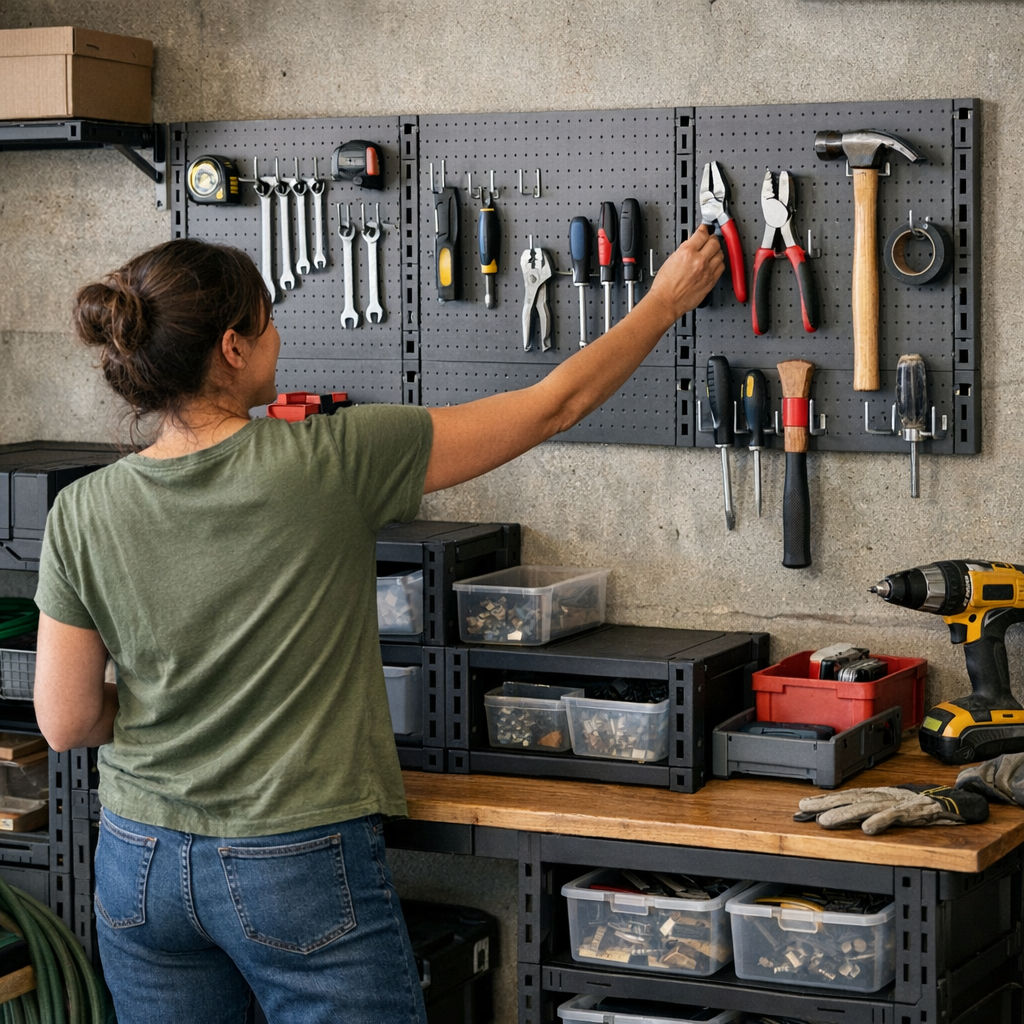
It’s funny how absence catches our attention more than presence. When a tool is missing from its spot in a modular storage setup, it quickly becomes noticeable, while those always in place fade into the background. I didn’t pay much attention to how I organized my pegboard until I kept searching for the same wrench, again and again.
The appeal of a fully filled wall-mounted system is hard to resist. Every hook taken, every space covered—a kind of order that feels complete. But as I added more tools to my workshop pegboard, a new kind of mess started to emerge. It wasn’t obvious at first.
But it was there. A quiet frustration creeping in.
The Trouble With Being Too Complete
At first glance, a packed pegboard feels like a victory over clutter. Each tool slotted in a custom spot, every inch of wall used. But after a few real work sessions, problems show up. Returning a screwdriver becomes tricky, the handle twisting to fit between crowded hooks. Wrenches blur into each other, making it harder to find the right one. You hesitate, searching. Eventually, instead of returning tools properly, they start piling up on the nearest shelf—overflowing your floor-based storage.
You don’t notice the change immediately.
But you feel it.
Crowding tools doesn’t just hide what’s missing—it encourages a slow drift. Each return gets less precise. The once sharp, gridded wall becomes a blur of shapes and misplaced handles.
Letting Space Do Its Work
There’s a kind of calm in an empty peg, a clean spot of wall between daily tools. One evening, I started removing every third item, adjusting hooks until the gaps were wide enough to slip a finger through. At first, it felt wrong—as if I was wasting space in my carefully planned system.
But something shifted. Each tool now had a clear home. Returning them felt natural, almost automatic. If a tool was missing, the empty peg quietly called attention. Mistaken returns lessened. The chaotic piles on the shelf disappeared.
A friend dropped by and noticed, saying, “It looks like you actually use this.” Not tidy, but clear.
Sometimes less really is more. It sounds like a cliché until it sneaks up on you during a late-night fix or weekend repair.
Rethinking What Matters in a Workspace
I began to see my pegboard less as a space to cram and more as an invitation for flow. Gaps let the wall breathe. Returning a tool wasn’t a fussy chore; it was a moment of order restored without effort or second-guessing. The pegboard became more than display—it was memory, feedback, and rhythm.
Now, I notice empty spaces in other parts of my setup—a deliberately free corner of my desk, an open shelf in the closet. The emptiness isn’t wasted; it’s the shape of what might happen next.
It’s easy to overlook, but those open zones act as a guide. They help you find what you need and quietly alert you when something’s missing.
Clarity takes up space, and that space matters more than it seems—especially when you want your tools, and your thoughts, easy to retrieve.
These insights settled in one late afternoon, as I straightened up the garage and watched the sunlight fall on those empty pegs.