The Quiet Relief of Even Lighting in Everyday Rooms
Linear and panel ceiling lights reduce strain by evenly lighting desks and paths, preventing glare and lost items for smoother daily work.
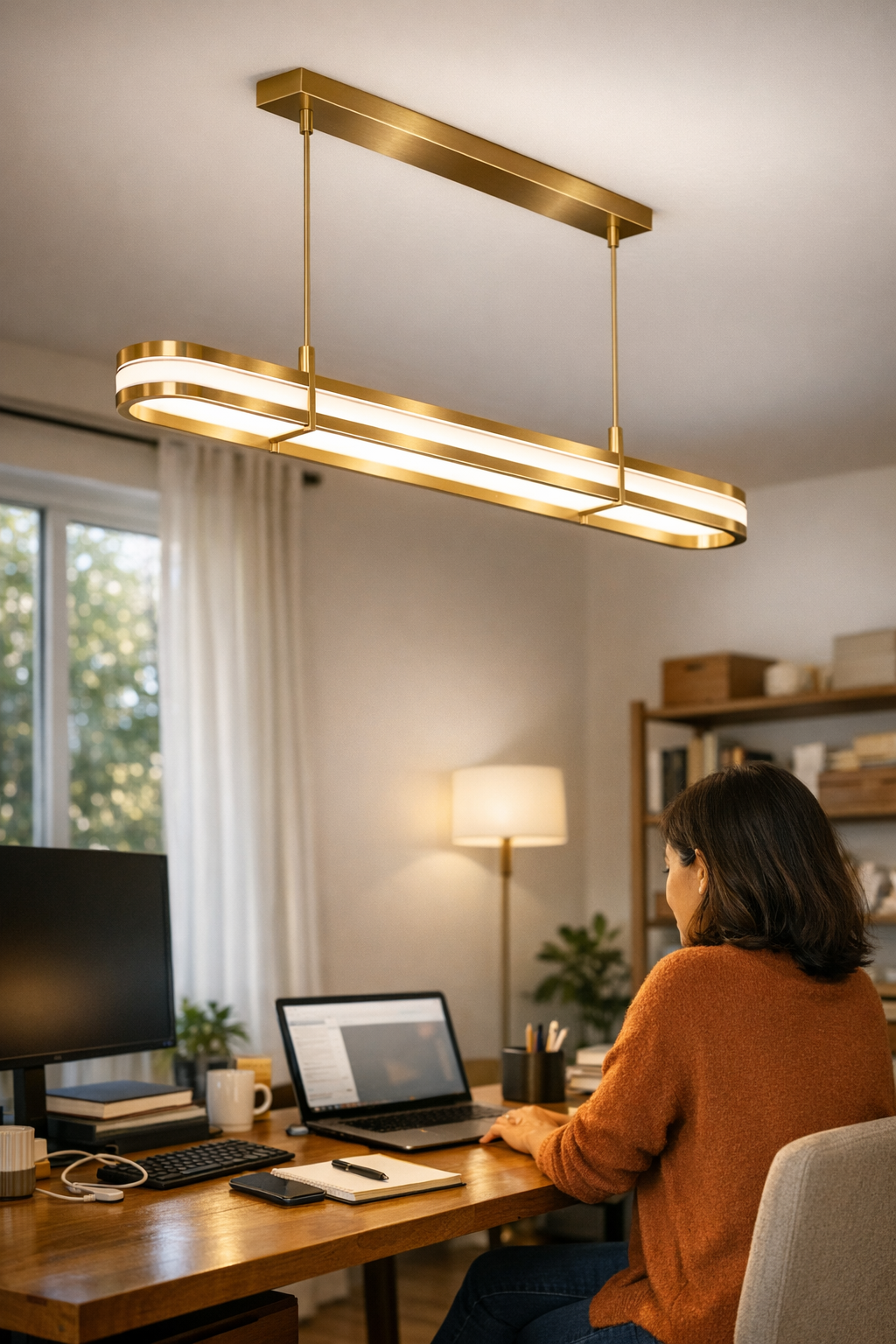
You notice it first as a low, insistent tension—all the small ways the room nudges you out of rhythm. It isn’t loud or dramatic. Sometimes it’s no more than a faint ache behind your eyes, or the way your arm reaches just a bit farther than expected, hunting for a cable that’s slipped into shadow. I spent months working under the same round, centered ceiling fixture before realizing the pattern: at the end of the day, I was always shifting, scanning, and pressing against the routines of shadow and glare.
Lighting was always there, quietly dictating pace and comfort—never quite resolved, even when surfaces looked tidy at first glance.
The Spaces Between Bright and Shadow
A single ceiling fixture casts light outward, but not everywhere you need it. There’s a familiarity to this: clean desk lines, yet cables fade into the floor’s edge, and glare creeps over the monitor by afternoon.
You don’t notice it immediately.
But you feel it.
Crossing from desk to shelf, the contrast in brightness seems trivial at first. The real story is told in the subtle pauses—your eyes squinting toward a dark corner or your hand fumbling along a shadowed tabletop for a missing pen. Even in what feels like a “well-lit” room, movement isn’t seamless. There’s always a pocket of dimness, a line of reflection glare, or a repeated hesitation.
What Happened When the Light Changed
When I swapped that center fixture for a slim linear LED panel placed directly over my main work path, things shifted—not all at once, but in slow, tangible ways.
The floor by the cables stayed visible, even in the evening. Books and headphones no longer disappeared into the periphery. I stopped nudging my chair to dodge overhead hotspots or retracing steps to find cords.
It’s not a dramatic reveal. It’s a series of small moments that don’t trip you up.
The part I kept coming back to is this: the difference wasn’t just more light, but where the light lived in the room, how it followed the things I actually used. Running the panel in line with a main work area made the space less demanding and full of minor workarounds.
Living with Smoother Coverage
With light tracing the desk instead of the ceiling centerline, my routine shifted from constant micro-adjustments to a kind of easy overlook. Everything became simpler to spot, and I stopped bracing for stray reflections or the edge where dropped pens vanished.
Even so, corners remained where the panel’s wash couldn’t reach—near bookshelves or under low ledges. No setup is ever perfect. Sometimes, the best solution comes from layering: under-shelf LED strips for spots where the panel falls short, or a task lamp angled just right.
It turns out the absence of constant adjusting fades into the background. You only notice again when the light falls short and little interruptions sneak back in.
If you want to explore how much light can subtly change a workspace, the quiet differences start to add up here: LightSupport.