The Quiet Rhythm of a Well-Designed Carry-On
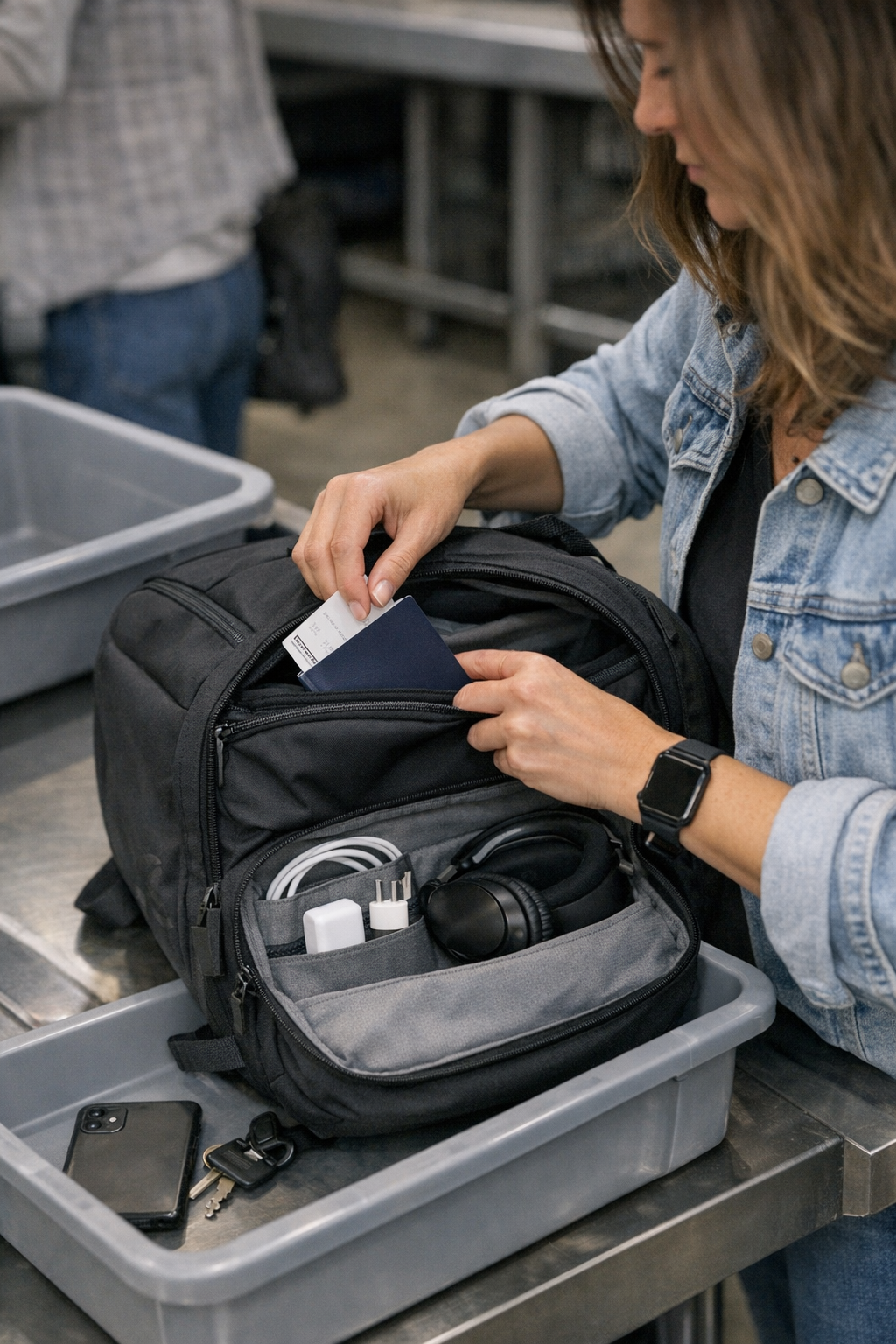
Frequent flyers’ carry-on layouts prioritize upright access, external pockets, and separation to reduce delays in repeated travel use.
You can miss it at first—the quiet feeling that something about your carry-on is slowing you down. Initially, the bag looks cleverly organized: zipper tabs neatly aligned, pouches nested, cords tucked away. It even feels satisfying to close. But after a few real trips—the third or fourth pull at the gate, the moment in a narrow aisle when you need just one item—you notice the rhythm is off. The bag looks fine standing still, but moving with it feels slower and more cumbersome than it should.
Where Order Breaks Down
There’s a difference between a bag that looks controlled at rest and one that stays easy to access and move with. You notice it after a few transitions: the clean mesh pockets, the perfectly packed organizers—they promise tidiness, but that promise can unravel with repeated use. It’s the part that keeps catching your attention.
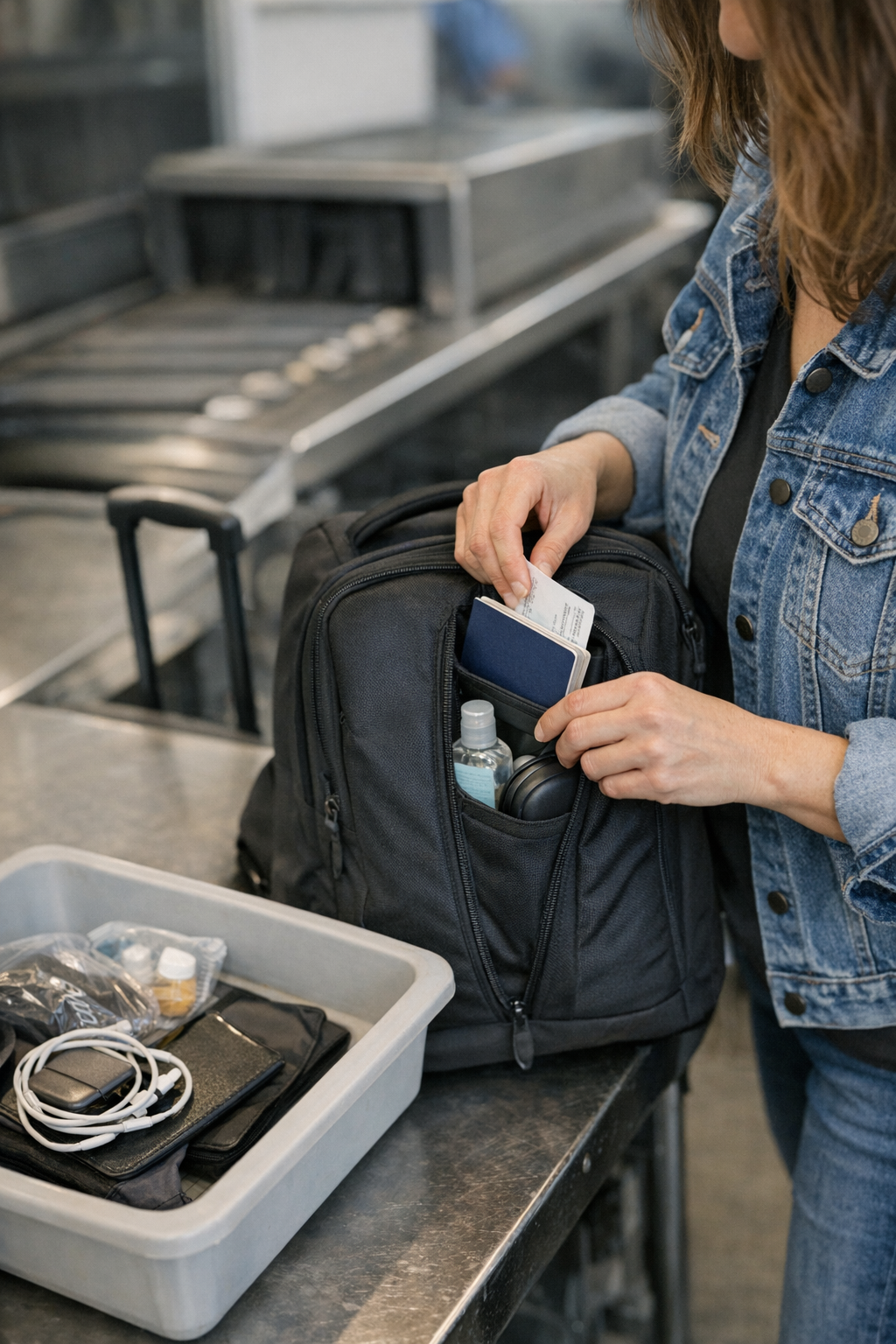
Reaching for a passport becomes a minor dig; a charger gets snagged on headphones. Those few seconds pull focus—and frustration—away from the flow. It’s not about big mistakes but those slow leaks of time, the small pauses repeating at every security checkpoint or seat change. The pattern shows up again and again: what seemed neat and organized before takeoff starts to unravel in the messiness of actual travel.
The Real Test: Access Under Pressure
Everything shifts when airport tempo picks up. A tight layover or the shuffle in a boarding line sharpens the bag’s flaws. An external pocket designed to open vertically, grabbed in one smooth move, makes a big difference. The first time it worked smoothly, it didn’t stand out—but as the trip goes on, the advantage becomes clear. No double unlocking, no cable jockeying, no repacking on a cramped tray.
What looked “organized” before often feels overstuffed in use. Layouts with too many layered internal sections slow you down, even if they photograph well. A visible pocket—one that doesn’t require thinking—quietly removes friction. That repetition—pick up, pull out, slot back in, move on—brings an almost relieving rhythm to travel.
Friction Adds Up
Over many trips, you realize what works consistently. A pouch that opens easily each time, without crowding or extra hands, sticks in memory. Symmetry in packing feels less important than knowing exactly where things go—especially while moving.
The delays add up: pockets that force awkward dives, items that must be laid out or repacked after each use, bags that don’t keep pace with your movement. Day-of-travel energy is limited. Finding ways for your carry-on—its travel pouches, tech organizers, document holders, and quick-access sections—to keep up rather than just sit packed gradually changes how the whole movement feels.
If you want a place to see some of these ideas in context, you can wander through CarryOnSupply here.