The Quiet Rhythm That Calms Our Restless Dogs
A predictable order—feeding, immediate cleanup, then rest—anchors daily dog routines and limits friction, easing restlessness and transitions for dogs.
I started noticing it right after breakfast one week—Ruby’s odd little hover, somewhere between the kitchen and living room, just after she finished her food. At first, it felt like an ordinary pause—dogs linger sometimes on purpose. But the more mornings passed, the clearer it became: something in those post-meal minutes kept stalling both of us. Not big drama, just a dragged-out sliver of the day that never quite reset and often stretched longer than it needed to.
The pattern showed up most clearly on busy mornings, when kitchen routines overlapped and my focus slipped. Her bowl might sit near the bedroom door, or I’d have to step awkwardly around it to get to the coffee maker. Ruby drifted from the empty bowl to her rest mat, then circled back. The space at my feet started to feel crowded, even though the kitchen itself looked tidy.
The Quiet Weight of a Bowl in the Wrong Place
You notice it after a few mornings: the half-wait, the way your own feet hesitate near the doorway, and the dog staying half-committed to resting. There’s a numbing ordinariness to it—a dog bowl left on the floor, leftovers still in sight, and a dog not quite convinced that mealtime is over.
At first, I didn’t link the leftover bowl to the slower mood. The old habit of “I’ll tidy up in a minute” felt harmless, common enough that I never questioned it. But that was exactly what kept creeping back. Ruby wouldn’t settle in her rest corner and instead kept watching the kitchen, half-expecting the next step that never came.
The difference showed up in small, concrete ways: a delayed stretch on her bed, more standing at the “wait” line across the tile, a few loops under the table before settling down. On rushed mornings, those small delays layered into a background static that nudged the whole morning off balance.
A Routine That Only Looks Finished
When I finally started clearing Ruby’s bowl right after her last bite, it felt at first like an extra step—almost unnecessary. The kitchen always looked “good enough.” But I noticed her sliding into her safe spot on the mat with less circling. The space near the door felt clearer too, as if we’d both been waiting for a single unspoken cue.
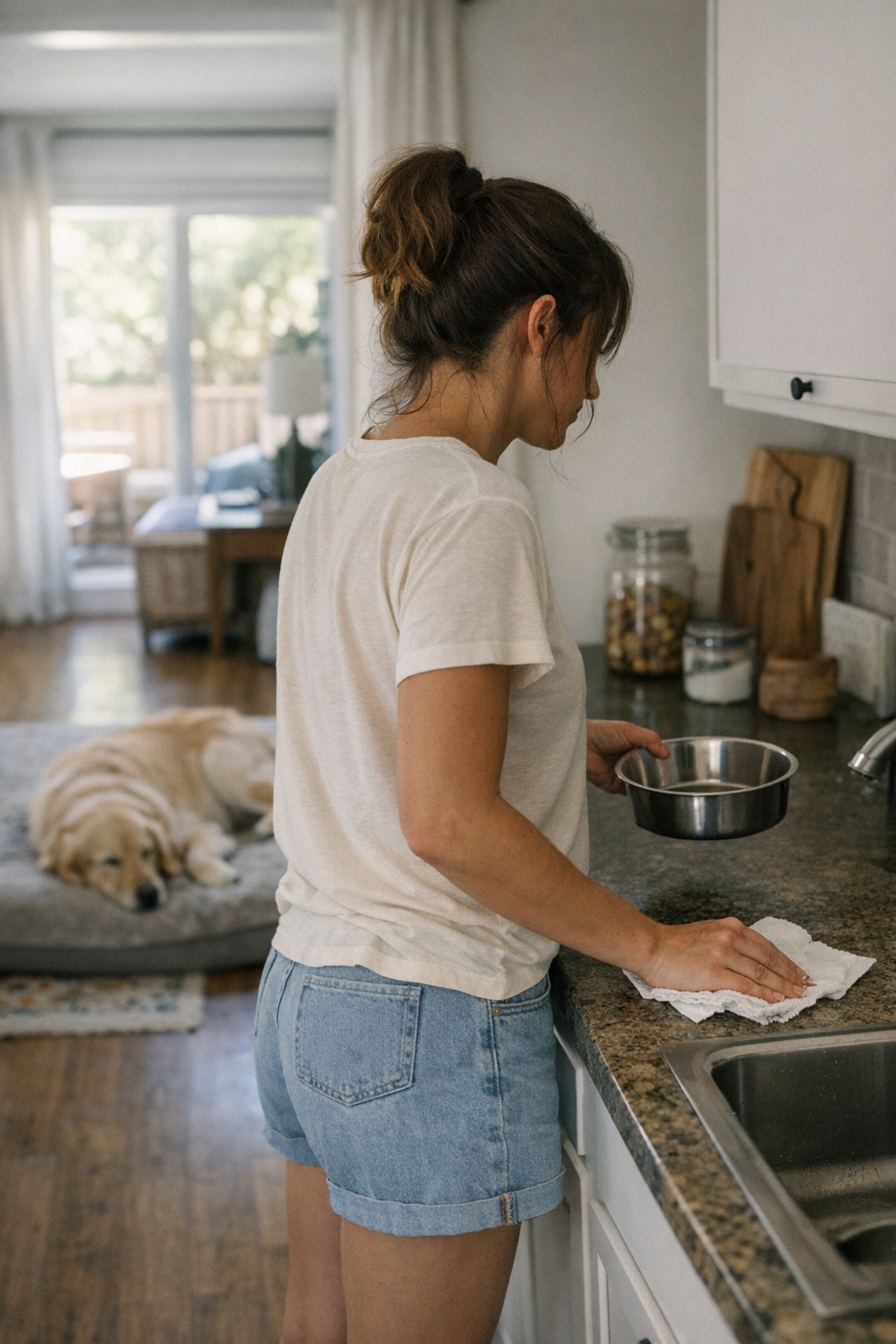
There’s a difference between a tidy-looking kitchen and one where the day keeps moving. Clearing the bowl—even just moving it to the counter—seemed to signal that we could both move on. The cleanup was quick: a wipe, a rinse, nothing elaborate. But it cut the holdover energy in the air. Ruby stopped pausing in doorways or doubling back for second rounds of kitchen-watch. She simply blinked at me from her bed, like she’d been let back into her routine.
This wasn’t about strict discipline or perfect order. The comfort landed somewhere in the quiet, predictable cue. The pause I used to feel wasn’t rest—it was leftover uncertainty in the space, for both of us.
Setting the Next Anchor, Without Chasing
It took a while to notice how gently that reset worked—how it was less about strict order and more about signaling that the next part of the day could begin. Most mornings still have the familiar sound: bowl to counter, coffee mug shuffled, one paper towel sweep. Ruby’s rest corner suddenly feels like a spot that’s really used, not just staged.
Nothing dramatic happens. The morning doesn’t become a story. But the room’s movement stops snagging on the same old edge. The ordinary friction softens, and the return to routine becomes what it was meant to be—a background rhythm that works, quietly and without fuss.
If you want to see what I mean, you can find a few of those everyday tools here: http://www.dogpile.myshopify.com