The Quiet Risk of Shadows on Familiar Stairs
Stairwells that look bright can still hide hazards; adding wall or step lighting makes edges visible and trips safer, reducing risks.
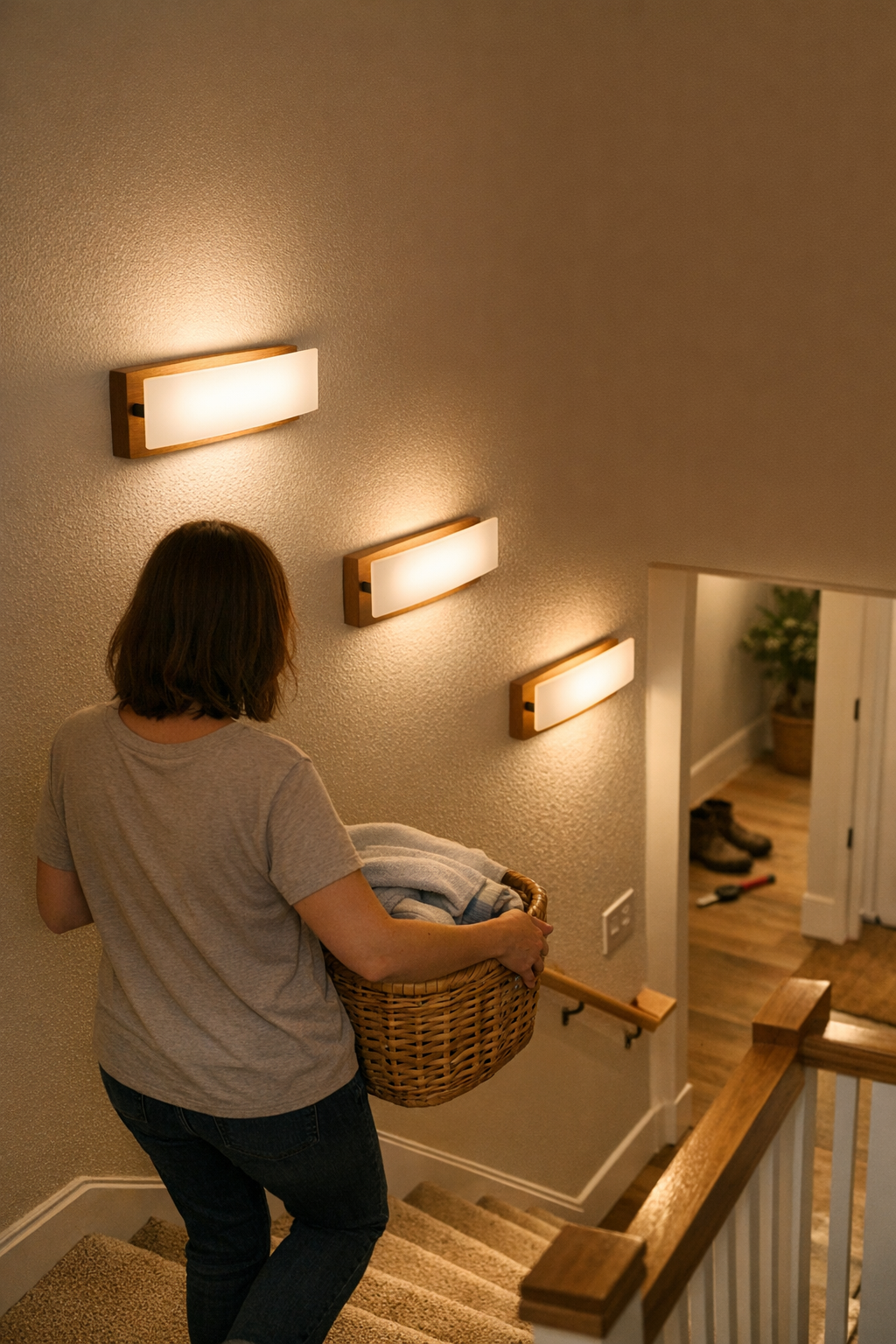
It’s surprisingly easy to trust a stairwell just because the ceiling fixture glows overhead. For a while, I did. The stairs always looked well-lit in the middle of the day—a broad wash of brightness from a flush-mount light, like a promise that nothing could go wrong. But the real story unfolded later, when arms were full and attention was frayed. Shadows gathered at the landings, a hesitation crept in at the top step, and there was a silent worry about what might be waiting just below your foot.
You only truly notice after living with it for a while—that the brightest ceiling light isn’t always the most reliable guide, especially on stairs. Some edges slip into gray even at noon; a single stray tool lost in those shadows can send your heart into your throat. These moments add up, quietly. One pause after another.
More Light, Less Certainty
A wide glow from above, like a flush or panel ceiling light, offers a certain comfort. It fills the space, bathing walls and steps in soft yellow. But comfort can be misleading. Over time, the trouble always surfaced where that ceiling fixture’s light couldn’t reach. Sharp corners momentarily vanished, and the top step blended with the landing.
You don’t notice it at first, but you feel it—especially when carrying a laundry basket or fumbling for keys in low light. That uneasy pause before the first step, the subtle way your hand brushes the wall for balance—these dim zones create a persistent friction, a series of almost-misses that only become clear after catching your foot on an unexpected shape.
Where the Shadows Win
At first, I blamed tiredness or distraction. But the pattern became clear: the stair’s shadows—the places even the brightest ceiling fixture failed to reach—were the problem. Corners and edges, including the frequently used top step, swallowed anything left behind once daylight faded. One night, a screwdriver lost in the gloom nearly caused a sprained ankle.
What surprised me was how much the feeling of safety depended on small lighting details, not just overall brightness. A broad panel or flush-mount fixture would light the walls and most steps, but it never fully defined the edge of each tread. Eventually, it wasn’t about darkness at all—it was about the pockets where something might be hidden.
Changing How the Space Feels
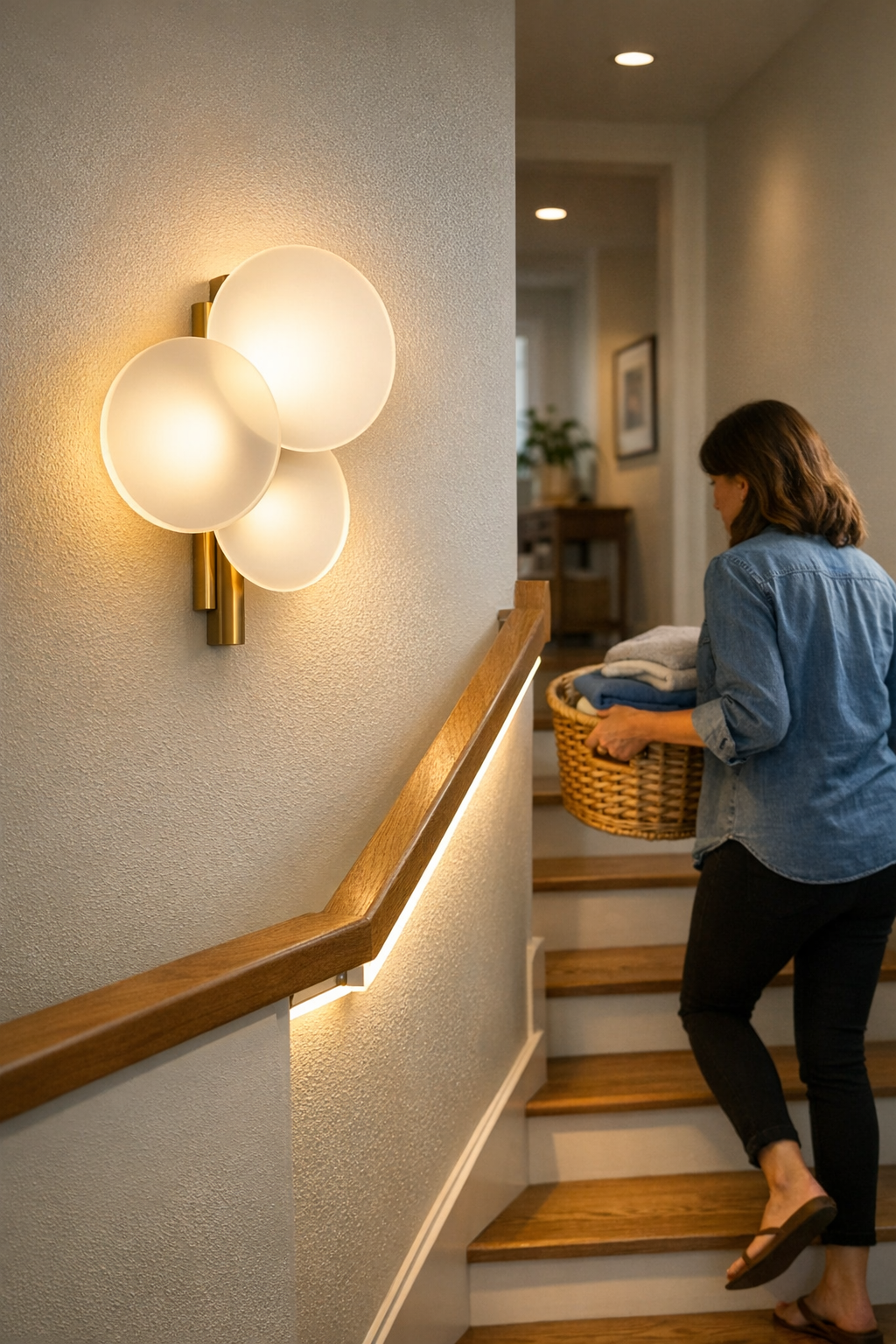
In the end, I added a pair of shielded wall sconces—hardwired wall lights just enough to spill a line of clarity along each step’s edge. The difference was subtle but meaningful: every tread became clearly visible, even late at night; no step disappeared into shadow. It wasn’t about aesthetics or brightness but reliability. The stairs stopped whispering warnings.
Small adjustments like these linger at the margins—less tension on every trip, less guesswork at every landing. The space felt more honest and dependable. Sometimes, the key to effective stairway lighting has little to do with the room’s brightest fixture.
There are more thoughts like this waiting quietly over at LightHelper.