The Quiet Shift of a Loose Light Fixture at Home
Loose or poorly tightened junction box screws can cause fixture flicker, shadows, and safety risks, especially in high-traffic areas; regular checks help prevent this.
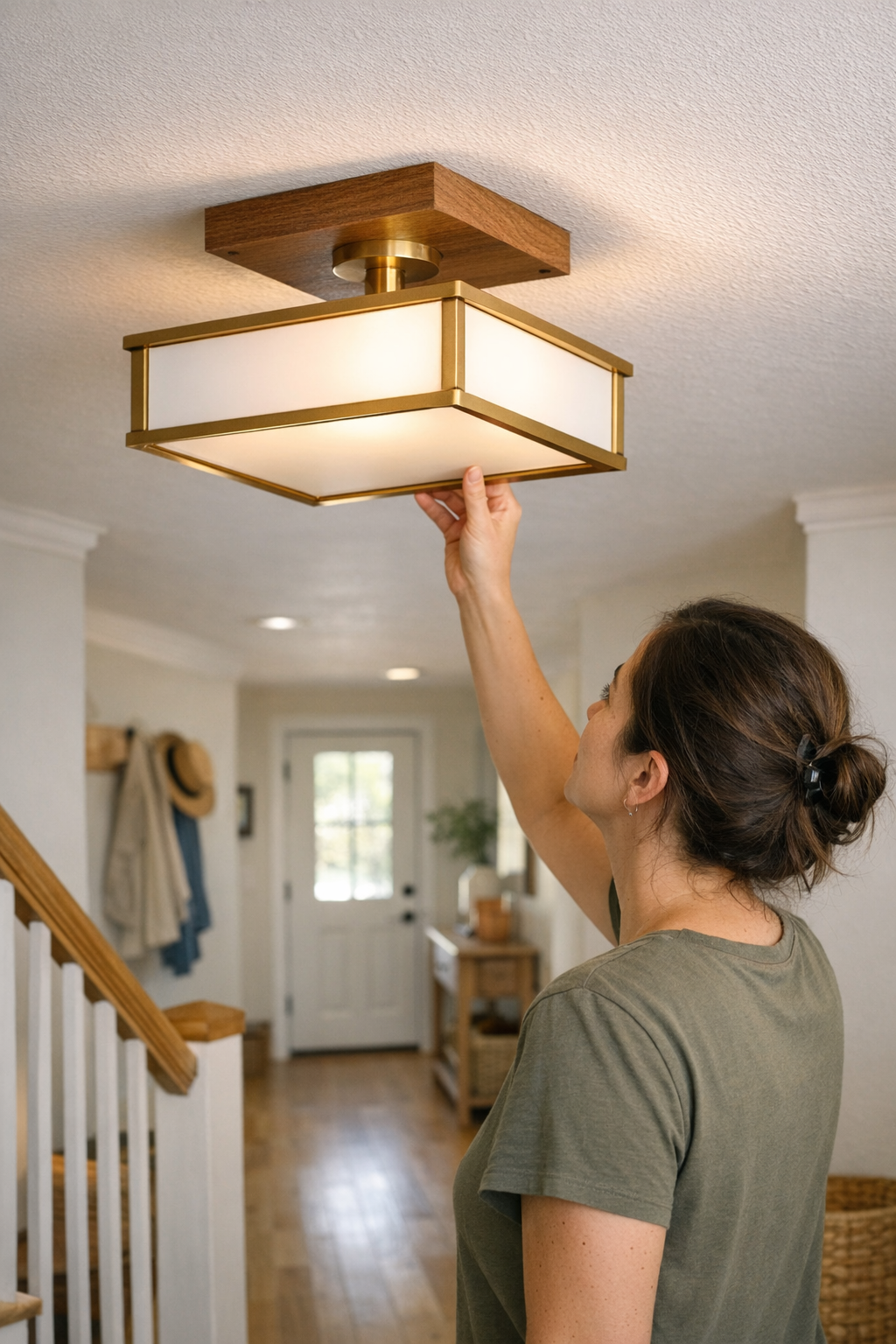
There’s a subtle satisfaction in walking through a well-lit hallway or switching on a bathroom sconce when you’re half-awake in the morning. For a while, you barely register the ceiling fixture above the laundry room door or the way the entryway light always comes on without a hitch—flush mounts, semi-flush mounts, wall sconces, or vanity lights in their usual places, steady and reliable.
But sometimes, there’s a day—it’s almost always during a routine, reaching for a switch with your hands full or brushing past on your way to make coffee—when you notice something off. Maybe the light isn’t casting quite the same steady glow in the hallway, or you hear a faint rattle where last week there was none. The smallest things have a way of becoming all you notice after that.
When a Light Starts to Drift
You don’t notice it immediately.
The first time a fixture shifts, it barely registers—a slight lean in the vanity light or the wall sconce above the stairs wobbling after someone thuds the bathroom door shut below.
But eventually, these small movements become persistent enough to linger. A hallway feels strangely off-center. The shadow on the third stair looks deeper and sharper than it was at install. The longer you live with indoor lighting—hallway and corridor lighting, stairway lighting, or bathroom-rated fixtures—the more you realize it’s often a single, nearly invisible detail behind it: the junction box screw.
It doesn’t announce its failure. It just quietly lets the fixture slip, bit by bit, until the very texture of the room changes.
The Subtle Work of Everyday Vibration
There’s a rhythm to repeated movement through a house. Feet on stairs, the slam of a bathroom door after a shower, the ripple of cleaning a mirror over the sink. These vibrations, subtle as they are, seem like nothing. Yet every step and every door swing puts stress on the screws holding up those quiet, working lights—linear and panel ceiling lights, under-cabinet lighting, hardwired wall lights, or fixed task lighting.
Not tightening a junction box screw quite enough (or tightening one too far in a rushed moment) never feels like the cause of uneven illumination or increased glare. But over days or weeks, you begin to notice: the entry fixture picks up a faint shimmer after a draft moves through, shadows change at the edge of the hallway, a flush mount in the laundry—once perfectly steady—now catches the eye for the wrong reasons.
You don’t realize how much depends on something that rarely comes up in conversation.
A Simple Check, and the Room Feels Whole Again
After chasing odd flicker or crooked shadows, I found stopping once every few weeks to check if a fixture still sits firm against its base changes more than just the view. It makes the whole space feel less vulnerable to those slow, distracting shifts in stair-turn visibility, mirror balance, and task-surface clarity that lighting once handled reliably.
There’s no grand routine—just a moment to see if the light rocks under gentle touch or if the screws feel finger-steady. One quiet habit brings the lighting back to predictable, keeping hallway shadows even, cabinet-run lighting steady, and work surfaces clear in ways that new bulbs alone never could.
It’s still strange how something so overlooked can carry so much of a room’s sense of reliability—a small reminder each time the fixture stays still of why the space keeps working the way it needs to.
If you want to keep thinking about the little things that make lighting quietly reliable, you might wander through LightHelper.