The Quiet Shift That Changes Everyday Entryways
Quality rollers on mobile storage ensure smooth, quiet movement and prevent bottlenecks and scuffing during repeated daily use.
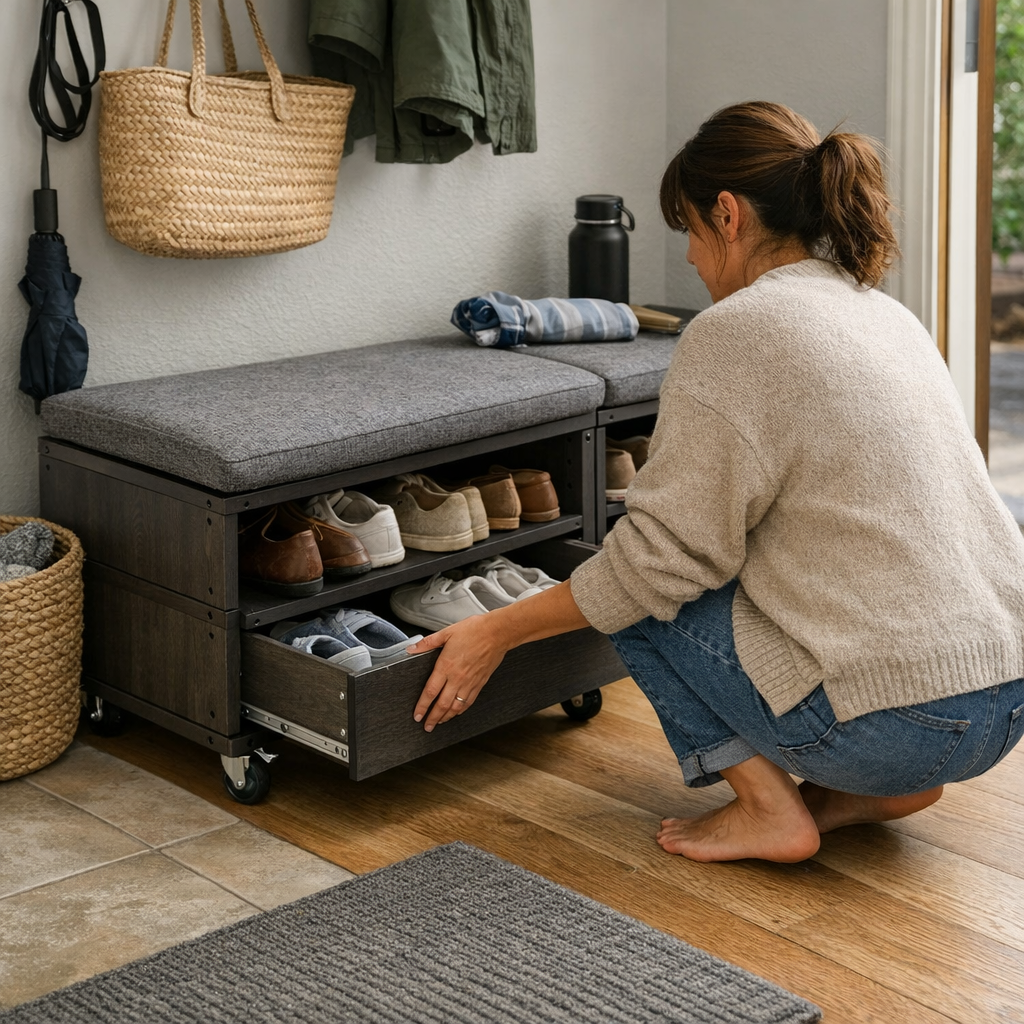
Sometimes I notice how the entryway changes depending on what moves easily and what drags, but it rarely feels urgent until it starts slowing you down. When the days get dense and the in-and-out traffic blends together—shoes tumbling askew, bags clumping by the bench, a jacket or umbrella hanging just a little out of reach—the storage pieces near the door become more important than they first seem. Mobile storage and its details—the feel of the wheels, the way a unit shifts or resists—transform those stop-and-go moments that happen every day, right where the house begins.
Thresholds as Living Places
You don’t notice it immediately. One day the cabinet rolls easily, the next it nudges up against a threshold or lurches when you least expect it. In my space, the drop zone isn’t just a static spot for shoes and rain boots; it changes depending on who just arrived or who’s running late.
An entry bench looks orderly when it’s freshly aligned, but the real life of the space shows up in the scrapes, the marks on the floor, the bench that needs a double push to clear a rug edge. After a while, I found myself nudging things almost by habit, even planning departures around which side of storage was more blocked. Between rows of shoes drifting along the floor and bags balancing on corners, it’s the small friction—sometimes literally the wheels on tile—that builds up and slows things down.
Where Mobility Makes a Difference
There was a moment, adjusting one shoe rack for the third time that week, when I realized the whole entry was held together by how well the storage adapted. The best setups were ones I could shift with one hand, even half-distracted, and they kept their shape without scraping the floor or leaving a trail. You feel it most when you need to clean or when one more bag comes home than planned.
I didn’t think much of it until swapping out a set of rough, clattering casters for rollers that moved quietly over hardwood and up against a raised tile threshold. The flow changed—resetting the entry became background noise instead of a minor event. Items wandered less, and the clump near the door loosened. That was the part I kept coming back to: how smoother movement let the rest of the routine fall back into place.
The Small Cost of Friction
If a piece looks organized but resists every shift, the small hassle never disappears. It only builds as the floor scuffs, as the pathway narrows, as shoes and bags scatter into any open inch. There are solutions—sometimes just swapping the type of wheel, finding a better fit for the floor, or spending a moment making sure the movement feels right instead of rough.
Now I notice when things glide instead of drag, how that ease saves quiet seconds coming in or going out. Living in between in this way—between inside and outside—means trusting that what you use actually adapts with you, not just for you. These are changes you almost miss until the next time the threshold clears without a second thought.
It’s the kind of detail I keep returning to, and for anyone else circling the question, the collection here carries that same quietly practical feel: http://www.betweenry.myshopify.com