The Quiet Strength Behind a Well-Anchored Shelf
A securely anchored shelf proves valuable as heavy boxes are stacked and moved, preventing movement and improving workspace efficiency.
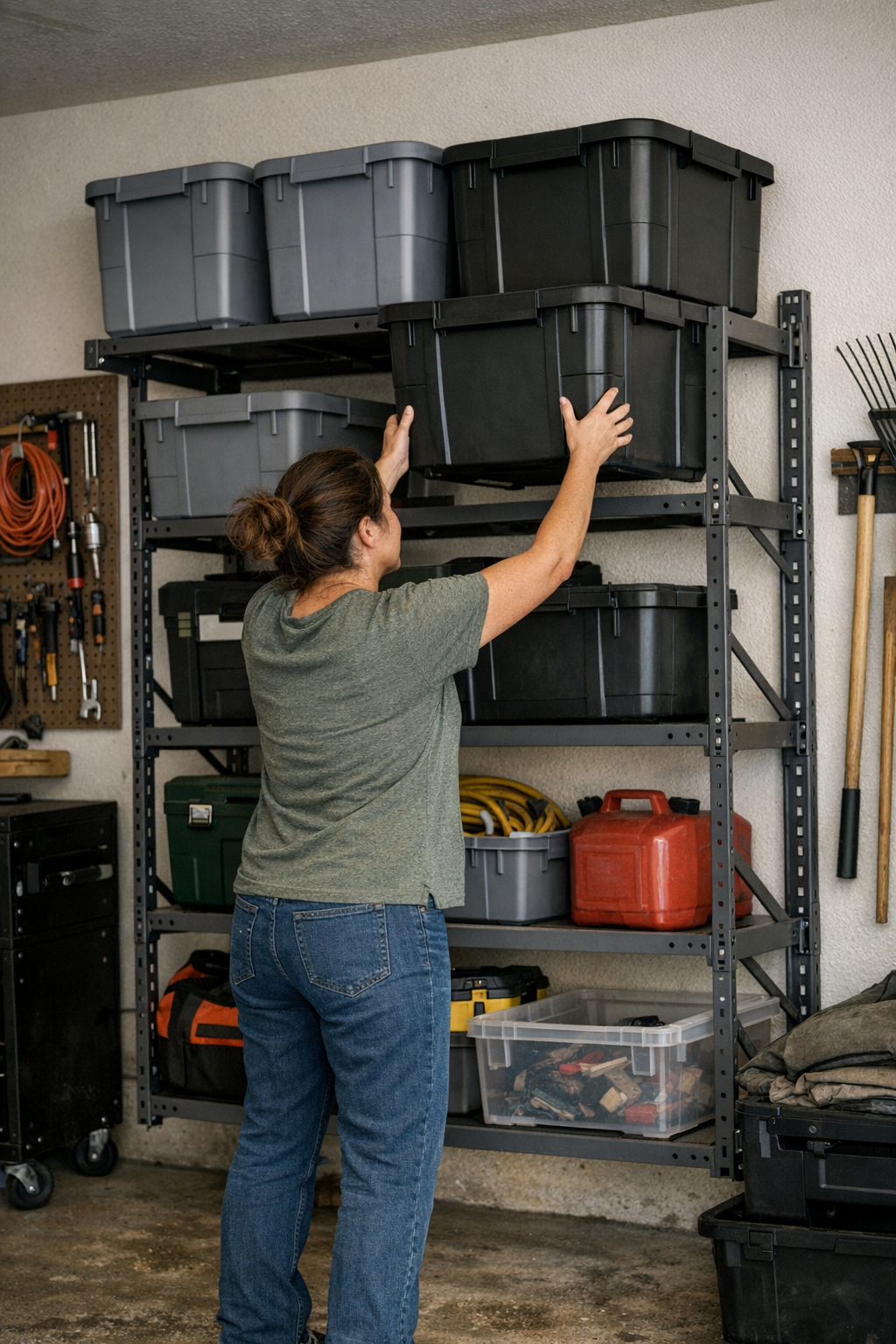
I never really paid much attention to the differences between shelving types—until something nearly fell in my garage setup.
When organizing a garage or workshop with modular storage or mobile units, the details can blur at first. Rows of shelves stand ready—wall-mounted or floor-based, sturdy-looking and prepared for years of stacking heavy tools and bins. But those differences—anchored or freestanding, rigid or just seemingly so—come into sharp focus the moment a heavy box goes up high and the system sways under the load.
You don’t notice it immediately.
But you feel it.
The Subtle Weight of Unsteady Storage
A well-organized wall of freestanding shelves offers a kind of quiet comfort. Every bin aligned, each tool in its place, easy to access during busy projects. But that order can vanish with a subtle shift—a shelf that bows under the weight, or tilts sideways when you place something heavy on the top tier. The movement is often too small to spot at first, but it’s there.
As the days go by, tension creeps in. The simple cycle of grabbing, returning, and stacking starts to reveal the cost of a less stable system. What felt solid when empty now demands small adjustments. Walkways get narrower as you brace the rack with your hip or step back carefully to avoid a lean; you slow down just enough, learning to work around the shelf rather than with it. Nothing dramatic, but these little shifts add friction.
How Small Adjustments Pile Up
By midweek, the storage landscape has changed in subtle ways. Each box you reposition on a flexing shelf creates micro-compromises: a lean here, a tilt there. Maybe you have to block off part of a walkway to steady a wobbling rack or navigate corners more cautiously. These aren’t big setbacks, but they accumulate quietly.
It’s easy to overlook during busy work. You might realize you’re bracing a stack with your knee or pausing before letting go of a heavy bin, wondering if it will tip. These aren’t quirks—they’re points of resistance. What should be a smooth routine becomes a cautious sequence of moves, each reach measured and slow.
Anchoring as an Act of Quiet Support
After several days of these minor adjustments, something finally clicked. One afternoon, a particularly heavy box on the top shelf began to tip as I reached out. Instinct took over, and I caught it just in time—but it left an impression. That day, I anchored the shelves directly into the wall studs with two sturdy brackets. It took half an hour.
The next time I stacked a heavy item on the top shelf, the unit didn’t budge. Not even a hint of sway. That small fix brought surprising clarity—less negotiating with each box, less hesitation. The storage system quietly supported my workflow, making even hurried motions feel secure and worry-free.
It’s a modest improvement, but it changed how the whole space felt: a little more ease, a little less distraction. That tiny adjustment echoed through daily habits, smoothing the flow of work.
Sometimes anchoring a shelf isn’t just about stabilizing the unit—it’s about freeing up mental space.
These reflections came as I reset the garage for another spring, tools in hand, dust on my jeans, realizing how much smoother a workspace can run with one gentle but firm shift.