The Quiet Struggle Behind Carry-On Organization
A carry-on can look organized but cause delays; frequent travelers place essentials in top-access zones to minimize friction and speed retrieval.
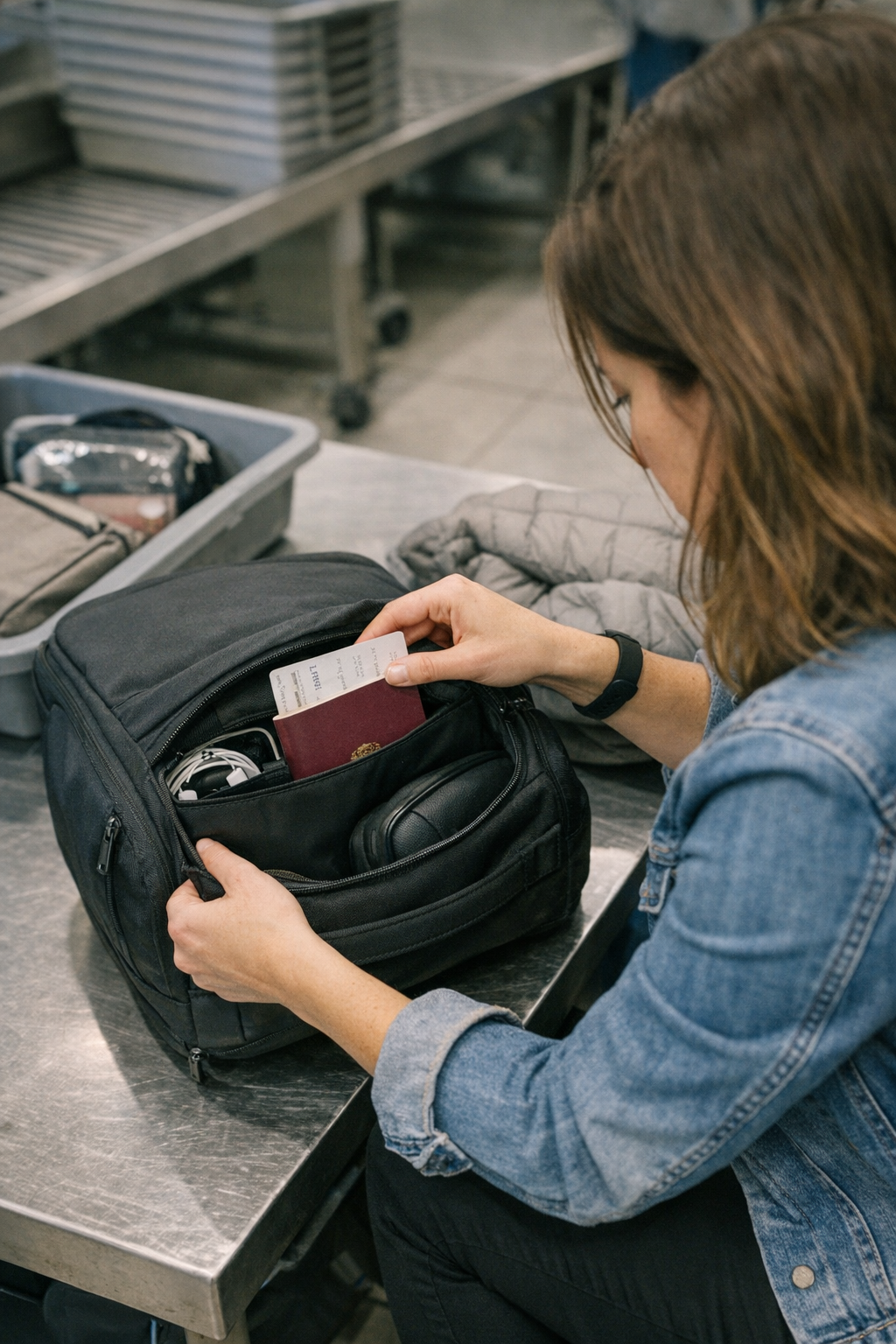
You notice it in those small, hurried moments—a hand searching for a passport as the security line coils up, or fumbling for wired earbuds before takeoff, the zip barely clearing on a crowded tray table. My bag looked organized once: neatly stacked pouches, zipped compartments, color-coded sleeves. It felt controlled at first, standing still at home. But in the churn of real travel—boarding, overhead bin lifts, crowded aisles—the difference between what looks ready and what actually is ready keeps showing up.
Order, after all, is easy to photograph. In motion, friction hides until it piles up: a charger sliding under a toiletry kit, the zipper on an inner pocket snagging as you reach for your passport, or a boarding pass slipping behind a stack of cords. Each move is just a little slower, heavier, more interruptive than it needs to be. That’s the part that kept coming back—and it never shows on the first pack. It builds as you repack on the hotel floor, or reposition your bag to free some trapped item yet again.
Where the Friction Actually Starts
I used to think an organized bag meant a smoother trip. All those nested sections gave off the right feeling at home. But add the pressure of a tight connection or the brisk airport rhythm where every movement counts, and the theory breaks down. The outer sleeve is tight. Three pouches inside one pocket blur together. Something always drifts to the wrong place—a passport buried beneath backup cables, a boarding pass lost between zipped folds.
You catch yourself fumbling, apologizing, blocking the line behind. The promise of a tidy setup starts to feel heavy. Repeat use exposes where things snag, where layers and overlaps add extra seconds, double-hand retrievals, or missing essentials. You start to crave something less clever—quietly ready, not perfectly arranged.
One Change That Kept Easing Every Move
There was a turning point, and it was smaller than I expected. Removing a mid-bag tech pouch—the one that always nested documents and cables—let breathing room return to the top compartment. Suddenly, my passport and ID had their own slip zone, easy to reach, never hidden behind another layer. No more stacking, no more zipping and unzipping. A wide pocket just inside the top rim became the home base for all essentials. One soft reach, and even in a rush, nothing was truly lost.
After a few travel loops, I stopped thinking about organization altogether. Movement felt lighter. The pause at the tray, the reach while standing mid-aisle, the scramble before boarding—everything reduced to a glance and a single reach, not an unpack-and-reshuffle. That was the relief: not perfect order, just a setup that didn’t demand attention every time I needed the basics.
Letting the Routine Lead
Some bags look calm when first zipped shut, but stay that way only in stillness. The real test comes with repeated transitions—seat changes, last-minute document grabs, crowded overhead bins. If you come back to the same friction each time, the bag isn’t working for the way you move. The right layout, it turns out, feels forgettable. Contained chaos is fine if nothing slows you down—if you don’t have to hunt while standing in line or shift your bag on a full plane. That’s what made the biggest difference: giving essentials their own runway, keeping urgent items unburied, and letting repetition find the spots that really work.
If you’re curious where I kept returning for better carry-on details, you can quietly find them here. You will receive a blog body draft.