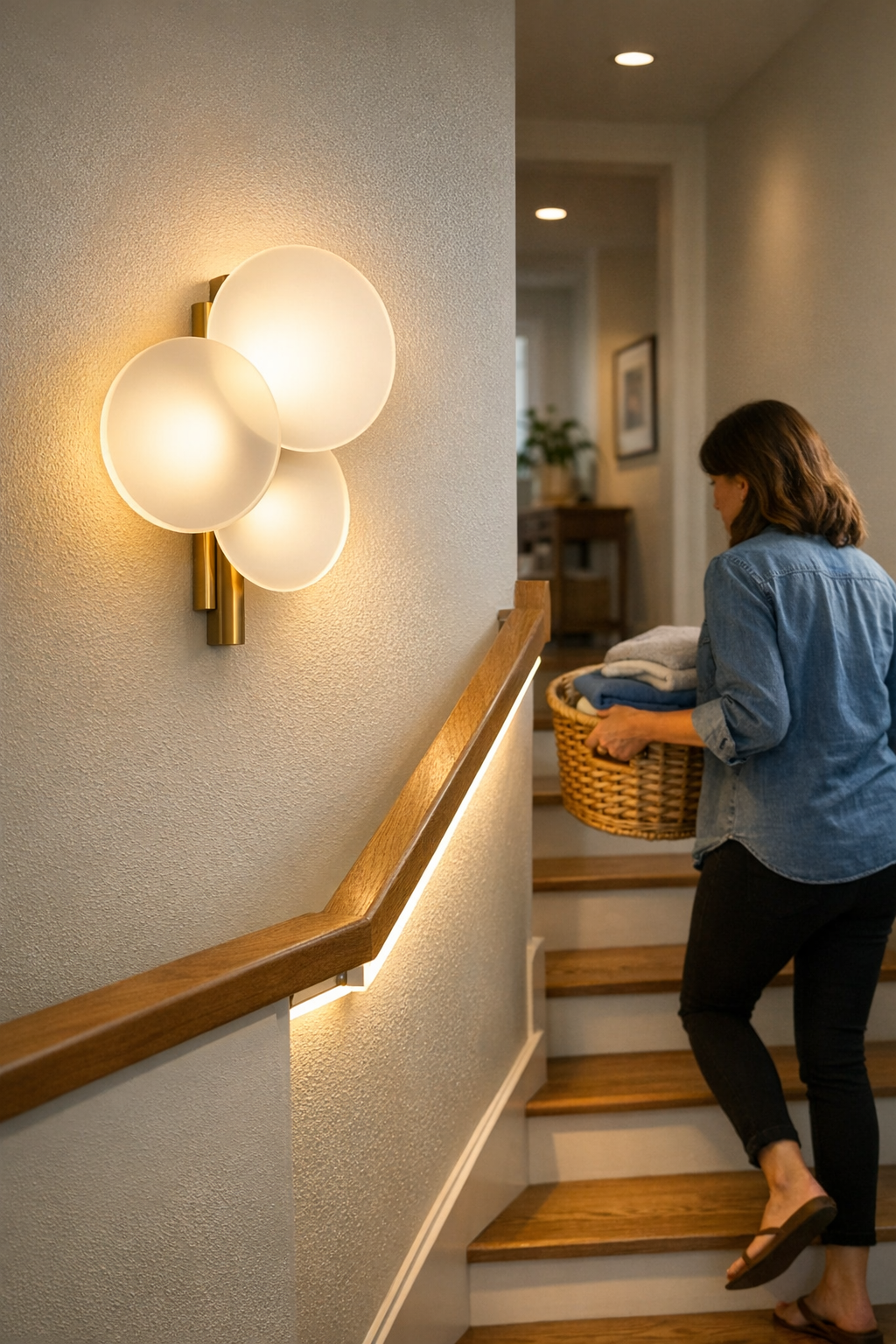
The Quiet Struggle Behind Clean Wall Lighting
“Untouched” wall lighting can cause sagging cables and loose plugs; minimal supports like slim brackets ensure lasting stability and usability.
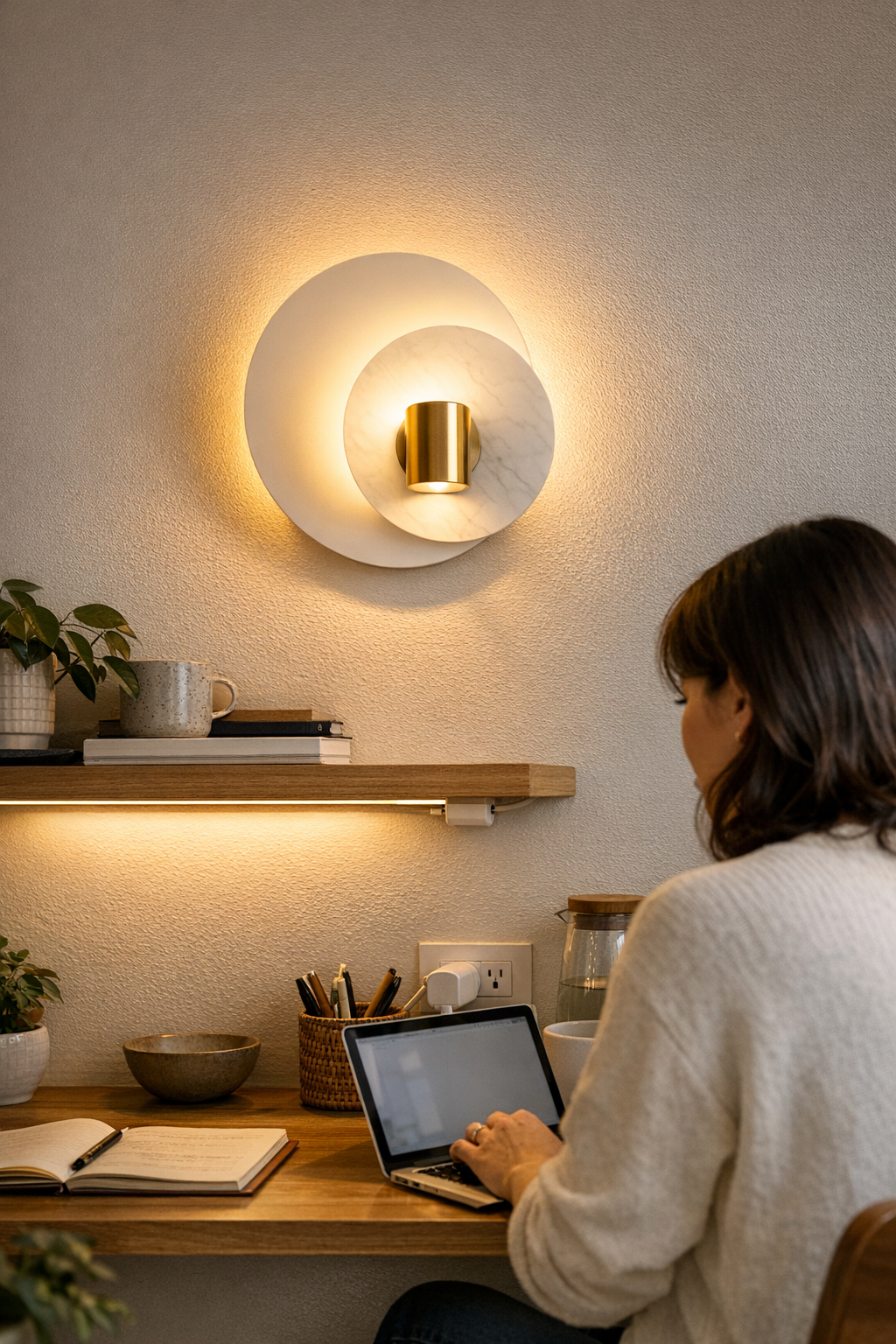
It’s strange how clean walls can play tricks on you. At first, there’s the quiet satisfaction of seeing a space look resolved: no screws, no hardware, just the glow of a light strip or a lamp near a desk, almost floating. The room feels a little lighter. Still, after a week or two, you start to notice something else moving.
Cables that used to run flush against the shelf edge begin to curl out, a plug shifts just enough to catch your attention under the table, or the end of a lighting strip sags by a fraction of an inch. At first it’s not a problem. You think it will settle itself. But with the regular rhythm of returning to the same chair, clearing the desk, or catching your foot on something under the table, the tidy look of “untouched” walls fades. The clean aesthetic holds, but behind every movement there’s now a small adjustment—pushing a cable back, resettling a plug, tucking an edge flat again. It becomes a background task you didn’t realize came with the deal.
When Surfaces Stay Untouched, But Support Goes Missing
Avoiding any kind of mark when installing lights—using adhesive mounts and plug-in desk lamps—can feel like progress. There’s a sense of care, or just a desire to keep things reversible and the walls free of visible hardware. The absence of brackets almost feels like advancement.
You don’t notice the downside immediately.
But you feel it.
On busy days—when chairs rotate at the kitchen table or a laptop is moved near a bracket-free shelf—the cables begin to drop noticeably. In the most-used areas, it's always the same spot that catches: where your hand flips a switch or a leg sweeps under the worktop. The light itself stays put, but the edges start to soften—not in glow, but in the slow presence of drifted cables, flexed adhesives, and that daily reach to push something back into place.
Still, those marks you thought you were avoiding trade places with a different kind of trail.
What Quietly Holds Everything Together
Most mornings, I found myself kneeling to nudge a cable back into line or pulling a lamp cord away from the floor sweep. That’s what I kept coming back to: how nearly invisible supports—a slim guide here, a discreet bracket there—make daily life smoother, even though they aren’t obvious.
The irony is that one barely-visible anchor—less than a finger’s width, fixed under the shelf—changed more than any untouched panel. Suddenly, the wire stayed where it belonged. The plug connection didn’t slip, and the light cast was exactly where it should be, night after night. There’s relief in not needing to adjust things every time the room is used. With bracket support mostly out of sight, the setup looked undisturbed, but the experience improved in a way you only notice living with it.
That quiet detail matters more over time, especially where people pass, settle, and unsettle the same area every day.
A Different Kind of Order
The longer a setup skips discreet support in favor of pristine walls, the more daily routine fills with small interferences—cables snagged by movement, plugs working loose, under-desk lines edging into view as the week goes on. It’s not dramatic, but it doesn’t go away.
There’s a refresh in finally allowing a small, structural support—just enough to keep wires from wandering while the surface stays clean above. You notice it most clearly when nothing needs adjusting after a busy evening at the table, or when the same desk light quietly casts exactly where you meant it to be.
Maybe in the end, what stays visible isn’t the only thing you learn to care about.
For anyone curious, the place I kept returning to is here: http://www.lightsupport.myshopify.com