The Quiet Struggle Behind Closed Cabinet Doors
Closing a cabinet hides clutter instantly, but lasting calm requires smart internal structure to prevent category drift and ease nighttime routines.
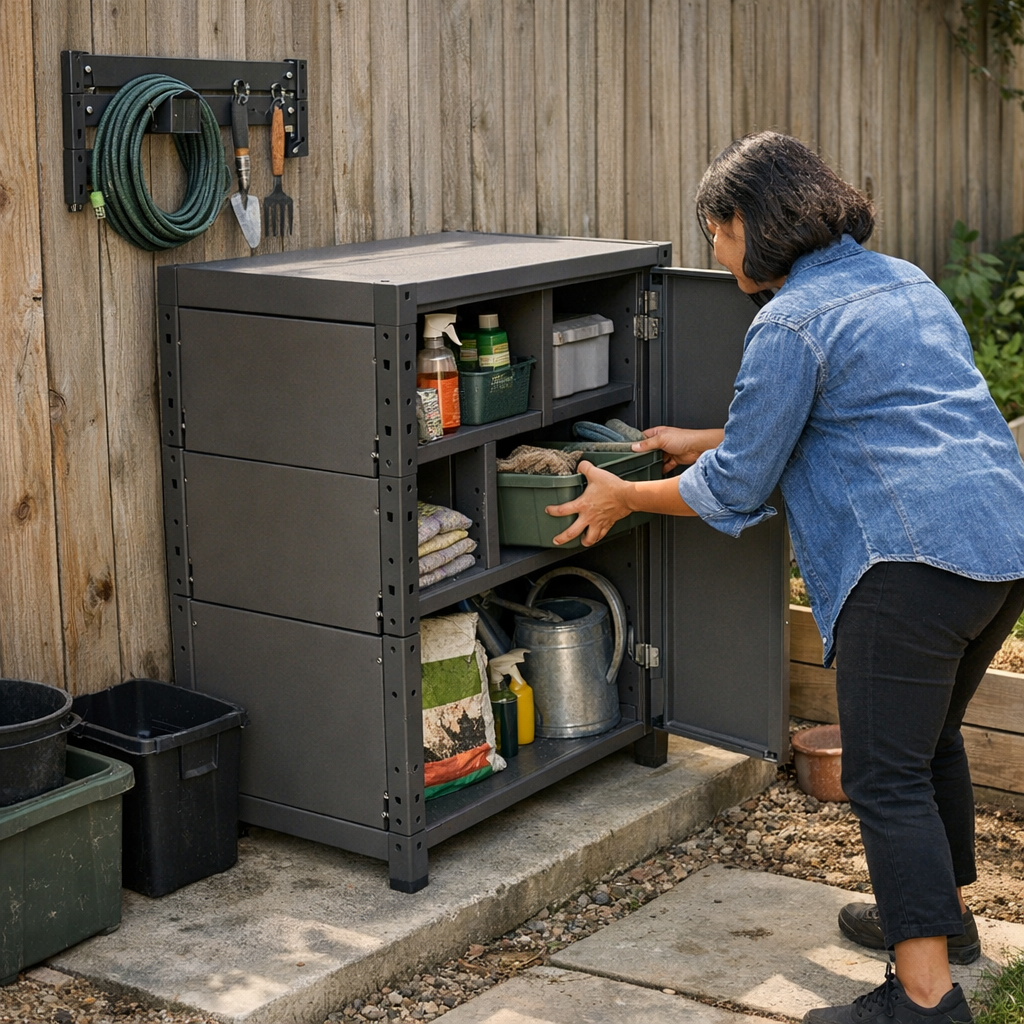
There’s a particular kind of calm when everything you need at night is hidden away, tucked behind a smooth cabinet door in a slim storage cabinet or modular system. The space feels lighter. In those early days, the simple act of shutting the door makes the room seem newly settled, the edges softer, distractions briefly erased.
You don’t notice it immediately, but inside that closed storage—whether a shelf in a wall system or a drawer unit—small patterns start to form. At first, closing everything away feels like relief. But as days pass, surface order sometimes hides a quiet tension: searching for what you need, shifting stacks aside, items gradually drifting from their original places. That was the part I kept coming back to—the ways clutter quietly reorganizes itself, even when you think it’s out of sight.
Why Visual Calm Doesn’t Always Last
A clean cabinet door or a closed drawer delivers a sort of certainty, at least on the outside. But it’s the inside—how shelves, dividers, and trays work (or don’t)—that quietly shapes the daily routine and the feel of use.
Often what feels organized at first gently dissolves. Books slip behind a stack of pajamas. A charger disappears beneath a folded towel in linen storage, and cables twist themselves into corners you didn’t mean to create. The false security of “put away” gives way to a different rhythm: the time spent hunting for one item late at night, or the silent frustration when doors won’t close properly because something blocks the hinges.
You feel it most when comfort matters—routines slow, and instead of ease, there is a soft disruption under the surface.
The Small Shifts That Matter
Eventually, I added a few vertical dividers and shallow trays—nothing elaborate, just enough in the pantry shelving or closet organization unit to catch what wanted to slide or overlap. That was the practical improvement I didn’t expect to notice so sharply.
With separation, things settled into habits. It became easier to return a book without toppling chargers, or to reach for socks in a drawer unit without shifting an entire pile. It’s not about perfection; the categories might blur at the edges, but the bigger tangles are kept at bay. Retrieval felt less like a hunt, more like a remembered gesture.
For the first time, resets were quieter. There was less of that hidden churn where everything threatened to become a junk shelf or a catch-all storage bench.
Hidden Storage and the Reality of Use
Closed cabinets and modular storage units offer visual relief, but their real value appears through repetition: night after night, the same small actions add up.
You notice it when the space behind the door stays ordered—not just after cleaning, but after dozens of easy returns. Structure makes the difference: a shallow tray here, a divider there, and the nightly reset becomes a background motion instead of a burden.
It’s a quiet sort of win, one you only appreciate after the initial novelty fades and daily life—with its mixed use, shared needs, and routine disruptions—takes over again.
If you ever want to explore modular storage that adapts alongside daily routines, there’s more to see quietly here.