The Quiet Struggle Behind Every Airport Line
Real carry-on speed depends on pouch placement and access order, reducing overlap and easing retrieval for faster airport flow.
Somewhere after the third or fourth airport, you start to feel it—a quiet gap between the carry-on setup that looked right when you left home and the one that actually works when you're rushing to reach a gate or waiting in line for security. There’s a difference between a bag that holds everything in its place and one that keeps you moving when every second counts. It took me longer than I’d like to admit to notice how much time I lost not to the weight I carried, but to the way my essentials were stored—one zipper, one pouch, one small overlap at a time.
The Slowed-Down Moment
The drag doesn’t show up on the hotel bed, where everything fits and zips with a kind of early-trip optimism.
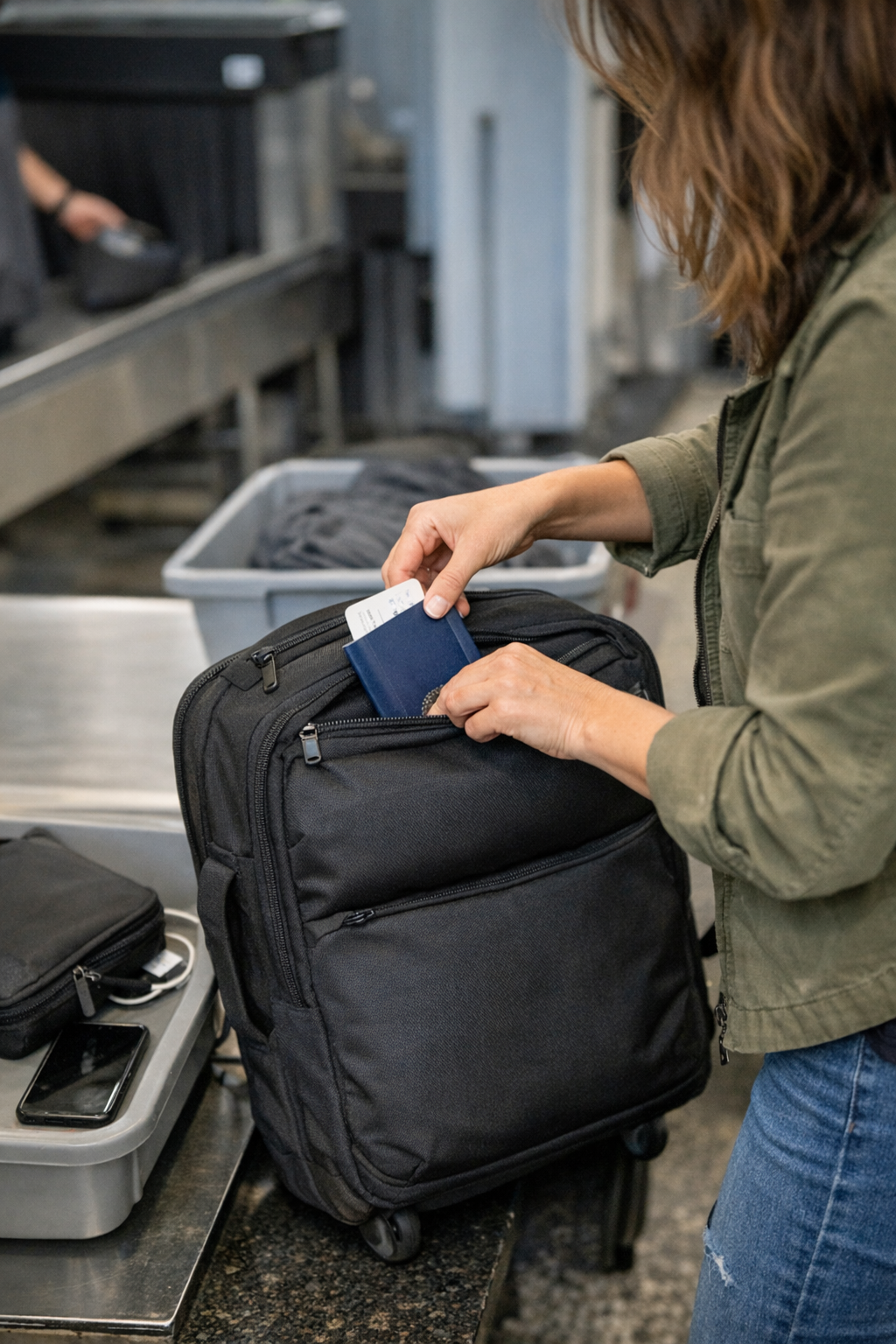
It’s at the checkpoint, or when the line suddenly moves, that a tidy setup betrays you. When the passport pouch hides behind a layer or two, or a tech organizer wedges itself in front of the one thing you need, the access path grows tangled. The bag looks ready, but your hand hesitates—and you feel people tighten up behind you.
That was the part that kept coming back.
Living With It, Noticing Friction
It’s the small things—the way a packing cube blocks a pouch, or a travel comfort kit shifts into the corridor of a quick-grab slot. Awkward reach, a moment of re-shuffling, a tray you have to fill and refill because something went in the wrong pocket. The order you created is still there, in a way, but real movement exposes the rough edges.
You notice it after a few transitions. The pause before seat entry, the fumble for a document you “always keep in the same place,” but now can’t quite reach. At some point, I realized my bag wasn’t disorganized—it was just built for stillness, not for repeated, pressured access.
One Less Hesitation
I stopped layering everything together. Quick-access documents, charger, boarding pass—they went into a single, never-overlapped outer pocket. Not buried, not nested. Just one step, in or out.
It looked less finished, maybe even a little exposed. But the difference kept showing up—no more micro-searching, no more silent self-annoyance at every checkpoint or aisle squeeze. The setup actually reset itself after each use, so the next move wasn’t a half-minute dig.
It’s funny—what made my carry-on look less “packed” ended up making it work better. The access became natural, more reflex than effort. Something in me settled, too.
If you want to see what I’m talking about, you can find more where they keep the details: http://www.carryonsupply.myshopify.com