The Quiet Struggle Behind Every Dog Walk
Routine leash pulling rarely fixes itself, but predictable routes and early resets can reduce resistance, making walks smoother and more trusting.
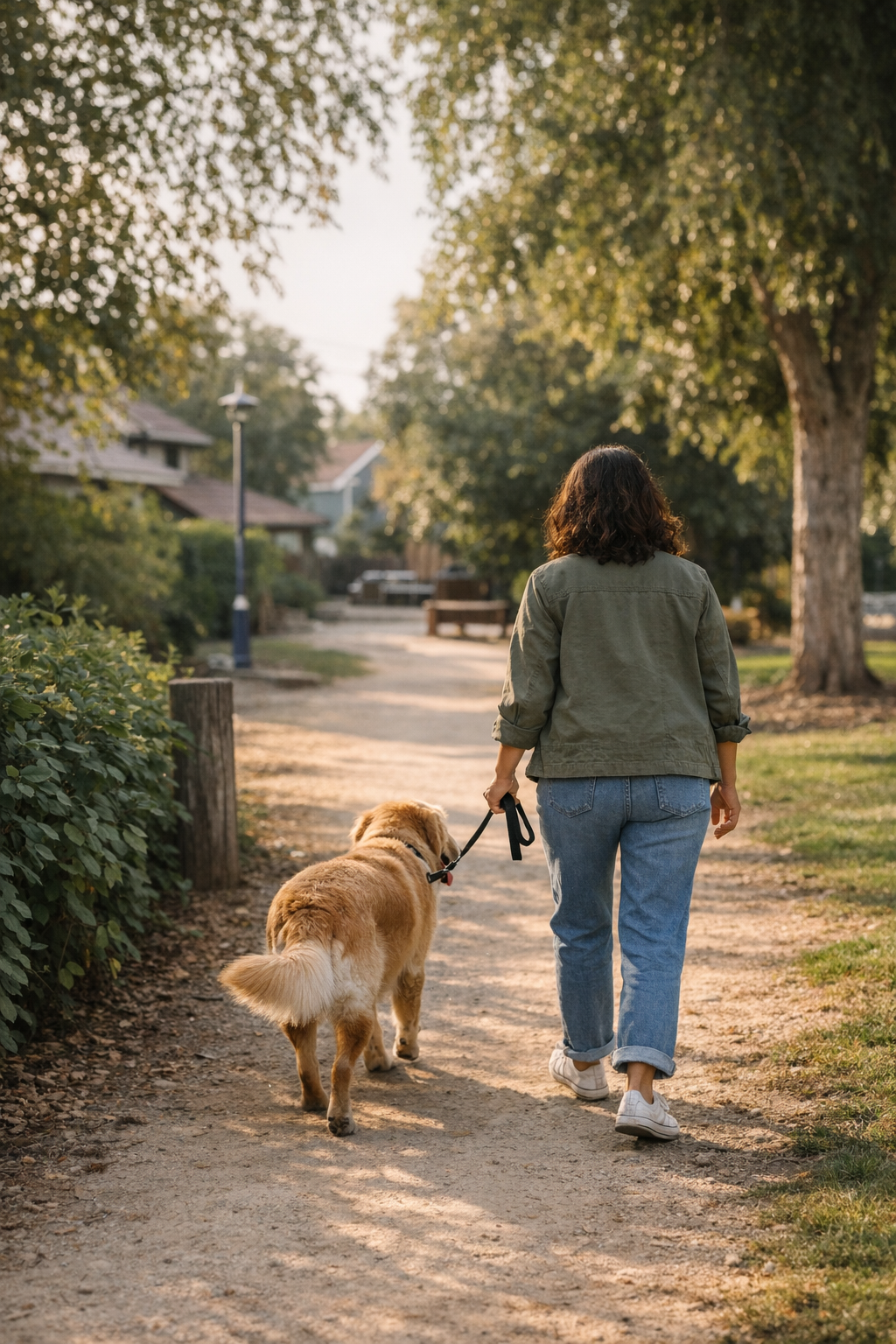
It’s easy to accept, almost without thinking, that a dog pulling on the leash is just how mornings go. I found myself caught in this pattern most days—clipping on the lead, stepping over a half-shifted water bowl, dog stretching eagerly toward the door, the walk already a little tense before we’d even stepped outside. None of this looked out of place at the time. But over days, I started to notice how these small frictions didn’t just disappear; they settled in quietly, shaping something more complicated beneath the surface of the usual routine.
You start to see it after a few mornings. The walk never quite begins fresh—it carries a leftover tension from the day before. Tiny setup details matter: the bowl left just inside the door, the leash hung a little too far for easy reach, skipping the paw wipe when grass is wet. At the doorway, the dog leans in while I brace, and suddenly the outside world feels farther away than it is. The whole morning pauses there, stretched tight by habit rather than real need.
Familiar Paths, Familiar Tensions
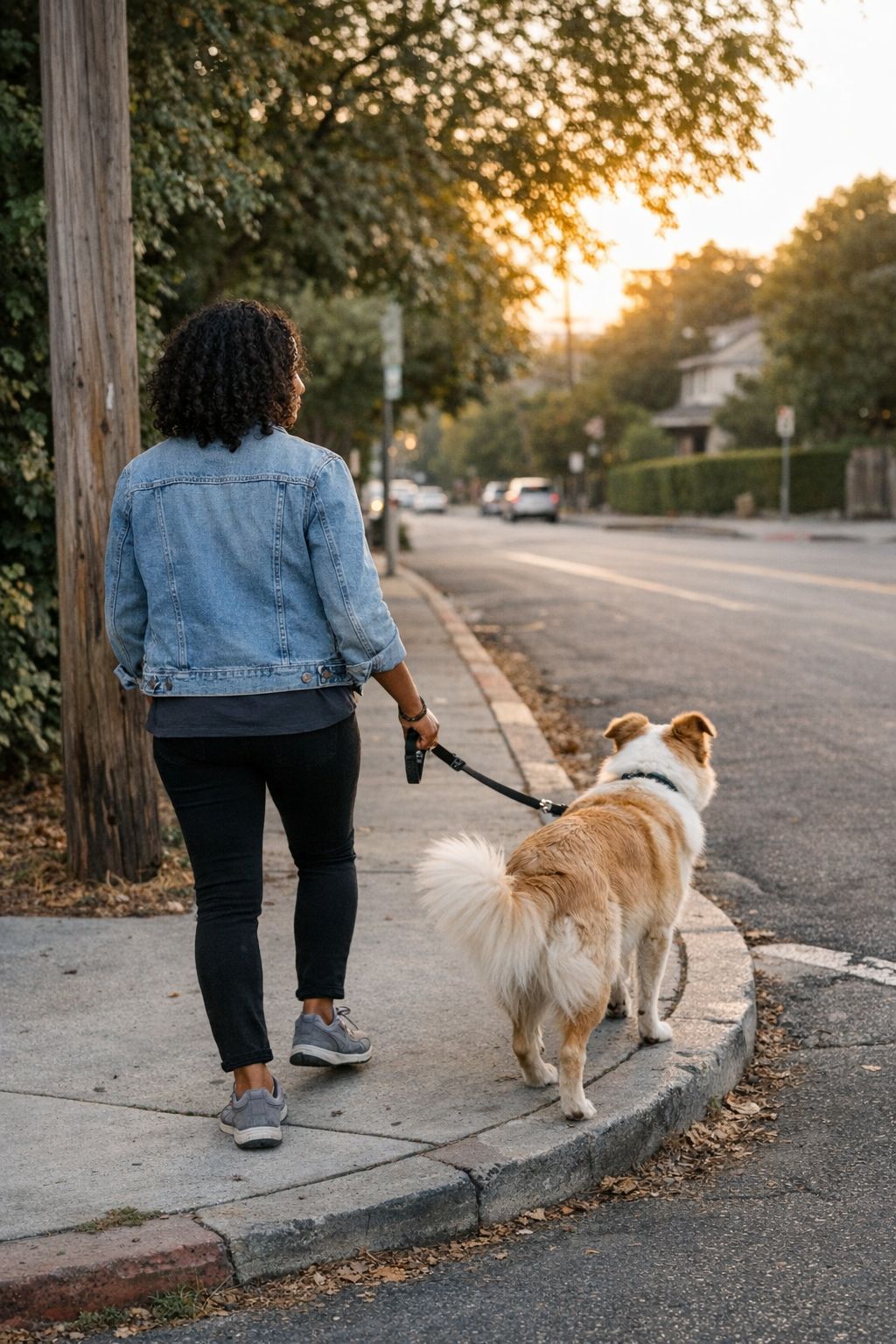
There’s comfort in taking that same route day after day. After a week, you know which garden hedges hold your dog’s favorite sniff spots and the trees where the neighborhood news is freshest. It’s not the discoveries that soothe but the steady routine itself—fewer surprises, less leash correction, a predictable flow. But expecting that ease can turn brittle if early habits get overlooked. That little rush out the door, the leash tightening before we even move forward—that’s the tension that keeps sneaking back.
Most mornings, I realized, we weren’t just walking the same path—we were carrying through the same unshaken tension from the start. Some days, it felt like trying to reset something that hadn’t really ended the day before. Everything looked normal: the water bowl in place, the usual route, familiar weather. But underneath, the friction kept building, invisible but persistent.
The known route didn’t erase the pull so much as highlight exactly where it took hold—the sidewalk patch where the leash first snapped taut, the driveway edge where my dog glanced back with uncertainty. When I missed those little signals, the entire walk felt choppy, both of us holding more tension than needed.
Small Shifts in Setup
Awareness came almost by accident. One foggy, sleepy morning, I slid the water bowl back a few inches from the door, just to avoid tripping. The next day I did it again without much thought. The change was subtle but immediate: there was more room to pause side by side before opening the door, less chance the leash would catch or clatter on the bowl’s rim. It was a small, easy adjustment—the kind that goes unnoticed until it’s undone.
Nothing dramatic changed, but over the next several mornings, my own pace softened a little. The dog, too, seemed less ready to lunge. A shared breath, a glance, then the door opened—a quiet reset button. The difference showed in small details: a slightly looser leash, fewer stop-and-start leash corrections, brief moments of eye contact at the usual sticking points. The walk felt less like a tug-of-war and more like cooperating through a shared space.
This didn’t “fix” leash pulling. Dogs remain dogs; distractions and impulses always find their way back. But the reset made the routine flow with less drag and fewer small interruptions compounding into ongoing strain.
What Quiet Adjustments Actually Did
After a couple of weeks, the morning routine didn’t look very different to anyone else. But it felt different—less hurry, less quiet frustration. There’s something relieving about a routine that doesn’t fight back at every step. Walks became easier to recover from, even the rushed ones, and I found myself less focused on tension and more present for the parts I enjoyed: the way familiar streets sharpen in early light, the soft pause while my dog scans the old fence for news only he can smell.
Sometimes, simply shifting how you start creates more room inside the activity itself. Familiar doesn’t have to mean stuck. The small ease of a tidier setup lasts longer than it looks—it’s not a fix that announces itself, just a lived-in improvement.
The routine will never be perfect, nor does it need to be. But when mornings go a little softer, it’s easier to carry that calm into the rest of the day. The tension settles into a quieter place, outside of the repeated walk.
I still notice the difference when I’m headed out the door. For more ideas on practical shifts, I found this helpful: http://www.dogpile.myshopify.com