The Quiet Struggle Behind Every Flight’s Boarding Moment
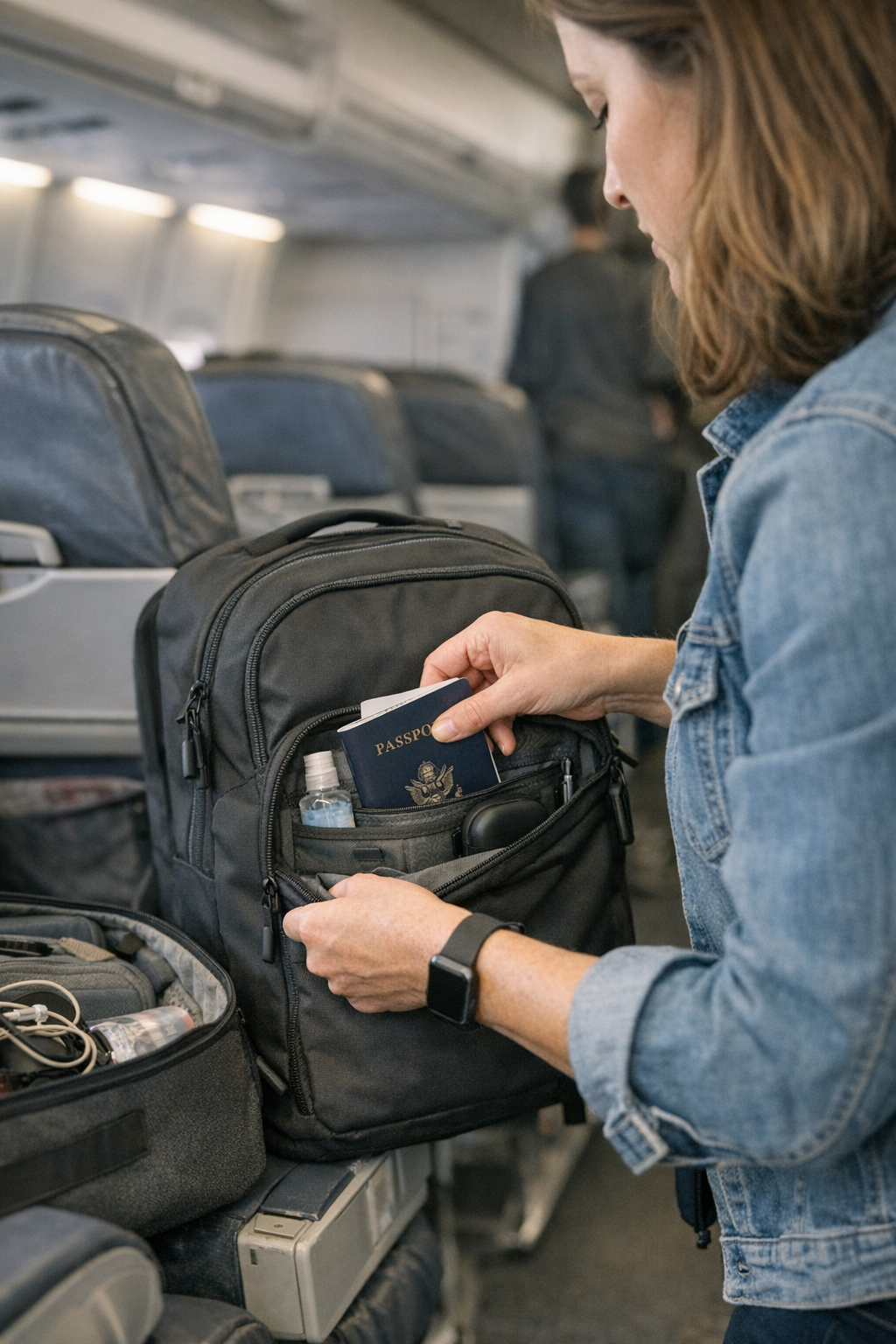
Boarding delays often come from poorly arranged carry-on essentials; using one dedicated outer pocket for quick access prevents friction and speeds travel.
It sneaks up quietly: the realization that a carry-on only stays “organized” if it holds together after the first few transitions. I noticed this around my fourth or fifth airport stretch—not when everything was neatly packed on the bed, but in the moments in-between: standing in the aisle, fingers searching for documents, feeling that tiny pinch of impatience behind me. The thing that looked tidy at home suddenly argued back, slowing me down exactly when I needed it to disappear. That’s when I started paying attention to how quick-access setups really behave, not just how they look.
When the Clutter Creeps In
You don’t see the clutter right away. Even the most thought-through arrangement, with color-coded organizers and slim pouches, seems like it’ll stay on your side—until the flows start stacking up: security lines, boarding queues, seat entry, and tray tables folding down.
One awkward pocket reach, followed by a cable pouch blocking the only zipper, and suddenly you’re rearranging just to find your boarding pass. Each shuffle in the aisle—each pause to dig or reset what shifted—becomes background static. It looked fine at first.
But the difference kept showing up: that pause, the half-second of confusion, someone waiting for your bag to clear.
One Step, Too Many
The pattern is easy to miss. Most carry-on issues aren’t dramatic; they’re just repeated friction points. Reach for headphones, but the sanitizer pouch gets in the way. Documents drift under a layer of “just in case” extras. A zipper path catches on something stacked too thick, and your whole seat-entry rhythm slows.
It’s not the number of pockets that matters, but how many motion-steps stand between you and the item you need. I started to notice that each time I had to remember which pouch held what, or dig two layers deep to grab a passport, some momentum slipped away. A setup that looks streamlined on paper can actually interrupt itself in motion.
That was the part that kept coming back.
Separate for Movement, Not Just for Looks
Eventually, it was less about finding the right tool and more about letting daily-use items float to the surface—unstacked, alone in an exterior zip pocket, their shapes obvious to the hand. With only the essentials—boarding pass, passport, sanitizer, headphones—in a single outside slot, there was no more fumble.
The difference in tempo was immediate on the next flight. Documents appeared in one gesture. Nothing shifted or fell. The pocket never jammed, and I stopped resetting things mid-trip. Oddly, it made the bag feel lighter—even if the weight hadn’t changed. You notice it after a few transitions.
I think the way you set up your carry-on really only shows its worth after it’s had to move, twist, and reload a few times, when neatness gives way to actual ease.
If any part of this sounds familiar, you might find more of this kind of lived-in detail quietly over here: http://www.carryonsupply.myshopify.com