The Quiet Struggle Behind Everyday Travel Routines
Repeated travel routines reveal weak carry-on setups; placing critical items in outer pockets and separating frequent-use objects eases transitions.
I didn’t notice the sticking points during the first leg. Packing always looks tidy in the hotel light—everything slotted into pouches, cables wound small, documents pressed flat. But the story changes once the bag reopens under real pressure. Boarding lines inch forward, someone jostles from behind, and suddenly a charger or passport is lost among layers that seemed clear in theory. A carry-on’s structure isn’t proved by how orderly it starts, but by how unbothered it stays mid-motion.
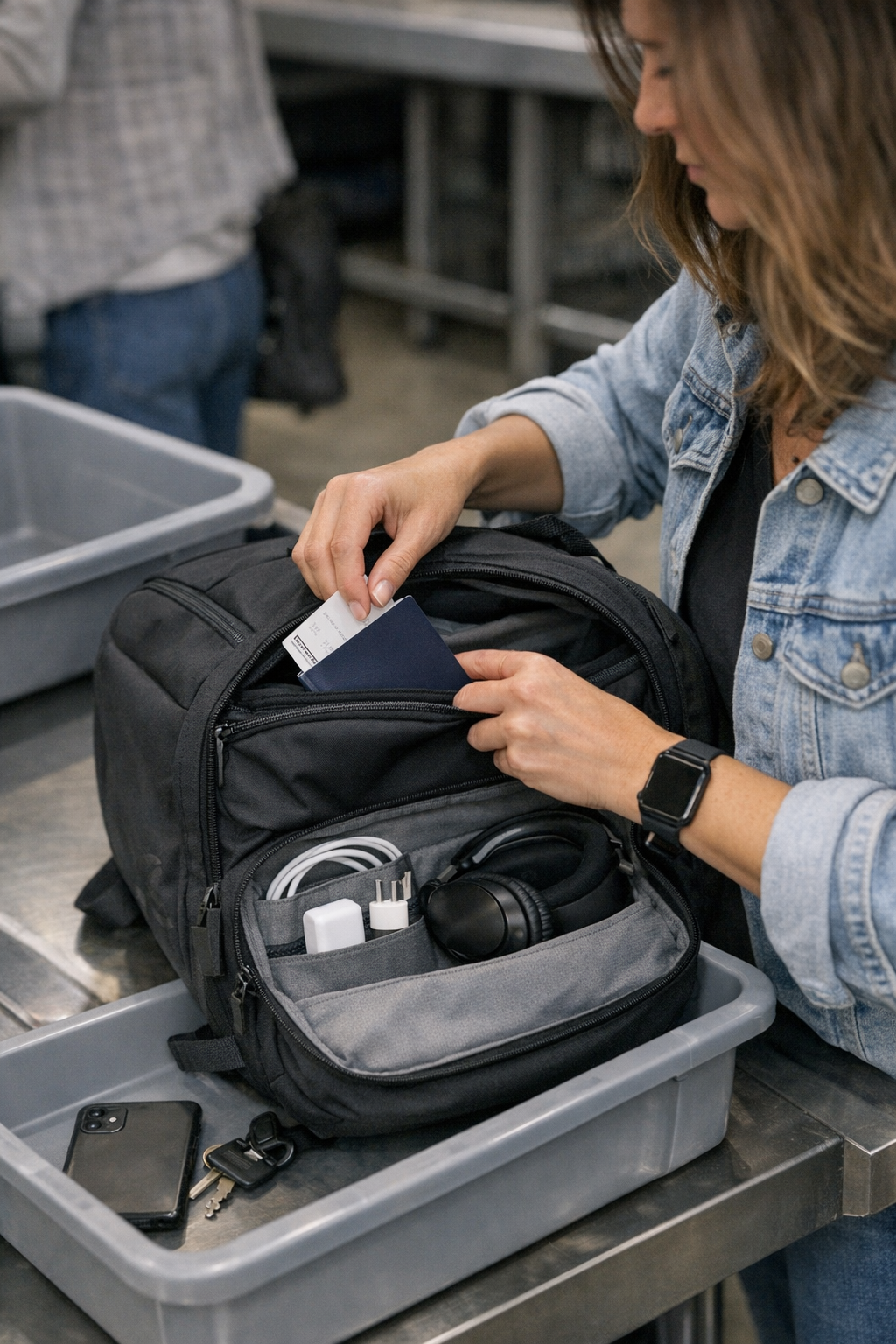
There’s a moment—sometimes at the x-ray tray, sometimes from a shifting shoulder strap—when the difference appears. Two items meant for quick access tangle up, or a frequently used object is trapped behind three calm-looking organizers. Each small stall adds up: a delay searching for an ID, the awkward reach for headphones as your row boards, half-unpacking just to grab a cable while the crowd surges past. After a few transitions, you notice the smoothness you expected just isn’t there.
Over time, I started paying quiet attention to which routines kept breaking down. What seemed under control before takeoff grew heavier during actual travel. Nested pouches looked efficient but in practice slowed everything that mattered. Pulling out a boarding pass often meant exposing the whole contents; finding one charger turned into fishing through unrelated layers. This repeated snagging—how easily frequent use unraveled tidy beginnings—kept coming back. A main compartment stuffed with stackable organizers made each small access harder instead of easier.
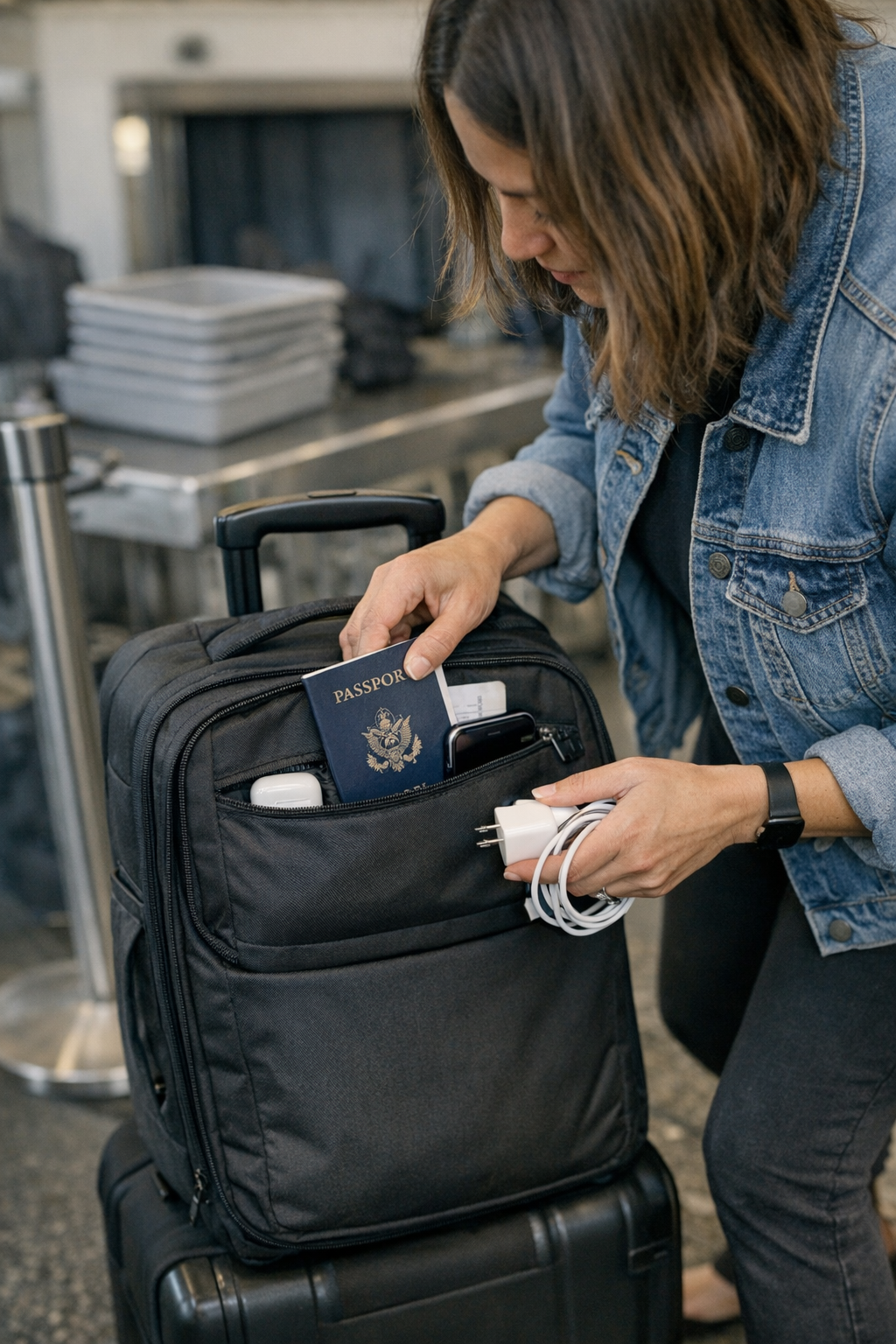
The one change that quietly shifted things was separating high-frequency items before the bag closed for the first time. Moving my passport and the most reach-for tech into a single, slim, outer pocket was oddly calming. Every retrieval cut to one zipper path—about the length of a palm—while untouched organizers stayed undisturbed deeper down. It relieved the pressure of re-sorting on the fly, letting items go back to their place quickly before the next move. The feeling of the bag changed: not just organized, but reliably light in the hand and mind, even when the trip stretched on.
Each routine—security trays, sudden gate changes, overhead bin maneuvers—became quieter. Instead of stopping to reshuffle, I slipped things out and back in without a crowd noticing. The pace of movement felt less strained. It looked fine at first, but the difference kept showing up the longer the trip went on.