The Quiet Struggle of Cat Toy Clutter in Shared Rooms
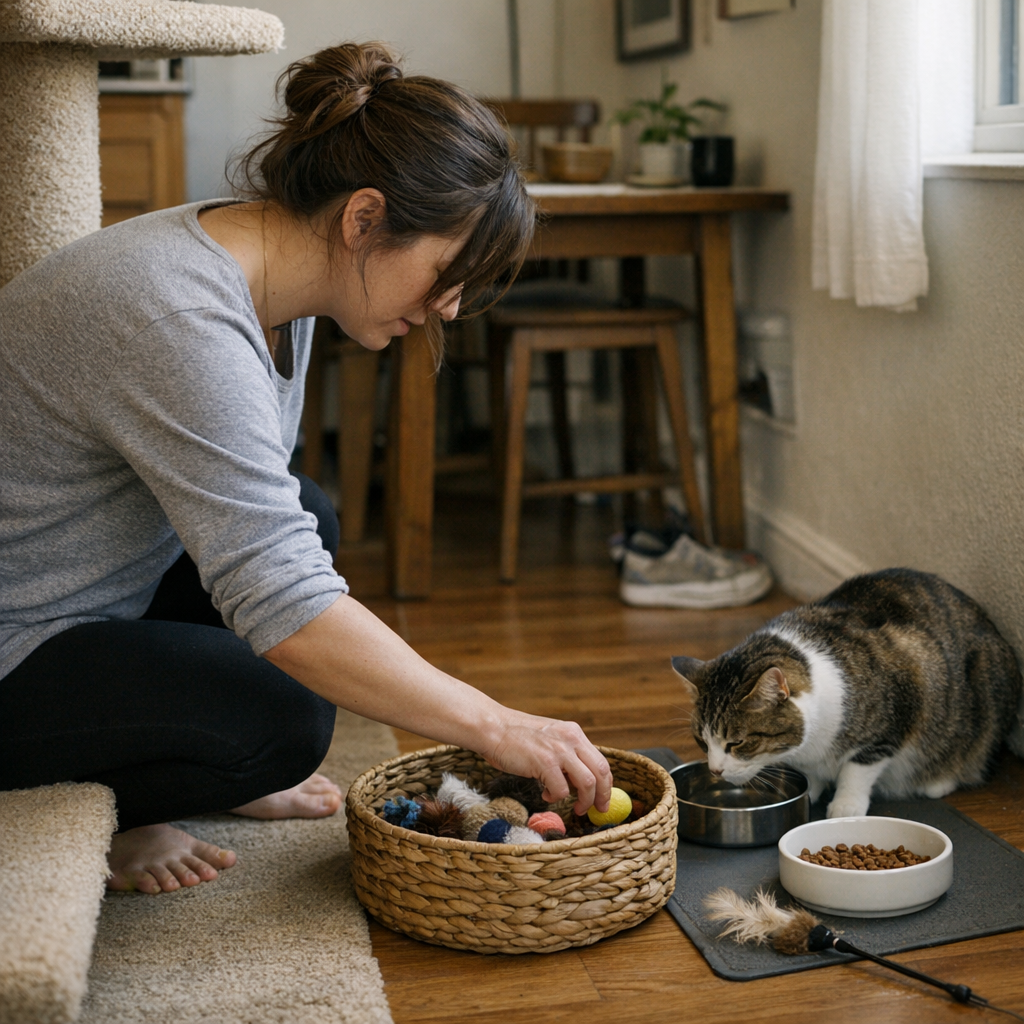
Leaving cat toys scattered causes repeated interruptions near feeding areas; storing them in a basket after play keeps routines smoother and reduces clutter.
There’s a quiet moment that sneaks up after living with an indoor cat for a while—usually unnoticed until the third or fourth time you reach for the food bowl and find a felt mouse blocking the way. It can feel almost funny at first. Toys rolling loose on the floor seem like small byproducts of a happy routine, little reminders of play scattered between the water mat and hallway. But after more mornings, even the most patient attention finds the mess less charming, especially when it turns a five-minute reset into something slower and repeatedly interrupted.
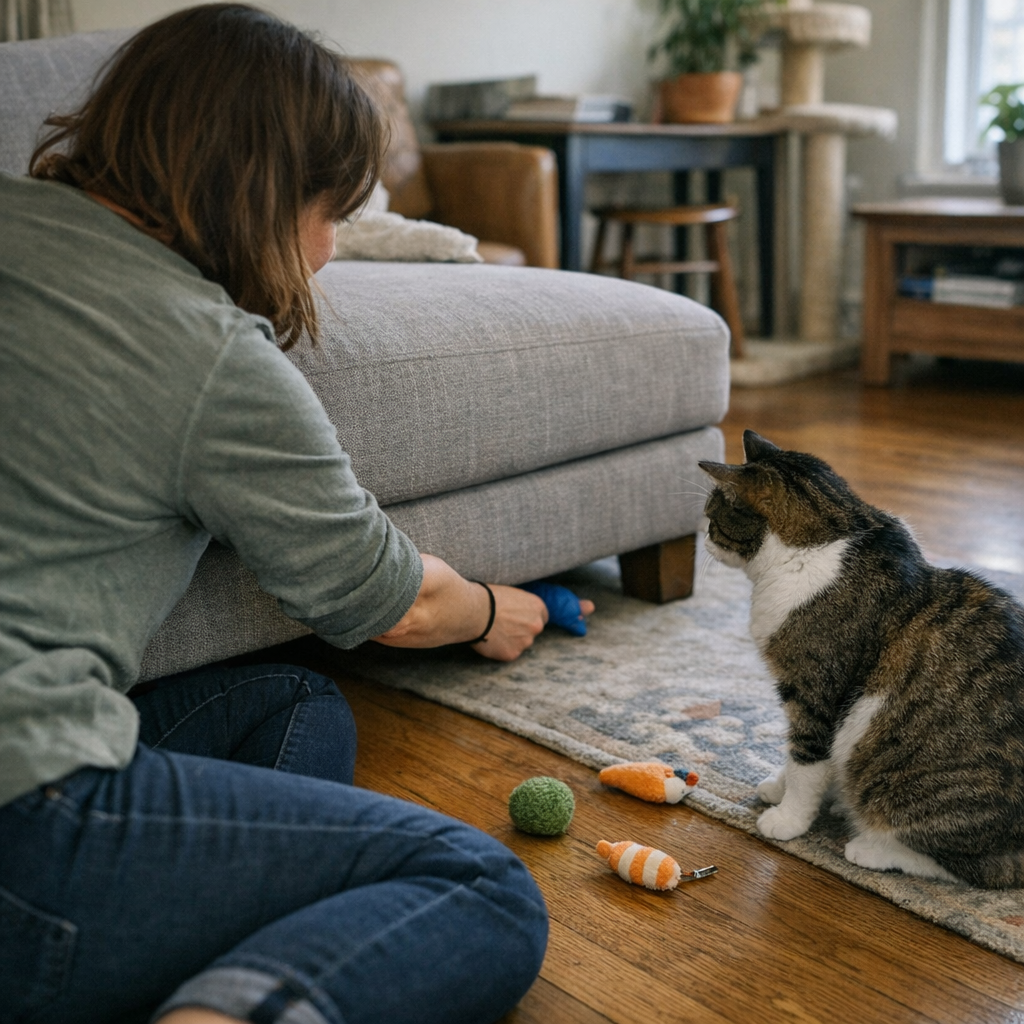
I used to let the toys roam wherever they landed. In theory, it felt like freedom—a home for a cat, not just with one. But the difference crept in slowly through the daily shuffle: picking up a crinkle ball wedged under the litter mat, nudging a wand aside while refilling the water, or stepping carefully around scattered plush toys near the feeding station. You only notice it after a few repeated resets.
Where It Starts to Matter
It looked fine at first. A ball in the kitchen corner, a plush fish near the food bowl. But with repetition, it became clear how easily stray toys turn routine tasks into minor hassles. Refilling water, vacuuming under the table, even setting down groceries—each small task began asking for extra steps. Instead of flowing smoothly, the routine stuck—bending, pausing, nudging, repeating. That’s the part that returned, a little more each week.
There’s something quietly exhausting about those repeated mini-detours. Especially in a smaller home, where cat zones are close to human zones, a loose toy in the wrong spot makes the whole area feel less organized—and less restful. When the same interruptions stack up day after day, it’s hard to ignore how much easier life would be with one straightforward change.
Shifting One Small Habit
A simple change opened things up: I left a low, open basket near the cat’s favorite perch, right where play usually winds down. Collecting toys into it every time the floor started looking busy cut cleanup cycles down to just a few seconds. It wasn’t much of a routine—just a quick sweep at the end of each play session—but somehow the entire space breathed easier. Feeding and water areas stayed clear. Walkways opened up again. Cleanup and vacuuming, even the final evening check before bed, slipped back into a smooth two-minute rhythm.
Now, if a toy rolls out of sight or shows up under the edge of the litter mat, it’s the exception, not the daily norm. It’s not about control or harsh tidiness—just the slow relief of tasks that no longer need extra hands or awkward moves to finish.
The Difference That Stays
Maybe the clearest insight is how a home shapes itself in small ways over hundreds of repeated moments. What started as a minor adjustment—one simple basket, close at hand—keeps showing its value not in how the room looks but in how all those everyday moments run more smoothly because of it.
That’s the part that sticks with me on quiet evenings, after everything is put away and the house feels ready for tomorrow’s version of the same routine: