The Quiet Struggle of Everyday Entryway Storage
Cheap rollers cause noise, misalignment, and blockages in entryway storage, while quality wheels ensure quieter, smoother, and more reliable use.
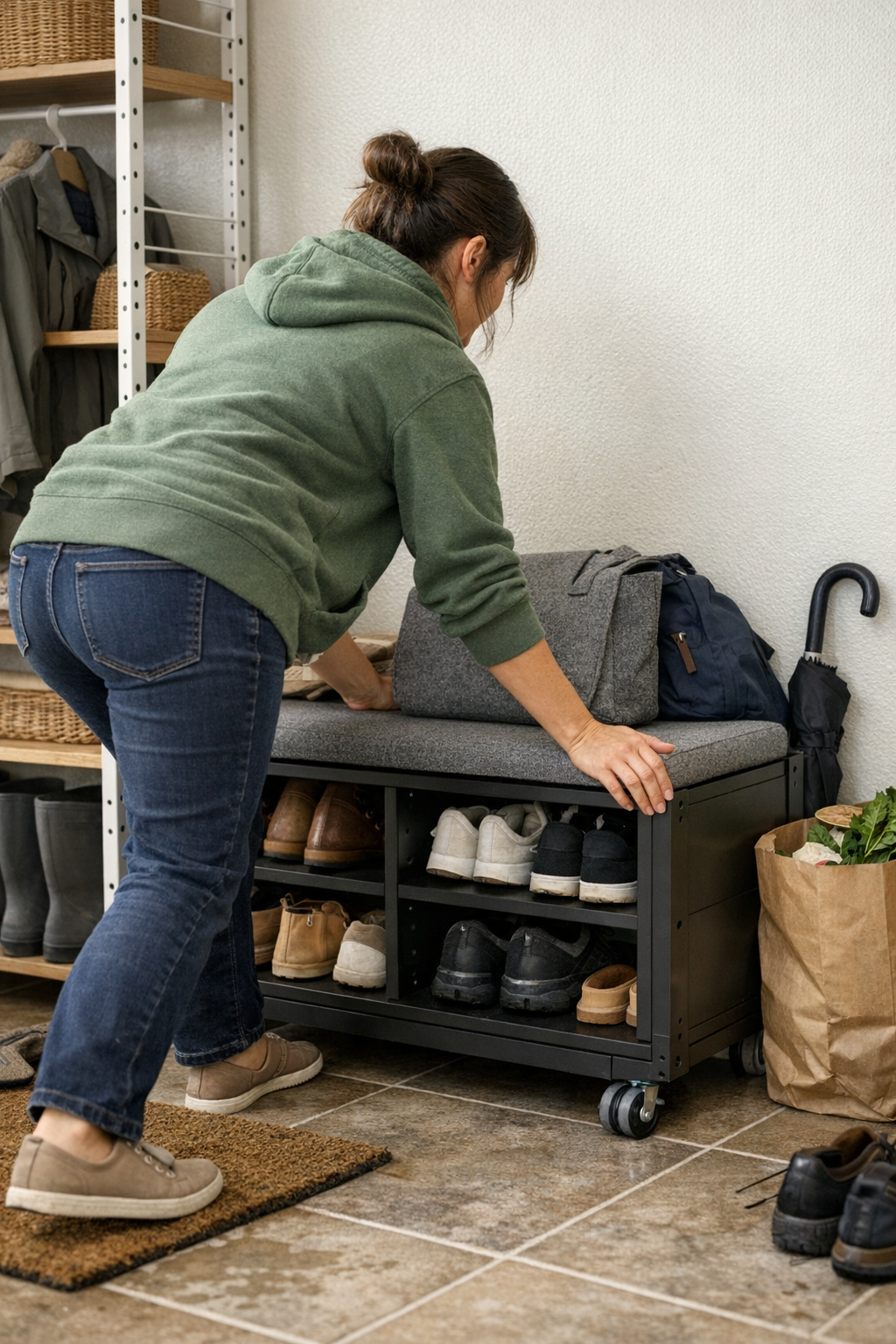
There’s a small comfort in the first step across the threshold, that transition from outside bluster into a more contained space designed for daily comings and goings. But sometimes, right at the edge of that comfort, small frictions begin to collect—like the low rattle of a mobile storage cart shuddering across uneven tile, or a bench that never quite returns flush to the wall after a rush of muddy shoes. These aren’t sudden disruptions but recurring threads, gentle yet persistent, woven into every arrival and departure. That’s where I first noticed how a simple part—such as the roller on a mobile storage piece—could quietly shape the flow of an entryway and the transitions it’s meant to serve.
The Sound of Something Slightly Off
You don’t catch it right away. A cart squeaks as it edges out for the third time that afternoon. Shoes pile up just a little further away from their tray, slipping off because the whole bench has shifted in place.
It’s not about mess exactly. It’s about how the boundary between living space and outdoor world subtly blurs when the basic rhythm of the entry—store, shift, reset—gets interrupted. I found myself hesitating to use the mobile cart for wet boots, just to avoid wrestling it back into place, especially when the quiet of the house made the jolt of noise sharper. As this happened more, everyone started sidestepping the storage entirely, mapping new paths around benches and bins that no longer sat where they were supposed to.
When a Detail Becomes the Pattern
It’s easy to get used to these daily nuisances. The bench angled out from the wall is hardly dramatic. But across weeks, these small shifts reshape the daily choreography—bags get dropped sooner, routes crisscross, and a low-level reluctance grows alongside the rising pile of morning shoes and the evening’s scattered routine.
What changed things wasn’t adding a new storage unit, but simply swapping in sealed, soft-rolling wheels—paired with felt padding underneath to soften the contact with the floor. Visually, the space was the same. But the corners stayed flush more often, the cart didn’t wander across uneven tiles, and that persistent rattle faded into silence. Suddenly, pulling something out or pushing it back wasn’t an obstacle course. That ease spread outward, making arrivals quieter, departures less scattered, and the return path inviting again.
The Smoother Reset
This isn’t about dramatic redesign. Fixing one overlooked friction point—a wheel, a pad, a misaligned cabinet door—echoes every time a bag drops, boots come off, or coats hang up. There’s something oddly steadying about it: when storage moves quietly, it nearly disappears, and the traffic flow through the threshold regains its original simplicity.
It makes me wonder how much a room’s calm depends on surfaces and mechanisms no one notices—until they go wrong. The smallest, everyday details shape how each day begins and ends, sometimes more than the bigger ideas ever could.
If you’re interested in the particulars of how transition spaces work in motion, I’ve kept a few notes together here.