The Quiet Struggle of Finding Essentials Mid-Flight
A carry-on that hides essentials beneath layers causes delays and frustration; easy access to high-use items eases travel discomfort.
The Carry-On Looks Neat—Right Until the First Reach
It’s easy to assume a carry-on’s order stays intact. That initial calm from seeing everything perfectly zipped and stacked—the clear lines, orderly pockets—almost makes you forget the bag will have to adjust to movement. But once you start traveling, you quickly realize there’s a big difference between a bag that looks good at rest and one you can actually live out of on the go.
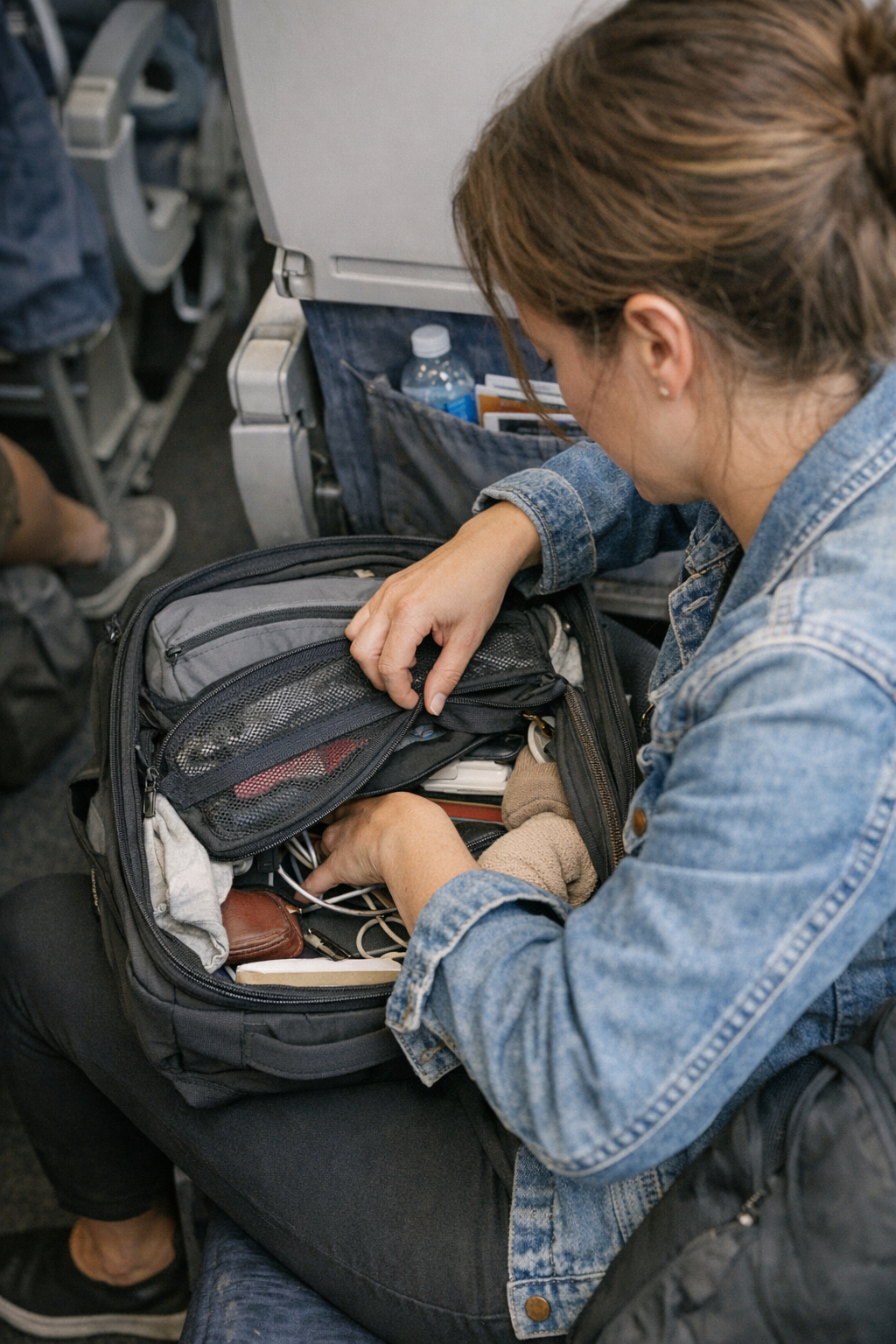
You notice it after a few transitions: the first time you need a charger or reach for your passport at the gate. Suddenly, those neatly stacked organizers and layered pouches stop cooperating. Grabbing one item nudges everything else out of place. What was a quick reach turns into a moment of fumbling, and your sense of control slips. It’s not dramatic, but the difficulty keeps recurring.
The Quiet Undoing of Over-Organization
At first, tight organizers promise efficiency. Each cable has a home, every document feels easy to find. But in the aisle or at your seat, you find yourself shifting one pouch just to get to a smaller one tucked underneath. You lift and re-layer almost without thinking—it feels like part of travel, but it’s really an ongoing disruption.
This slow undoing stuck with me. A bag that’s organized in theory becomes a tool you wrestle with when you’re behind schedule. The friction builds mid-movement, when all you need is straightforward, one-handed access.
The Small Friction Points Add Up
Everything looked fine at first. But every retrieval becomes a test—passport checks at security, headphones mid-flight, sanitizer after touching a tray table. Layered structures seem manageable until you realize you’re always moving something else out of the way, sometimes bumping elbows with neighbors. One or two awkward moments become a pattern.
The tiniest inefficiency multiplies under travel pressure. It’s clear when you return an item to the wrong pouch or when zippers catch on bulging seams because too much is packed in one spot. A quiet frustration hums as you repack, hoping nothing slips out of order.
A Subtle Shift in What Feels “Organized”
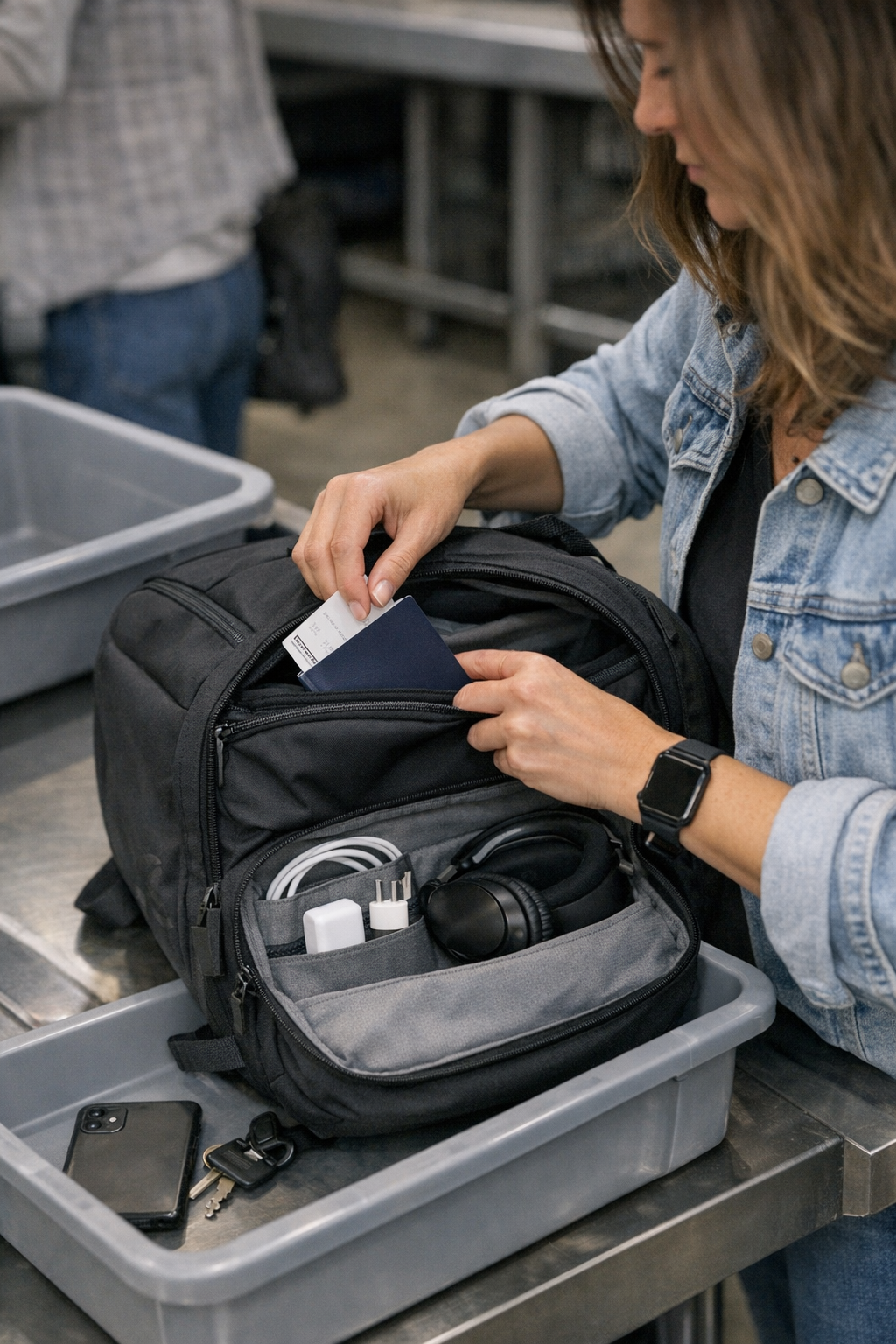
After repeated transitions—especially ones needing quick, one-handed access—I scaled back on maximum packing. I left the top pocket nearly empty except for essentials I always need first: passport, charger, one cable, earbuds, sanitizer. No layers, no hidden pockets. Just one zipper and a single, clean motion.
It was a small change, but travel tension eased. No more slow border crossings because something slid down inside, no more awkward tray-table repacking for a simple document check. It didn’t look engineered to perfection, but it felt gentler—fewer things to reset every time the bag opened or closed.
In those airport moments, real comfort came less from perfect packing and more from knowing exactly where your essentials live before you even unzip.
If you want to explore the kinds of organizers and pockets that shift travel routines this way, you’ll find some quiet examples here: http://www.carryonsupply.myshopify.com