The Quiet Wear That Slows Down Every Cut
Power cleaner nozzle wear causes uneven spray and extra cleanup; regular checks and timely replacement keep finish quality and work efficient.
You rarely notice the moment a tool lets you down. One day, the task feels slower and a touch messier, with no clear reason why. It’s so subtle you almost miss it—until suddenly, your flow is gone. I’ve felt this often with the power cleaner nozzle, a part built for precision yet easy to overlook. Over time, small changes add up, quietly shifting the work in ways you only notice after the rhythm breaks.
The Quiet Drift of Wear
Brand new, every nozzle looks confident: cool to the touch, edges crisp, everything symmetrical. In the beginning, work moves effortlessly—every pass sharp, debris swept aside like it’s nothing. But give it time and pressure, and differences begin to surface. A spray that once felt tight grows wider, more scattered. The finish isn’t quite as clean, and the job takes just a little longer.
You don’t notice it immediately.
But you feel it.
What’s striking is how quickly working with a worn nozzle becomes the new normal. There’s a sense of pushing harder for less return, but the change is quiet—masked by habit or urgency. Sometimes all it takes is pausing to look closer: a rougher edge here, dust building up where it shouldn’t.
Small Delays, Compounded
These are not dramatic failures. Just minor patterns—cut lines collecting grit, one more sweep to clear each panel, a fit that isn’t as neat as it was last week. Maybe you swap in a fresh blade or adjust your rhythm, and suddenly the work feels crisp again. But when you swap out the nozzle, it’s unmistakable: the spray narrows, the sound settles, and progress returns.
Realizations often surface in the middle of a routine job. I remember switching to a new nozzle halfway through a batch of MDF—instantly, everything tightened. No stray dust, no pause to sand down seams. The difference was small but tangible. It’s these kinds of shifts, almost invisible in the moment, that quietly define how a day’s work feels.
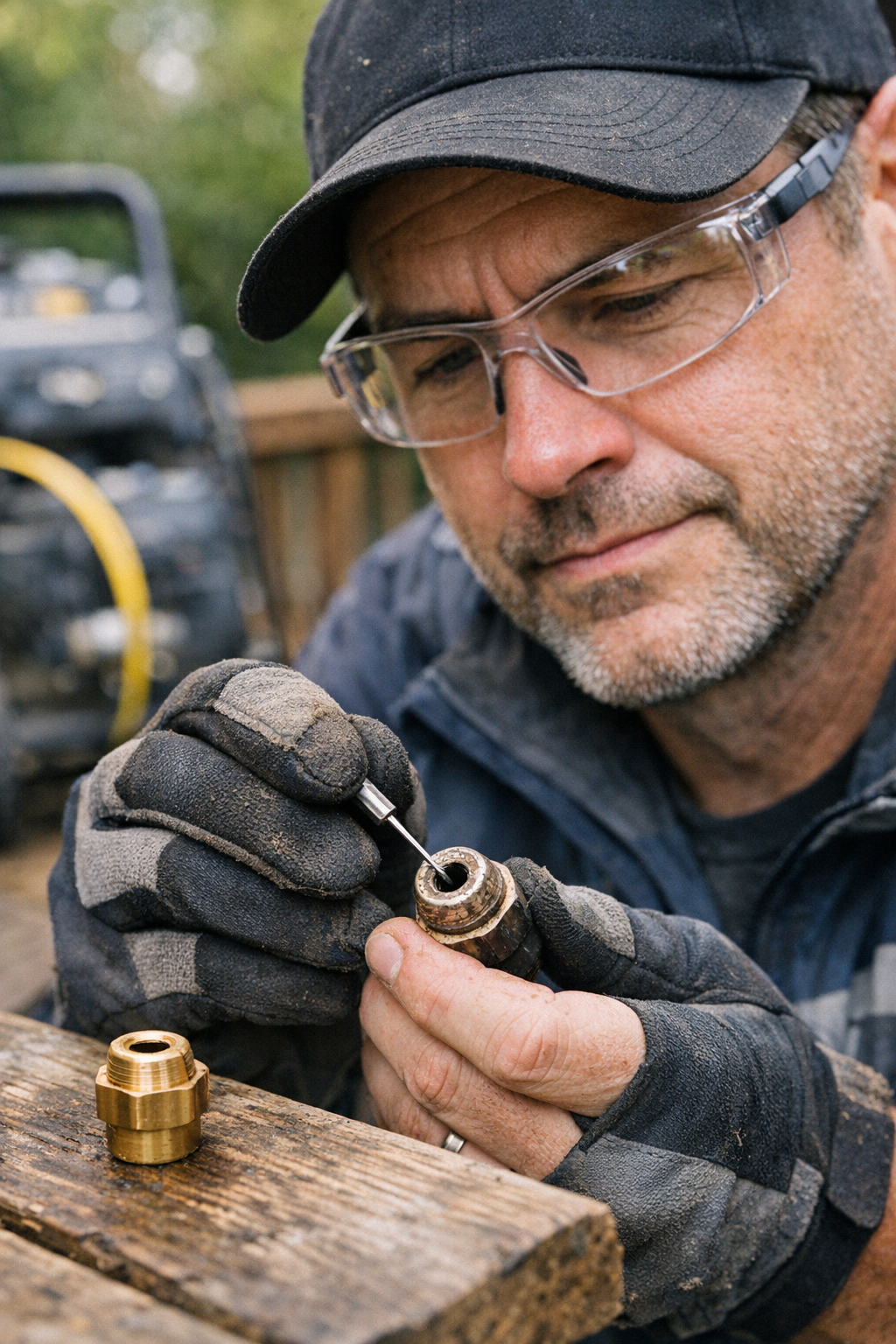
The practical side of this is gentle: looking closer, just occasionally. A bright light over the workbench, a careful glance at the nozzle’s opening. Sometimes, an inspection pin reveals a widening you wouldn’t see with the naked eye. These checks, as simple as they sound, gently steer the day back to a satisfying flow.
The Balance Between Routine and Rhythm
It isn’t about perfection. Every tool wears, every job leaves its mark. But the cost of ignoring the subtle wear can be more than surface deep—a little more effort for a little less result, repeated often enough to reshape the whole routine. Catching those shifts doesn’t mean obsessing over every detail; it means noticing when flow turns to friction, and giving yourself a moment to adjust.
There’s comfort in knowing that restoring rhythm can be as gentle as swapping a part, or pausing for a closer look. It’s less about maintenance, really, and more about paying attention to the marks work leaves on the tools you trust.
I find it helps to remember that sometimes, the smallest adjustments make the work feel whole again.
These reflections found their shape during a quiet afternoon spent in the shop, checking the spare nozzles more carefully than usual.