Waiting at the Gate: The Quiet Struggle with Carry-On Bags
Packing for access, not neatness, reduces travel friction by keeping essentials in one quick-access section for smooth retrieval before boarding.
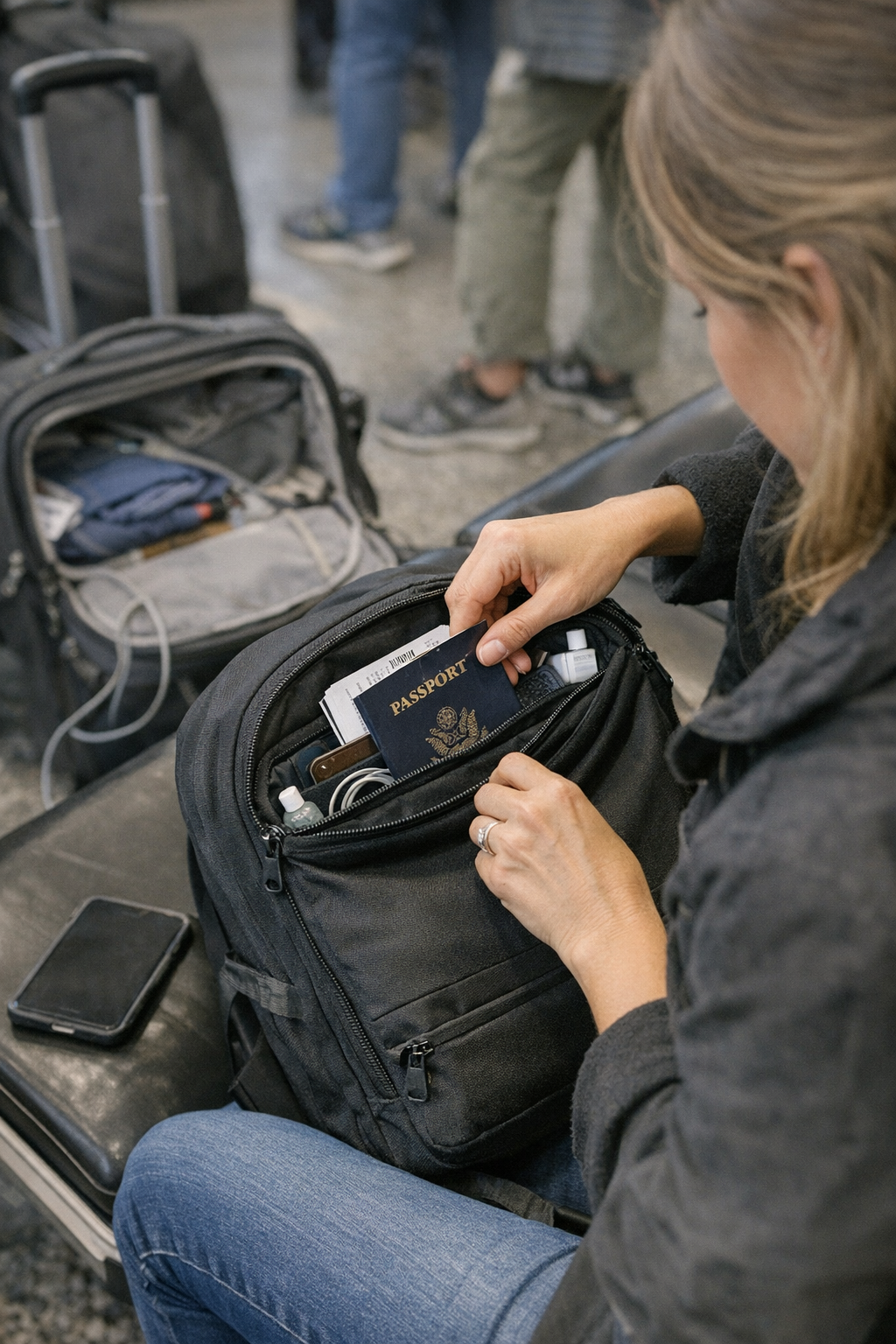
Waiting near the gate, you settle in for a moment of calm—only to realize your passport is wedged behind layers of careful packing. This is the kind of detail that’s easy to overlook until it interrupts you at the wrong time. What felt organized when zipped up at home becomes a persistent obstacle on the move. These moments tend to appear when you’re tired, distracted, and the crowd thins for final boarding calls.
You notice it after a few transitions. Something as simple as pulling out a charger means nudging aside a pouch, shifting a folder, maybe even tilting the whole bag onto your lap. The more these little interruptions stack up, the less restful the wait actually feels. Most of the friction isn’t dramatic—it’s the low background hum of travel, a reminder that setup matters more in motion than at rest.
Compact Doesn’t Always Mean Easy
The setup that looked so contained on your floor—documents, headphones, snacks tucked neatly in the main compartment—seems to unravel as soon as you need just one thing. There’s usually one item you reach for repeatedly, and every time it’s buried, you have to choose: disrupt your order or let efficiency slide. I kept returning to this quiet tension: the difference between feeling sorted and feeling at ease.
You start to realize a bag that looks tightly packed doesn’t always travel well through the stop-and-go of boarding. The smallest delay—fumbling for a boarding pass at the wrong moment—can turn organization into hassle.
The Shift from Packed to Ready
It didn’t happen all at once. After enough trips—squeezing past armrests, responding to sudden document requests, unzipping and re-zipping between lines—a new layer of clarity set in. That clarity was a pocket you can reach without upending everything else, one that makes itself known over time, even if you didn’t plan for it at first.
Moving passport, wallet, and those odd in-transit essentials into an external zip pocket meant always knowing where they were. The main compartment stayed mostly closed and untouched—less noise, less re-packing, less to put back after every retrieval. You notice this mostly in the quiet between movements: one zipper, one hand, still settled in your seat.
Small Structures, Bigger Quiet
What changed wasn’t just speed but the ability to pause. There’s a subtle comfort in having what you need right where your hand expects it, instead of scraping through organizers or squinting into the depths of your main compartment. Sitting with your bag before boarding suddenly feels genuinely restful—not just less stressful.
It looked fine at first. But the difference kept showing up in the space between transitions. Repeated use focused the lesson: true ease isn’t just tidy packing, but knowing the right things won’t get in your way the next time you reach for them.
If you want a starting place for building routines that hold up through actual movement, this is what I kept circling back to: http://www.carryonsupply.myshopify.com