When a Bench Becomes More Clutter Than Comfort
A storage bench must support fast retrieval and clear category separation to prevent hidden mess and keep daily routines on track.
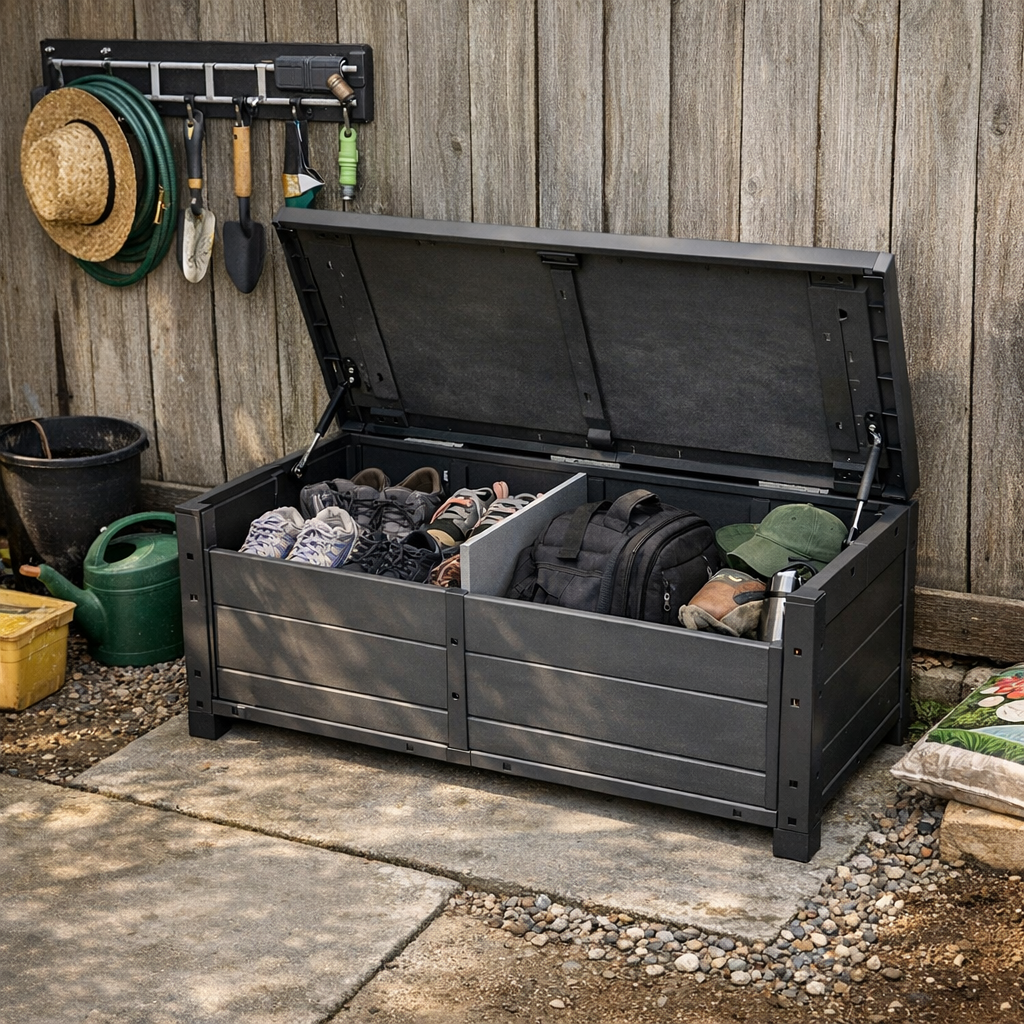
After the first few weeks, something shifts. The entryway surface stays calm—no shoes tumbling into the walkway, no stray hats waiting on the radiator. The storage bench is doing its job, holding everything out of sight. From the outside, it looks like everything is in place.
But the slow trouble isn’t obvious at first. Over time, an itch of frustration appears—especially when running late and lifting the neat lid only to find yourself searching through a muddle of bags, lunch kits, and sandals. The more the bench hides, the more it collects. Each return is quick, but every retrieval is slow. The routine that started tidy gradually drifts.
The Hidden Disorder
There’s a particular moment when this hidden disorder becomes clear—a morning reaching for gloves, only to find one, then nothing. You empty out half the bench to find a second mitten tangled with bike lights and summer baseball hats.
What seemed like a tidy solution slowly morphs into a bottleneck. The bench’s one large compartment turns every day’s easy drop-off into next week’s buried search. This surface order is really just a performance; inside, everything waits for the next disruption.
When Holding Back Isn’t Helping
The tension grows quietly. At first, every lid closure feels like a win—one less mess in sight. But the bench fills silently, layer by layer—with shoes, scarves, school things, dog leashes. In a hurry, everyone drops items and trusts the lid to keep things “tidy.” Before long, belongings overlap, and retrievals become lazier and more difficult.
It’s a small but persistent stress. Retrieval feels like a reset. One hidden overflow leads to another, until late in the cycle, the floor starts to catch the run-off. This pressure on the floor and blocked movement go unnoticed at first, but you feel it eventually.
The Small Shift That Changed Everything
One evening, I slid in a simple divider, using a leftover board from an old shelf system. Shoes went to the left, bags and grab-and-go items to the right. Not a big project—but suddenly, the bench kept categories in check. Instead of one tangled cavity, there were boundaries. Even rushed mornings felt easier; search time dropped to a single motion.
What surprised me most was that this small adjustment wasn’t just about storage, but about reducing resistance in the rhythm of coming and going. That was the part I kept noticing. The bench held a little less drama, and daily routines started feeling possible again—at least for the span of the workweek.
If you want to explore more about how storage friction and simple solutions play out in real life, you’ll find additional ideas at Gridry. Their systems—from wall units and modular shelving to storage benches and slim cabinets—are designed to address challenges like hidden overflow, category drift, and repeated retrieval.