When a Dog’s Pause Shapes the Evening Flow
Subtle repeated behaviors like a dog waiting in the kitchen doorway add friction; small adjustments prevent delays and keep routines smooth.
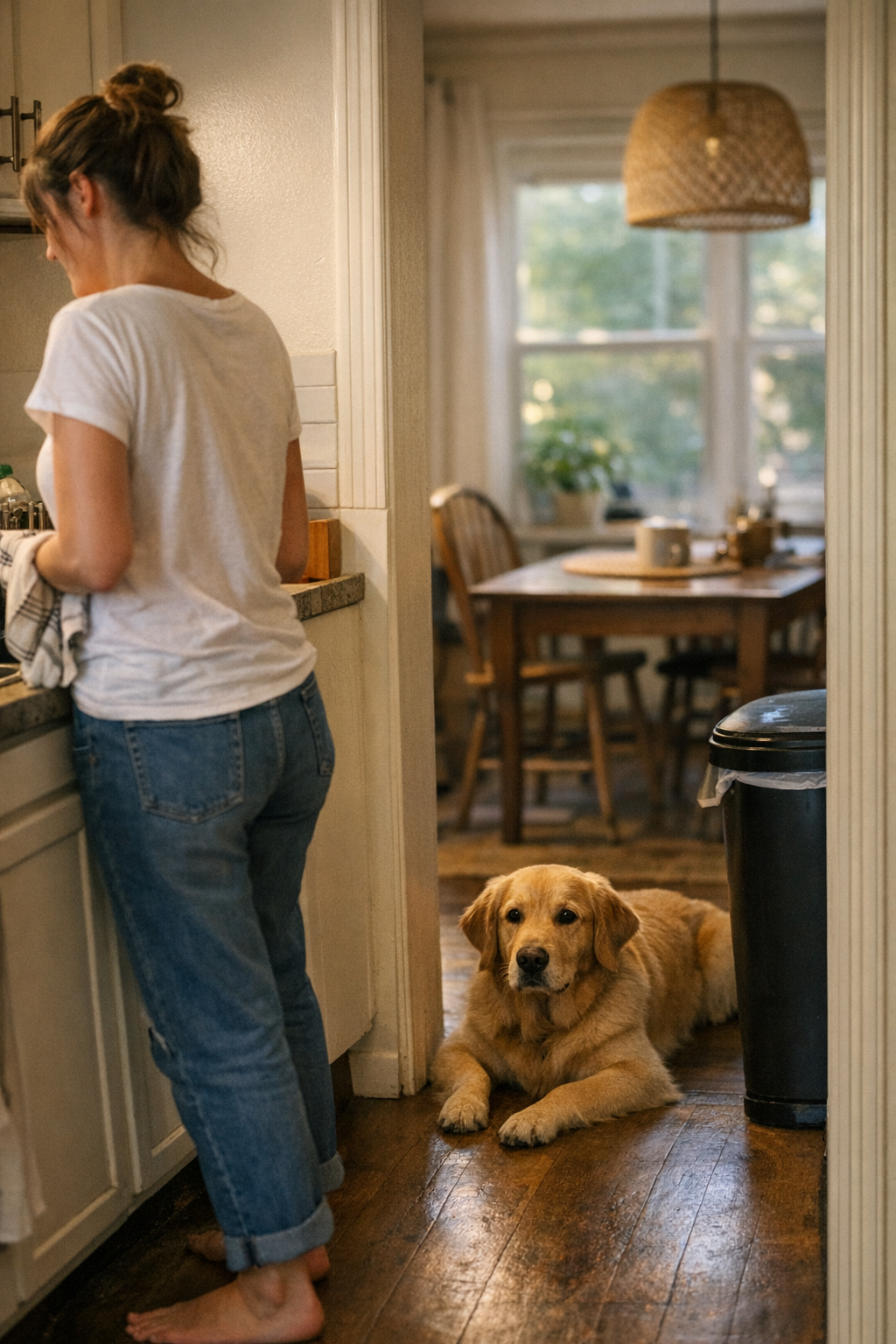
It crept up quietly: every time I tried to wipe a muddy paw, the towel wasn’t quite where my hand needed it. Not far away, not missing—just always a half-step out of reach after coming in from the rain with the dog. I’d juggle the leash at the door, shoes half off, then cross the room, dripping, to grab the towel. The kitchen tiles showed the pattern fast: a trail of prints, barely visible but always left for later. You notice it after a few mornings.
These small snags reveal how daily dog routines shape themselves around repeated friction points. Feeding, walking, coming back in—each happens often enough that any sticking moment stands out, even if it’s just a towel not keeping up. At first, I blamed bad timing or the dog’s speed. But the feeling of always being one step behind came back again and again.
What seemed like a minor setup detail—the towel hung neatly near the door—ended up slowing down our whole post-walk routine. The difference showed in smaller ways than I expected. Sometimes clutter sneaks in by looking tidy or intentional but failing to work smoothly during hurried dog-life moments.
Small Patterns, Big Interruptions
You really see it when the same snag happens five times in a week. The towel hangs there, the leash tangled around your ankles, the dog circling, ready to be let in or out. That pause at the doorway repeated—the moment a setup meant to help ended up asking more than it gave.
I stopped blaming weather or the dog’s excitement. It was mostly about where things landed after each use: towel on the hook, leash hung, shoes lined up by the wall. All signs of order, but the routine still snagged. I realized I was resetting things to look ready, not to fit how the routine really felt—muddy paws, wet days, rushed evenings. The problem wasn’t clutter, but small delays piling up: a towel just out of easy reach, a leash too far, tiny resets that slowed the flow.
At first glance, it looked fine. Only living with it made the friction clear.
Where Reach Actually Matters
The small fix was embarrassingly simple. One damp night—after a muddy walk—I left the towel draped over the door handle instead of its usual hook. Just that once, because my hands were full and the dog was shaking with impatience.
The shift stuck. Next time, the towel was right there where I reached. No crossing the room, no wet tracks. I’d been thinking about what looked organized, not what let me move quickly in the moment. It was a little change, but the routine settled back into rhythm: shoes off, leash down, paws wiped. It felt calmer. Not because the routine itself was different, but because those little pauses and missteps stopped getting in the way.
The doorway looked less “staged,” but the routine worked better for real mornings.
The Quiet Gain of Setups That Keep Up
Sometimes it takes a streak of small inconveniences to see how a setup shapes the day—one wet paw at a time. The dog didn’t mind old or new routines; but my own flow felt different, and cleanup stopped feeling like a chore always one step late. The change was quieter than expected: not a big fix, just the slow disappearance of small friction points.
It wasn’t really about towels. It was about everyday dog life running on setups that keep pace with their own mess—ones that don’t turn key moments, like coming home and wiping paws, into mini detours. The best change sticks when it fits the ordinary repetition: return, towel within reach, no extra steps.
This is how routines quietly get easier—when the details match the shape of real days.