When a Door Rack Changes How You Move Through Home
Without reinforced hinge support, heavy door racks harm door movement and storage; proper support preserves alignment and reduces maintenance hassle.
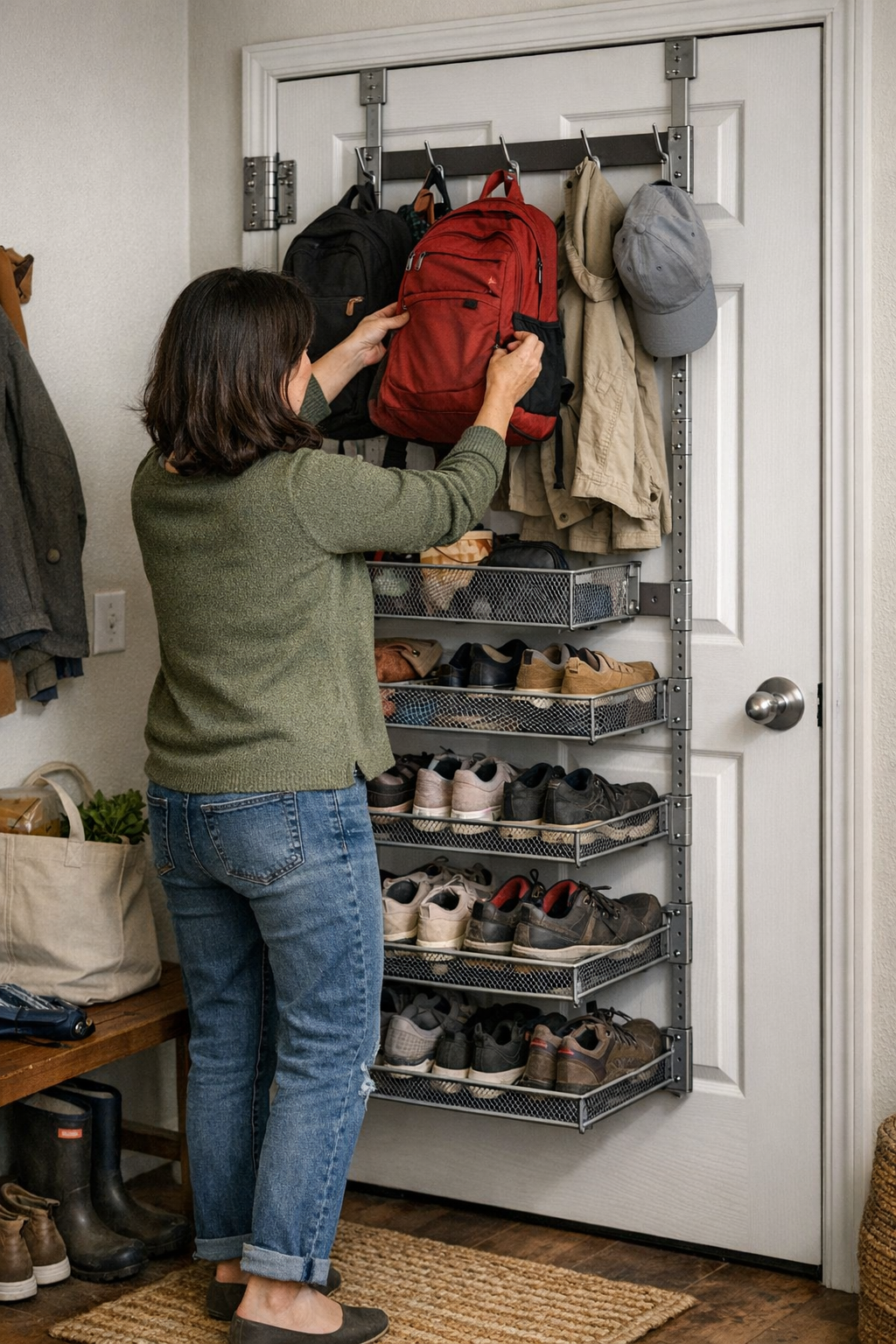
Some things in a transition space only reveal themselves after you’ve lived with them. It’s not the mountain of shoes or the stray bags that catch your attention first, but a new kind of resistance—the quiet friction that sneaks in when the setup isn’t quite right. Over time, I’ve noticed how the pull of a door rack loaded with daily gear changes the entire feel of a threshold. A drop zone might appear controlled at a glance, but the truth lingers in the way you move through it and what resists.
Bodies in Motion, Loads in Flux
You don’t notice it immediately. Day by day, shoes, coats, and bags gather—each one light by itself but heavy in their repetition. The door that once swung free now needs a second push, or maybe your shoulder through the frame. This isn't chaos—it’s a slow settling.
I caught myself pausing, hip-checking the door in the evening—never thinking much of it. Then I looked at the hinge and saw a faint line where wood had begun to wear. The solution had shifted: what started as a tidy vertical stack had grown into something pressing against both structure and routine. That was the part I kept coming back to.
When Clutter Management Creates Its Own Resistance
Most racks feel like relief at first—floor cleared, a clean line of hooks. But when every arrival and departure adds a little more, the “fix” quietly becomes part of the threshold’s pressure. Shoes multiply by the bench, backpacks lean at odd angles, and the rack pulls just enough for the latch to start missing its mark.
The difference, I realized, came down to support—how much weight the door could really manage before passing through got harder. This buildup isn’t obvious until you share the space with others, arms full, weather in tow; every extra bit of loaded gear demands more room than the structure gives.
Sometimes, it isn’t about organizing more—just making sure what’s there doesn’t tip the balance from access to obstacle. The rhythm of movement matters.
Small Shifts, Clear Passage
There’s a kind of calm in a rack that simply works—the door falling closed without complaint, even on heavy-use days. I found that extra reinforcement at the hinge made the difference less about visual order and more about how easily the space could recover after a rush.
Smoothing out the hidden strain let arrivals feel less like a test of patience and more like a handoff, day after day. I hardly notice the shoes lining up (or multiplying) now, but the way the door holds square and silent under real load is something I appreciate each night.
These reflections settled in after plenty of lived-in resets, and if you’re curious, the details carry on quietly over here: http://www.betweenry.myshopify.com