When a Neat Bag Still Slows You Down at the Airport
A neat carry-on often hides friction if access means shuffling layers. Placing essentials in direct-access pockets eases airport flow.
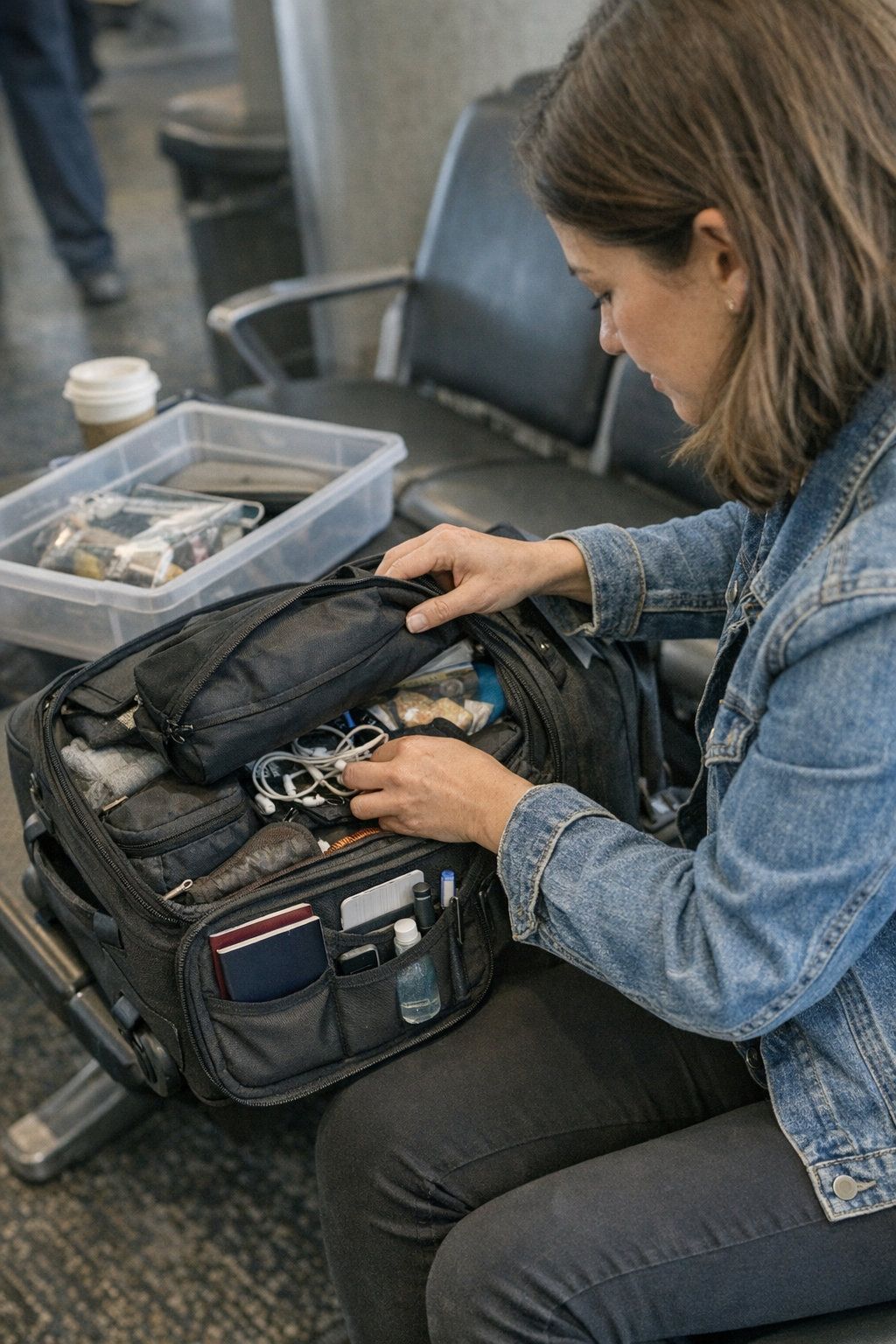
There’s a moment when the bag you packed carefully at home starts to feel less like a well-planned system and more like an obstacle on the move. The outside still looks crisp: compartments zipped, clothes aligned, pouches tucked where they should be. But every time you pass through airport trays or shuffle down the boarding aisle, something small drags the whole process down. The passport isn’t where your hand expects it. Headphones dig further into the pack. You notice it only after a few airport transitions.
The Quiet Drag of Overlap
At first, I thought the issue was about tightening up my packing — a neater roll, a better organizer, an extra pouch for overflow. But after several flights, it wasn’t visual clutter slowing me down. It was the overlaps: the things you actually need kept behind layers of things you thought you might need, or pooled with items rarely used while moving. What looked functional at home spread itself too thin across repeated airport interruptions. A simple reach turned into a juggle. That friction kept coming back.
Solving for Movement, Not Just Storage
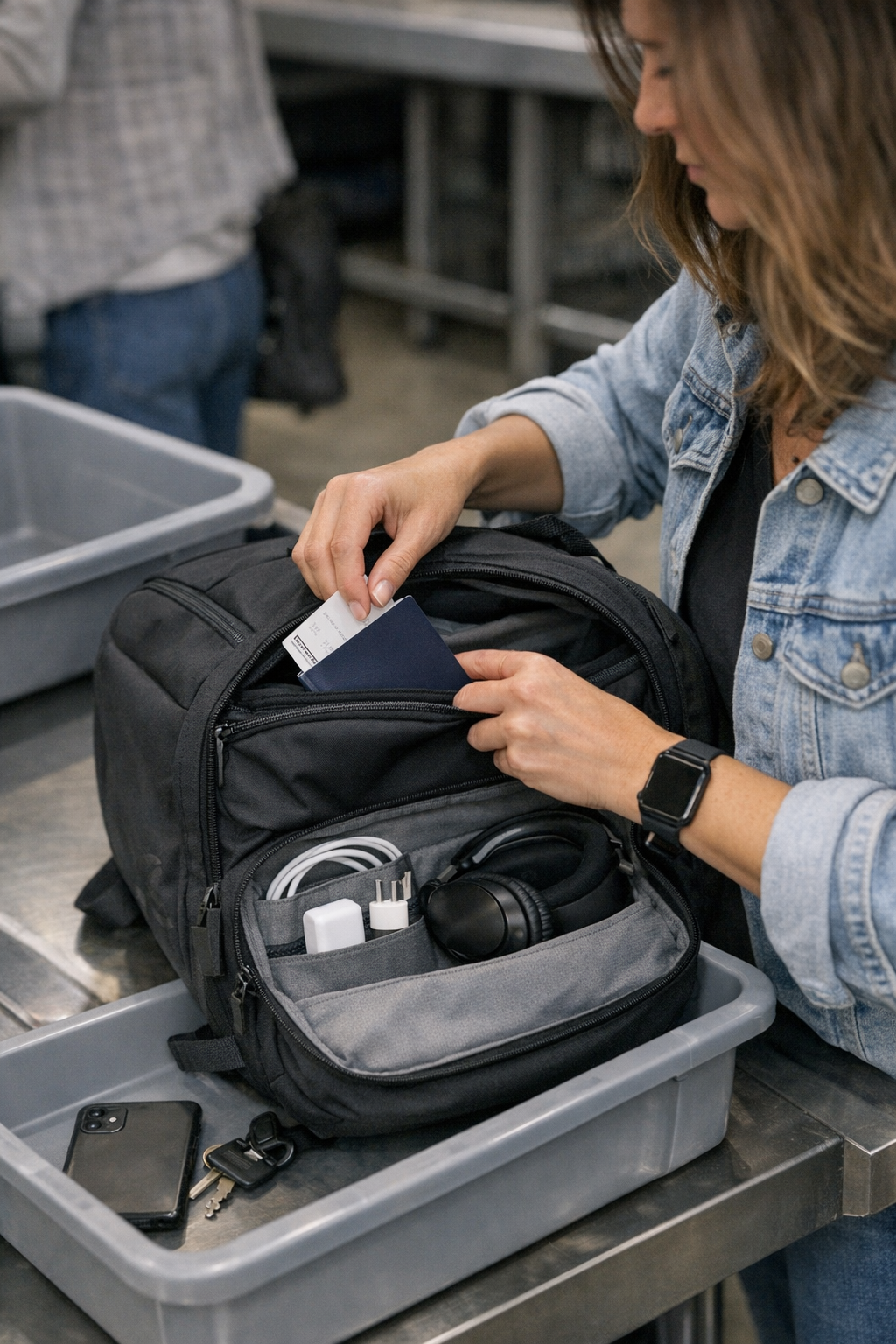
At first glance, the bag looked fine. But the difference became clear in real use: grabbing documents at security checkpoints, sliding into your seat before the person next to you arrives, untangling cables mid-flight. These moments aren’t for repacking or major reorganizing — just quick, repeated retrievals. When I started putting essentials — phone, passport, sanitizer — each in their own easy edge-of-bag spots, the trip felt smoother. I stopped stacking every pocket with pouches and left quick-grab items out front. The difference was more time moving and less time resetting.
Order That Lasts Beyond Arrival
We often prioritize tidy packing over ease of access. That’s the default approach. We focus on making the bag “look” organized instead of noticing how often we reach behind snacks for the charger, or fish through layers for a pen. The result is the difference between packing for the bed and packing for the hours between check-in and takeoff. A pen found in one reach, a passport sliding into its own slot, headphones exactly where the hand expects them — these small setups reduce constant interruptions. The bag may look a bit less composed, but the trip itself moves better. That flow matters most.
If you want to see some real-world tools behind these routines, they’re quietly gathered here: http://www.carryonsupply.myshopify.com