When a Pause Changes the Rhythm of Home Life
A repeated afternoon pause by a dog can unsettle evenings; moving the water bowl closer often resets routines and removes friction.
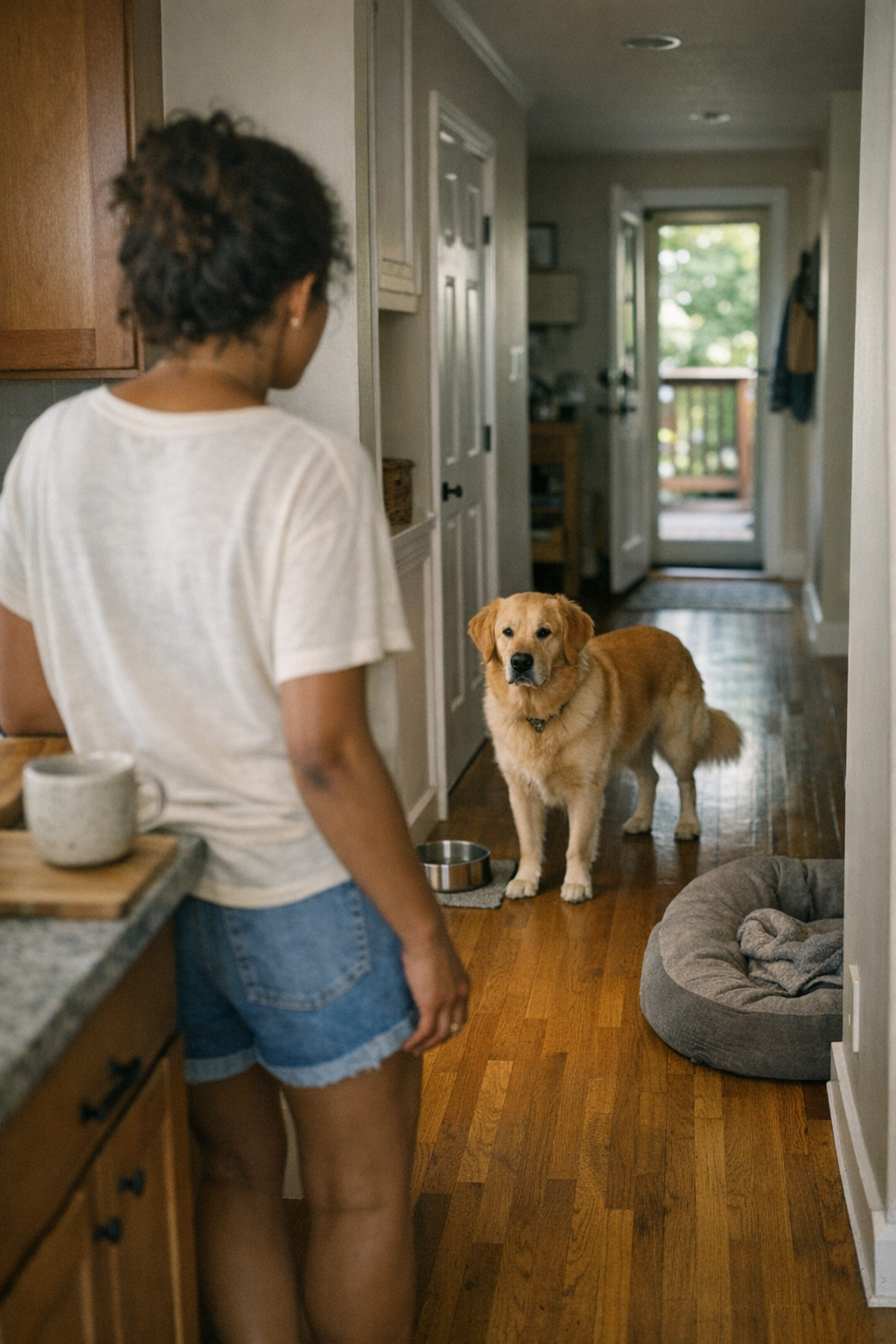
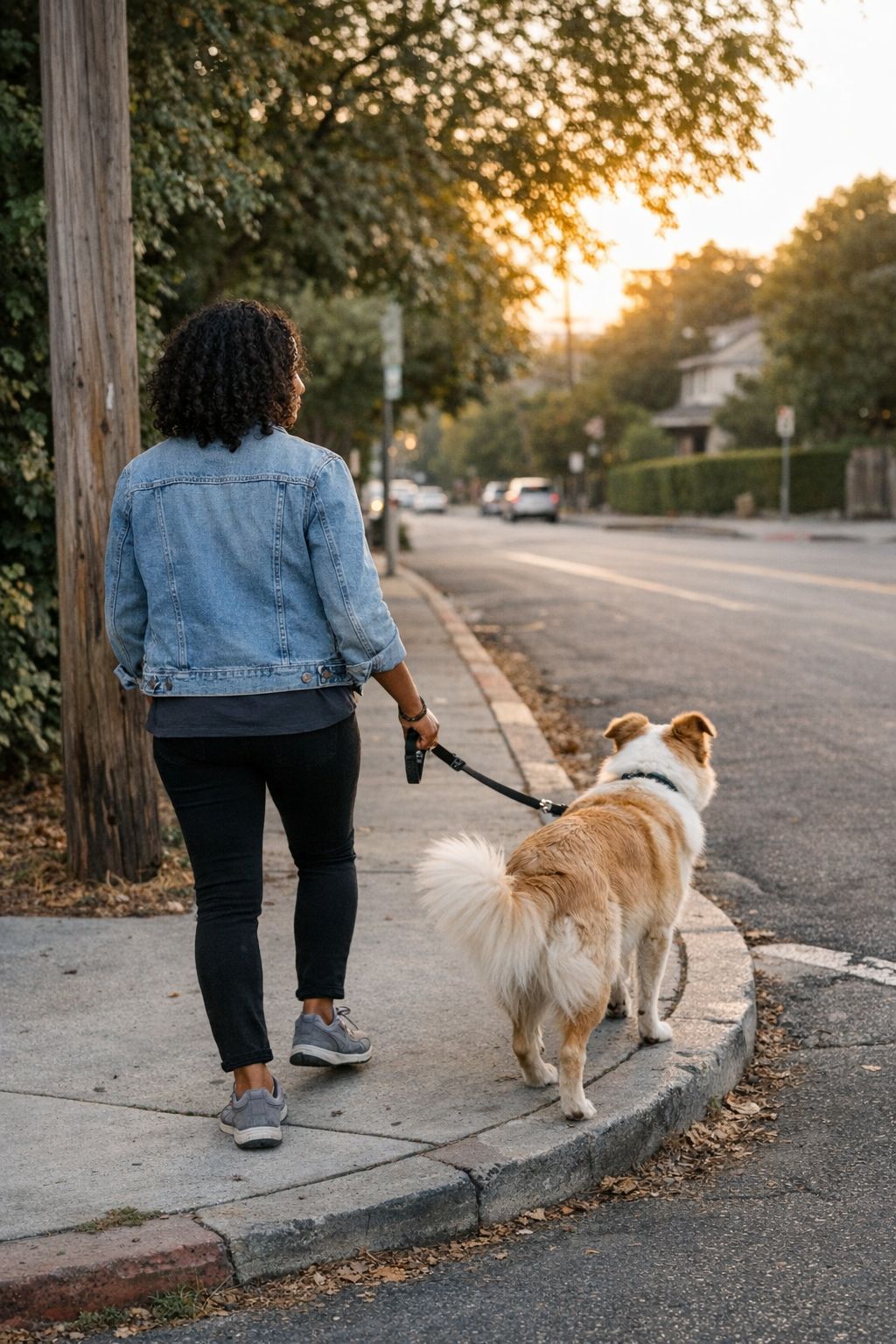
There’s a certain spot in my house where the routine always slows down. For us, it’s right after a walk, halfway between the back door and the rest corner—the damp leash still hanging loose, my dog stopping just short of his bed, unsure what comes next. It happens on quiet afternoons and right after dinner, always catching us between motion and rest. At first, it seemed like a coincidence. But day after day, the pause lingered, and the small delays around cleanup, feeding, and winding down quietly stretched out. The difference wasn’t dramatic—it just refused to go away.
Dogs mark time more by where things happen than by the clock. My dog’s rest area always looked neat, toy basket tucked carefully to the side, bowl perfectly aligned with the mat. Yet cleanup after feeding felt slower than it should, and each night I found myself dodging the same stray bone or stepping around a nudge near the food dish, like a question had been left unanswered. The tidy setup didn’t match how either of us moved through the evening. That spot kept pulling us both off rhythm.
You start to notice it after a few mornings. The hesitation repeats. Sometimes he circles near the kitchen entrance, not quite ready to decide between water, food, or a nap. Other times, I miss the cue and step on a scattered toy just as I’m trying to reset the room for the night. The space looks fine from a glance—better than most messy corners—but “fine” isn’t the same as easy. Every night, the same two-foot span tripped us up. That was the part that kept coming back.
The Repeat Pause
It builds up quietly—a half-beat where everything else stops and nothing moves forward. The first week, I thought it was tiredness or a quirk typical of dogs. But soon I realized it was always the same: after every walk, the stall put us in an awkward standoff, with his body pointed nowhere and my hands busy rearranging something I’d already reset earlier.
Evening routines depend on small, invisible transitions working smoothly. Here, though, timing and access kept slipping. The corner looked organized, but cleanup after feeding always dragged because of some small obstacle. Rest time overlapped with unfinished chores. Conventional wisdom might say more structure or clearer signals would fix it, but that wasn’t the problem. The physical route—from door to bowl to bed—required more navigating than it should have.
You feel the drag in small ways. Stepping around bowls left slightly out of reach, lifting bedding corners twice just to open a path, picking up a toy that crept exactly where your foot has to land. None of it is major. But nothing clicks, and every night the next round of winding down takes a few extra minutes.
Where Form and Flow Don’t Match
For a while, I kept trying the usual fixes—straightening bowls, rounding up toys, smoothing towels by the crate—trusting that a neater setup would be enough. But every night, the same mismatch came back. He’d hover in that fuzzy spot between tasks. I’d find myself circling back, moving something twice that should only need handling once.
The difference between tidy and livable isn’t always obvious. Our setup looked mostly under control. But the stalls told another story: the routine had a kink. The bowl sat just far enough from the rest corner to make every transition require an awkward loop. Toys spilled into the walking path, rolling slowly toward the feeding area and underfoot during cleanup. The corners I hoped to keep calm became small staging zones for repeated, unnecessary movement. The clearest sign was how many times I paused in the exact same spot, towel in hand, waiting for him to choose whether to eat, drink, or settle.
Moving the bowl closer or nudging the crate forward felt strange at first—a break from the habit of how things were “supposed” to look. But after a few evenings, the awkward pauses shrank. He took to the new bowl spot without fuss, the circling and hesitation faded, and cleanup finally flowed smoothly.
You only notice how off the flow was once it loosens for real. The difference isn’t in the new arrangement itself, but in the quiet that returns. Fewer steps, less double-handling, a softer reset into night.
Letting Small Tweaks Do Their Work
Most routines don’t just repeat—they accumulate small snags waiting to be noticed. I used to think a clean feeding corner or toy basket meant the job was done, because it looked fine. But my dog’s hesitation—his way of hanging at the edge of everything—was a quiet friction that set the tone for the whole evening. We both felt the delay even though the layout stayed nearly the same.
Over time, checking that spot became less about finding new trouble and more about knowing when the flow felt right again. I’d run my fingers over the mat, see how he chose his path from door to dish to bed. No rushed efficiency, just a gentle ease coming back at the end of the day. Sometimes dogs sense a difference in the space before we do. Sometimes it takes a dozen awkward resets before you see the pattern, and a small change finally settles the hesitation that’s been there all along.
After the last round of tweaks, the evening routine felt quieter, more lived-in. Neither perfect nor finished. But the pause—the one that used to stall us for no reason—softened into something you barely notice.
For anyone dealing with similar small frictions in their daily routine, these moments usually sort themselves out best when the space lets both of you move naturally, not just sit neatly. If you ever want to explore where your routines meet real use, you can find the small setups that helped me here: http://www.dogpile.myshopify.com