When a Simple Walk Becomes a Daily Struggle
Recurring stalls during walks signal setup or timing friction, not behavior. Adjusting timing and gear placement eases delays, improving routines.
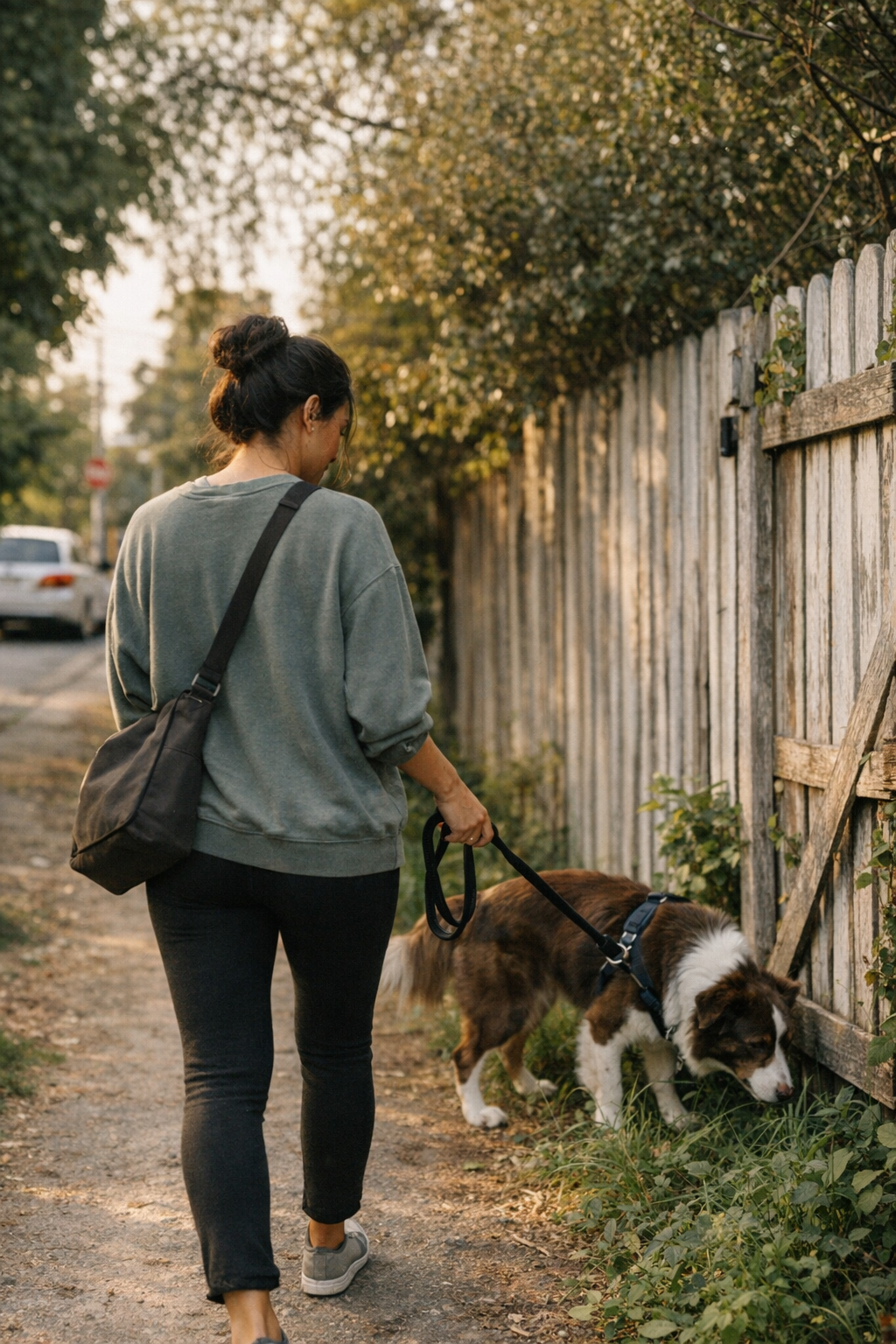
It took a run of rushed mornings and a few groggy late returns before I noticed how dog walks, which once rolled out with a background ease, had quietly collected their own set of speed bumps. Not big problems—nothing dramatic—but those little stutters you feel when the leash slackens just before the neighbor’s fence, or your route zigzags out of habit, lengthening the loop to skirt a gate. Most days, it passes without comment, but the repetition gives it weight: a tug here, an extra loop there, and a slower re-entry at the door that makes grabbing the towel more frantic than it needs to be. That’s the part I kept coming back to—how even pet routines, familiar as furniture, can grow steadily less usable the longer you let them run unchecked.
The Surface of Ease
You notice it after a few mornings: the routine looks fine on paper, a kind of inherited choreography from dog-walking guides and memory of what’s worked before. But when the leash twists by the same bush or your hand bumps the hooks where harnesses hang just out of reach, it’s harder to pretend it’s working smoothly. I started catching myself glancing at the gear station before walks, calculating how much extra reach I’d need, counting how many times the towel was out of place for muddy paws. These repeated pauses, no matter how small, build up over time. I found myself moving slower at the door, reacting instead of moving.
It looked fine at first. The entryway tidy, the leash hooks convenient enough. But the difference showed up in smaller ways than expected: a little more frustration in my steps, a dog less certain as we lined up for the walk. The flow from indoors to outdoors developed sticking points I could have blamed on my dog’s behavior, but really came down to layout and timing I stopped noticing.
Signals in the Routine
It became a pattern—my dog hesitated a few feet past the same gate every evening, just as my head started clearing from work. At first, I thought it was a mood thing or lingering scent trails, but the way he slowed down felt deliberate. There’s often a reason for repeat pauses that’s less about stubbornness and more about a sequence that’s gone out of sync: leash too loose, harness pulled from an awkward corner, bowl still drying on the mat. Each time, the fix meant a workaround—detouring, pulling, stepping back for a forgotten wipe.
That part kept returning. By the time we made it inside, the entry mat was crowded with toys nudged out of place, feeding bowls misplaced in the hallway, and the towel nowhere near where dirty paws landed. Post-walk cleanup, once a swipe-and-go, became a scramble. It turned into a quiet contest between the setup I thought I’d mastered and what we actually needed. None of it looked chaotic, but it overlapped in ways that chipped away at a calm reset.
A Smaller Shift Than Expected
I never meant to overhaul the whole routine—it’s more accurate to say I gave in to a quieter logic after one particularly messy return. Instead of explaining away the repeat slowdowns as quirks, I made almost incidental shifts: nudging the walk time earlier, landing it between my own schedule and my dog’s usual afternoon rest. The second change was even smaller: moving gear from a mid-door hook to a crate-edge shelf, and rolling the towel into a resting spot reachable with one lean instead of a stretch.
It’s subtle, but after a week the stickiness around the gate eased. The leash stayed untangled; the return home felt less like an obstacle course. The bowl sat where it should, and there was less urgency grabbing the towel when damp paws arrived. The whole post-walk transition calmed down—not dramatically, but enough that I didn’t have to constantly think about workarounds. The routine didn’t look much different, but it started letting me move through it naturally, matching the pace my dog was already setting.
Small Repeat Signals
Most of the daily frictions never announce themselves as problems; they just persist until they demand a patch. A repeated pause at the door, a leash slipping underfoot during untangling, a towel out of reach at exactly the wrong moment. These things never seemed worth changing alone, but their overlap made the walk-and-return pattern more draining than necessary. Over time, I realized it wasn’t the routine itself slowing us down; it was the cluster of tiny misplacements and ill-timed exits that grew into blocks.
What started as minor annoyances ended up carrying weight across the whole day. How smoothly a walk begins and how calmly it ends depends less on getting everything perfect and more on noticing where your setup quietly interrupts itself. The refresh didn’t come from a new system, just the willingness to let one part of the routine shift and watch the difference.
The routine keeps teaching me that what’s easier to live with isn’t always what looks tidy or well-prepared. It’s more in how easy it is to grab what I need, at the pace my dog already sets.
Sometimes you only notice the real difference after the small frictions stop.
Find a few other small changes and low-key solutions here: http://www.dogpile.myshopify.com