When a Single Cable Changes the Whole Room’s Feel
Loose lighting cables disrupt daily use with snags, dust, and distractions; securing them keeps setups truly tidy and functional.
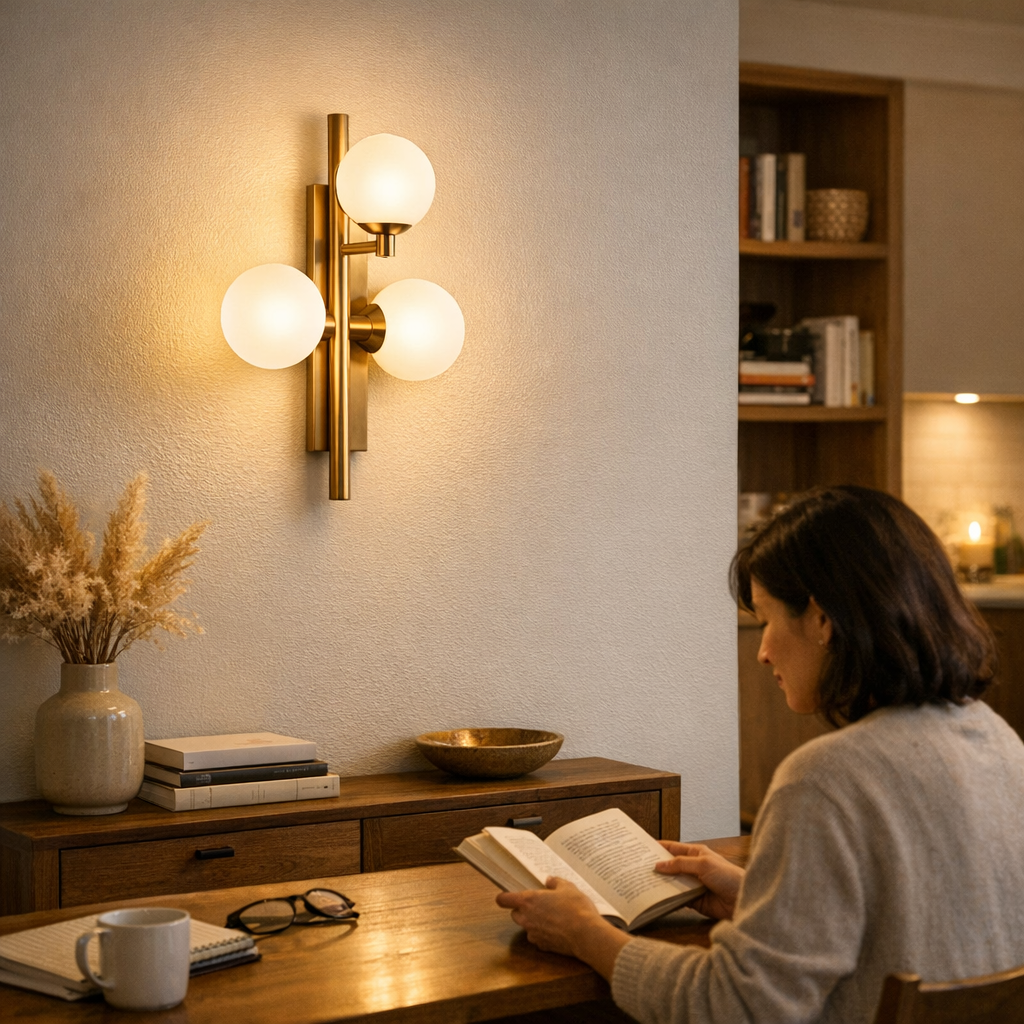
Most evenings, I sit down at my desk and see a space that should feel resolved. The lamp’s right where I need it, the shelf overhead is clear, the edges are clean. Walls catch soft light and there’s nothing obviously wrong. But small issues tend to surface after a week or two—an exposed cable under the desk, a loose cord trailing along the back of the counter, a wire shifting as I slide my chair in. At first, these details don’t stand out. Later, they become hard to ignore, cropping up as interruptions you step around, duck under, or just sigh over as the space starts to feel less finished than it looks.
Order That Breaks Quietly
A lighting setup designed to look clean in photos rarely holds together smoothly under daily use. Hidden wires might appear effortless at first, but a single loose cable tugs a little each time you move. Maybe it’s the lamp’s power cable working itself out from behind its bracket, or the once-tidy line settling into dust just out of sight.
You don’t notice it right away.
But the space starts to behave differently. That neat surface gets interrupted by a looping cord or a plug that slips from its channel.
That was the recurring frustration I kept coming back to.
The Small Ways Cables Distract
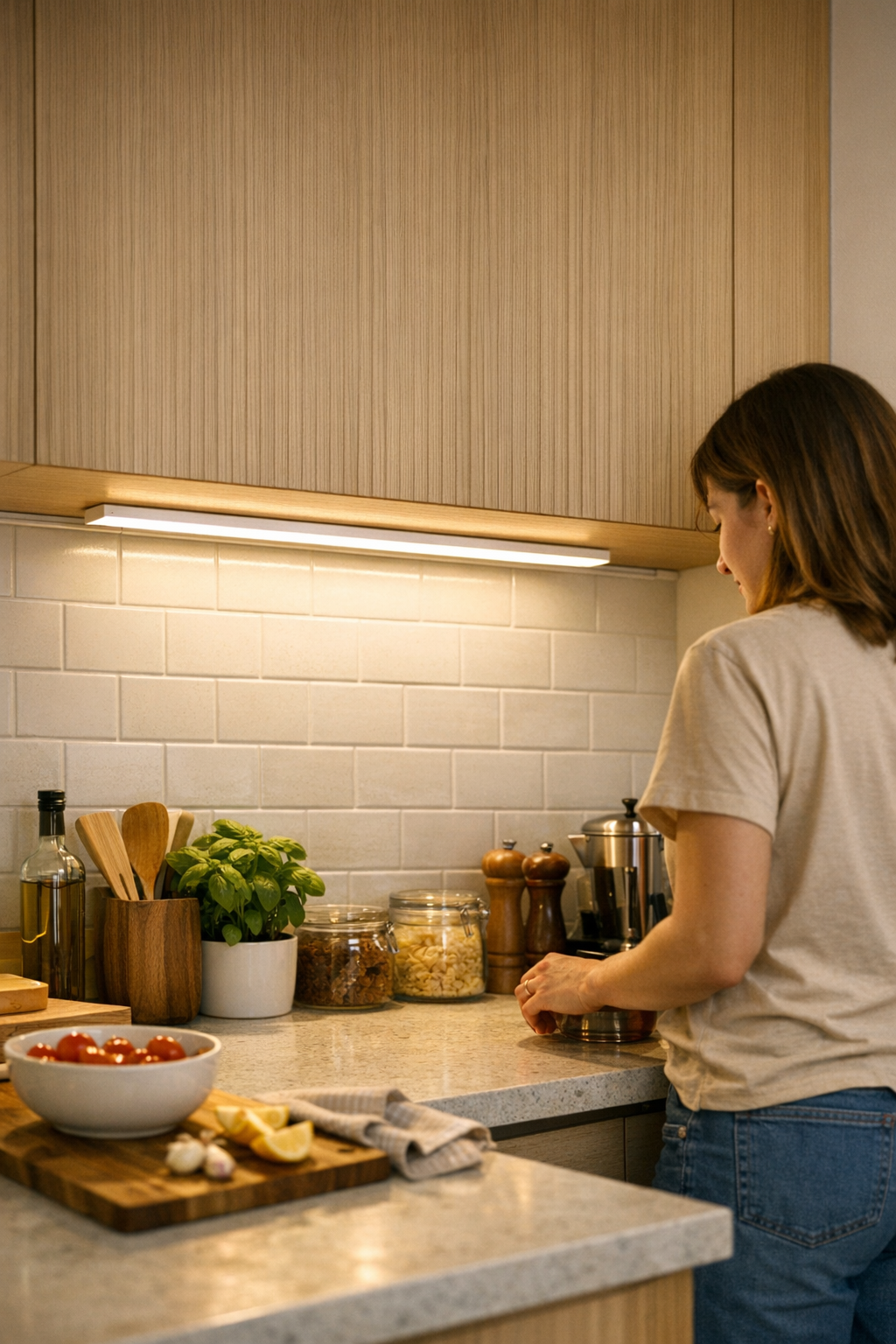
One evening, wiping down the counter beneath a low-profile LED strip, I realized how often the power cable trailed in the way. It arched away from the wall, gathered dust, and drew marks from every passing hand or container. At the desk, a similar nuisance appeared: the task light’s cord caught by the chair’s wheel—not dangerous or dramatic, just another thing to keep fixing.
Spaces that look calm at a glance can change very quickly during use. You start cleaning around cables or fidgeting to keep them out of sight on video calls. There’s no crisis, but there’s friction—a sense that the setup isn’t quite working, that the order is only surface-deep.
I found it changed everyday routines—day by day, the simple acts of reaching, sitting, or moving around the room didn’t feel as smooth.
When the Solution is Almost Invisible
The fix, when it came, was neither costly nor difficult. Anchoring main cables with slim adhesive raceways, tucking cords neatly along the backs of shelves, keeping lines flat to the wall instead of swinging free—each small change reduced friction and made maintenance easier. That quiet shift meant I cleaned less around those edges, didn’t snag cords sliding the chair back, and the space stayed visually calm—not just in pictures, but through everyday use.
The difference is quiet but palpable: a lighting setup that stops demanding constant adjustment and simply works in the background. It’s striking how one anchored cable can make the whole space feel lighter.
Some of these thoughts stayed with me as I browsed through LightSupport’s collection.