When a Tidy Tray Turns Into a Stubborn Mess
Flat trays trap water and odor after wet use, making entryways hard to maintain; elevated storage speeds drying and eases upkeep.
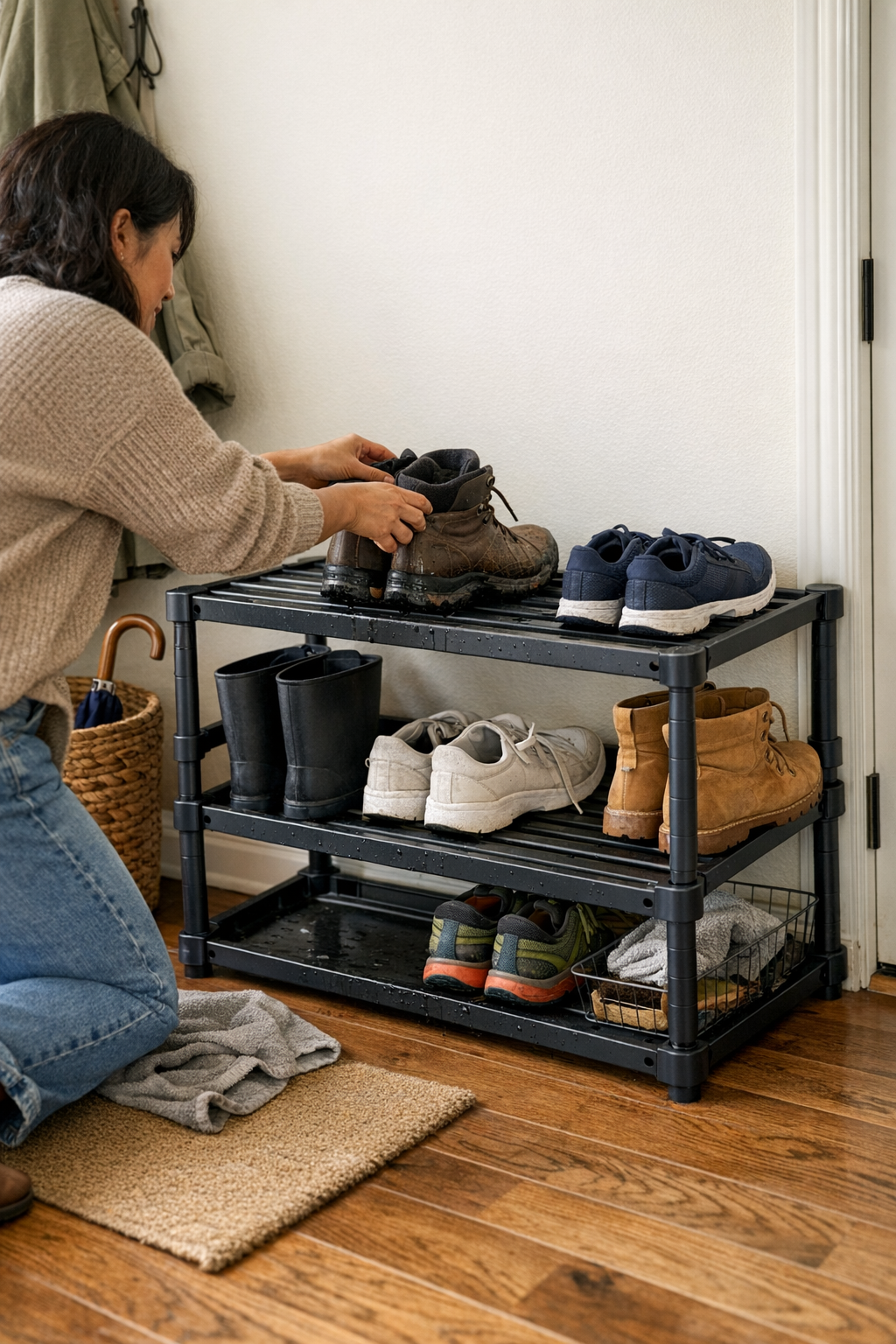
There’s a small satisfaction at the end of a long, rainy commute—coming in, stepping onto the entry mat, and sliding your shoes onto a clean tray. For a while, it feels like the evidence of weather and dirt has been tamed. But the feeling changes quietly, as days loop in a routine: shoes on, shoes off, wet soles collecting in the same spot. Gradually, what first promised calm control begins to press back with its own kind of resistance. In the rush of repeated arrivals and departures, the transition space reveals what it holds—and what it hides, sometimes all at once.
When Order Masks What Lingers
You don’t notice it immediately.
At first, the tray holds everything in place: shoe pairs line up, puddles seem contained, and gritty flecks don’t stray far. But after a few wet days, something changes—the tray surface can’t dry out. Each arrival adds to a faint but persistent mustiness.
I found myself pausing at the door, reluctant to add another pair of wet shoes to the slowly souring mix. It was an unexpected pattern. The tray kept things visually organized, but each time I reached down, there was a subtle resistance—shoes never fully dried, the tray demanded a deeper scrub than I had time for, and the effort of “tidy” started to outweigh its benefit.
The Hidden Cost of Containment
It’s strange how solutions that look good at first can falter under real daily use.
That’s what kept drawing my attention. The tray, once pristine, became a layer of work I didn’t want: pooled water, stagnant grit, and that lingering odor. Each day, it required more upkeep—one more wipe, one more round of cold water and reluctant hands.
Letting shoes rest above the surface instead of on the flat, wet pool felt like a small but significant shift. A raised rack or vented shelf lets air circulate—shoes dry naturally, and clutter feels lighter in the room. It isn’t just about storage; it’s about how the entry space breathes and works over repeated, real-world arrivals.
Resetting the Rhythm
Every entry has its own pace—sometimes hectic, sometimes slow.
I noticed families picking paths around the tray or shoes creeping toward wall-mounted overflow storage after just a few rainy days. It doesn’t take much: a single wet week shifts the neat tray into a threshold blocker, spreading its own kind of clutter.
This is where the lesson settles in. Storage that lifts shoes, lets water drain or evaporate, or allows air underneath has a quiet but daily impact—especially in spaces handling the constant flow of arrivals and departures. The change is subtle, but over time it makes the routine of coming and going easier, not harder.
Some days I still feel the urge to reset with simpler solutions—those small improvements do matter: