When Blades Overheat: The Quiet Struggle of Long Cuts
Choosing the right jig saw blade prevents heat buildup, ensuring cleaner cuts, better control, less fatigue, and reduced rework in dense materials.
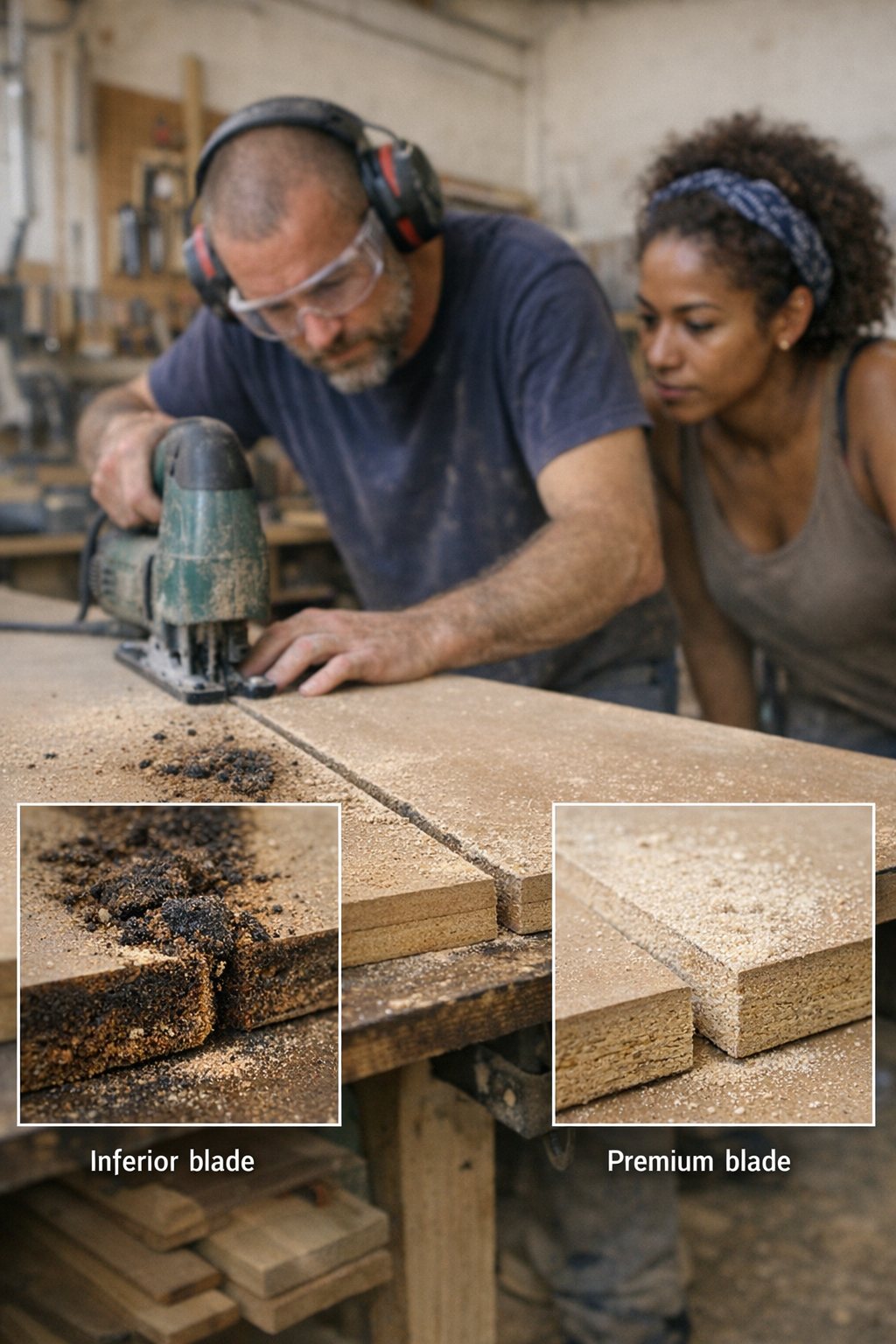
You don’t really notice battery life — until it interrupts your rhythm. It’s the same with the blades you use for the small, repeated jobs that make up a workday. Hours slip by, one cut following another, and only after a while do you sense resistance creeping in. Not a sudden shift — more like a tool quietly beginning to fight back.
I’ve spent afternoons in sawdust and hum, instinctively grabbing whichever blade is close. On fresh pine, most blades feel about the same. But feed a jigsaw into dense, layered board — and keep going, pursuing that gentle, uninterrupted line — and the difference appears. You don’t notice it immediately. But you feel it.
The Moment Things Start to Drag
At first, the saw’s movement stays light and certain; edges stay crisp, and the sound is clean. Then, somewhere in the rhythm, the blade starts to drag. Edges go a little rough. You might see darker streaks, or surprise yourself by pressing harder, just to stay on track.
This is when subtle design choices — those tiny, nearly invisible differences between two nearly identical blades — matter more than packaging ever suggests. If you keep cutting, trying to finish with a blade grown hot and tired, it gets harder to ignore. The wood is scarred. The air warms around your hands.
Often, this is when you realize: it’s not just about finishing a cut faster, it’s about how much you end up fixing when the cut is done.
What the Blade Leaves Behind
There’s a detail you might never think to watch for: the residue left trailing in the saw’s wake. With a sharper, cooler blade, the dust is dry and almost pale, the kind that falls softly to the floor.
But when heat builds, the debris turns clumpy, a little sticky and darker — a sign the blade is laboring, teeth losing their edge. The feel in your hands shifts, too. The vibration increases. The control slips, just enough to turn an easy routine into a minor battle.
Most of the time, we discover this difference only after we’ve spent too long fighting through a stubborn board.
Sometimes, simply switching to a blade with a true heat-resistant coating can quietly reset your day — letting you return to the fluid, almost-forgotten efficiency of those first few cuts.
The Cost of Pushing Through
In practice, that small switch made a practical difference in my workshop. I used to swap blades after half a dozen cuts, quietly frustrated. With a higher-quality blade, the dozen strips cut nearly as easily as the first, saving not only money, but also those hidden hours lost sanding out scorched edges, or just battling fatigue.
It’s easy to assume all blades do the same job until you’re deep in a project and every extra ounce of effort starts to wear.
In the end, it’s the subtle cues — sound, feel, residue — that show how much wear a tool is hiding. Paying attention to those little changes can shift the whole rhythm of a workday.
And sometimes, it’s in the smallest shift — a cleaner edge, a smoother pass — that everything quietly improves.
These quiet observations surfaced while I was dialing in my own shop routines, made practical with a bit of reflection over real-world results. If you’re curious, here’s where I gathered more thoughts.