When Cabinets Look Tidy but Feel Chaotic at Home
Cabinets that seem organized can cause friction and blocked movement in daily use; fixing weak spots improves flow and ease over time.
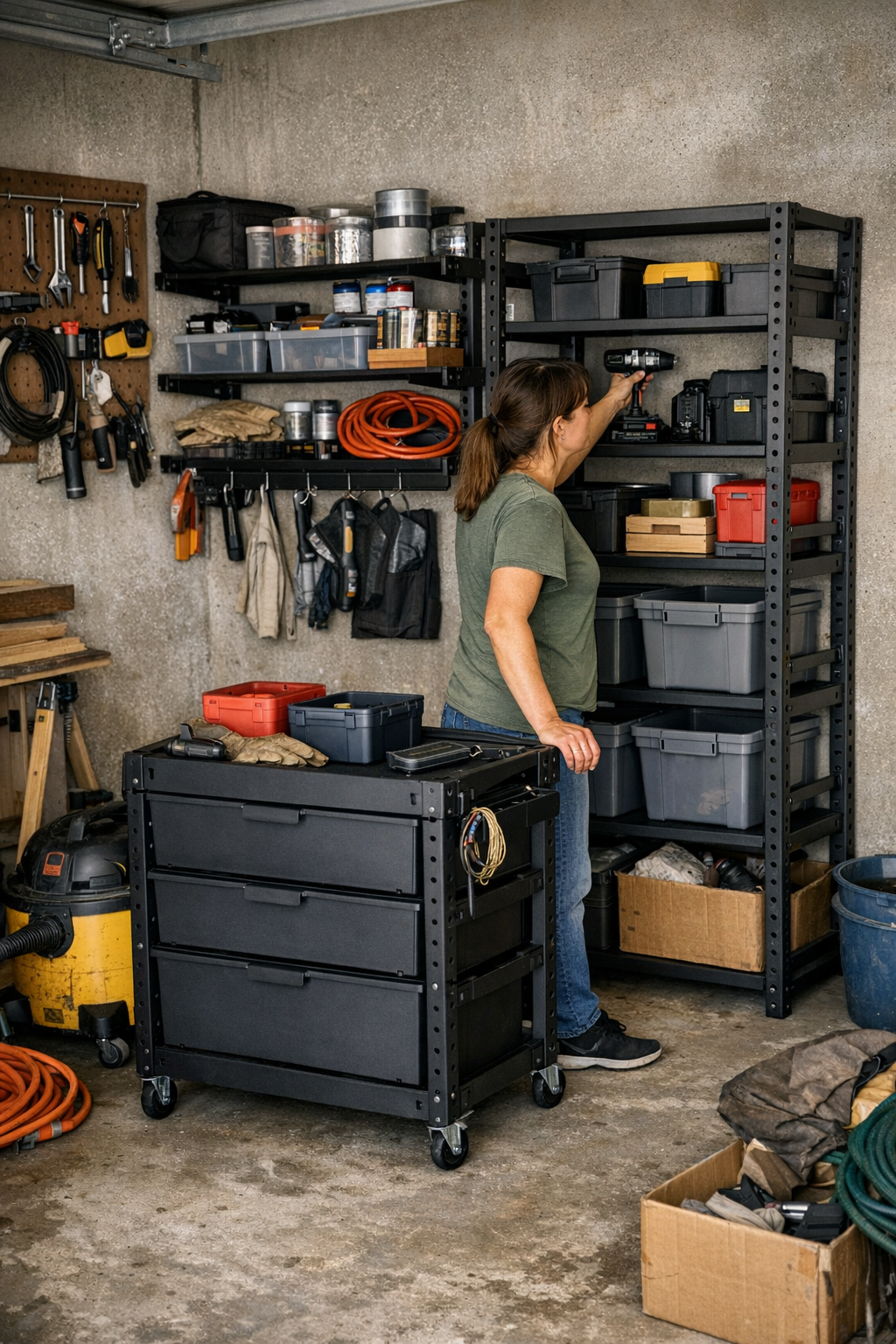
There’s a special kind of satisfaction in seeing a workspace look pristine. Drawers closed, bins tucked away, everything lined up just so. Order can feel like a kind of calm—at least, at the start. But the real test comes later, when tools and supplies start moving in and out throughout the day, when the pace picks up. That’s when simple organization is quietly tested, and a “finished” setup starts to show its seams.
You don’t notice it immediately.
But you feel it.
The Illusion of Order
At first, a neat cabinet or row of wall-mounted racks feels like the answer. You stand back, take it in, and it fits the image of a productive space in your garage or workshop.
But as days pass, small annoyances creep in. A cart rolls into the pathway and quietly narrows your steps. That tall cabinet—perfect in photos—now hides your drill behind a couple of clattering bins you didn’t expect to move. What once felt open turns subtly cramped.
You reach for something and end up moving other things first. The reset takes longer. Come Thursday, a tool sits on the counter, not in its place. Later, it becomes tomorrow’s problem.
And another tiny bit of friction sneaks in.
Movement Over “Containment”
It’s easy to mistake a storage system that simply “contains” items for one that truly works. But over time, there's a difference between looking organized and feeling organized in the flow of a busy workspace.
The turning point usually arrives after a hectic week. Even if everything’s in its zone, blocked aisles and stacked-over bins show up—reminders that the system handles rest better than action.
Sometimes the answer is smaller than you expect—a shift from two cabinets facing each other to one clear wall of open shelves, freeing up just enough floor space to move easily, even with a cart in the way. The flow changes; the clutter doesn’t collect as quickly.
It feels strange how much difference a few inches or one open return path can make.
Paying Attention to the Quiet Signals
These things often go unnoticed until awkward detours pile up: ducking around open drawers, stacking bins just to reach one simple tool, or adjusting routines to keep moving through the space.
When everyday returns get harder, resets start slipping. Clutter moves in, settling onto any open surface. The confidence of “finished” organization fades, replaced by a quiet urge to reshuffle—maybe next weekend.
Sometimes, what helps isn’t more shelves, but better movement: letting reach, return, and reset happen with less thought, fewer steps, and less resistance. An organizer is only as good as how well it fits real, looping motion.
It’s in how a setup lets you finish a job, walk away, and later step right back in without noticing the system at all.
I found these thoughts coming together one late afternoon after realigning a few shelves in my own crowded shed.