When Calm Looks Busy: The Hidden Strain of Pet Care
A daily pet-care setup that only looks calm ends up demanding repeated effort; small changes like a covered bin reduce clutter and interruptions.
You don’t always notice the growing pile at first. A home with pets can look tidy and calm while the quiet friction of routines adds up in the background. Every day brings familiar small loops: bending to pick up dropped kibble, wiping water splashes, and realizing the towel for paws is missing again. The work isn’t dramatic; it’s a steady hum of interruptions—just enough to break your flow, but never enough to force a change in how you do things.
At the start, everything looks organized. Food stored in a clear bin, water within reach, towel folded just so—there’s comfort in that illusion of control. A container here, a bottle there. You expect a “neat” space will mean an easy routine. But differences kept showing up. By the third or fourth walk, meal, or cleanup, towels were draped on chair backs, brushes drifted farther each day, and items didn’t return to their spots—not out of laziness, but because their spots weren’t really set. That’s when you start to see the slow reappearance of clutter.
There’s a soft resistance that grows when everything is slightly out of place. Bowls stay out long after feeding, the scoop leaves dust behind, and a half-used bottle lingers by the sink. The home remains functional, but every pass through the space feels a little slower—one more reach, one more mental note to “deal with that later.” You start to notice it after several repeats. And eventually, the background effort is what sticks in your mind, more than the straightforwardness you expected.
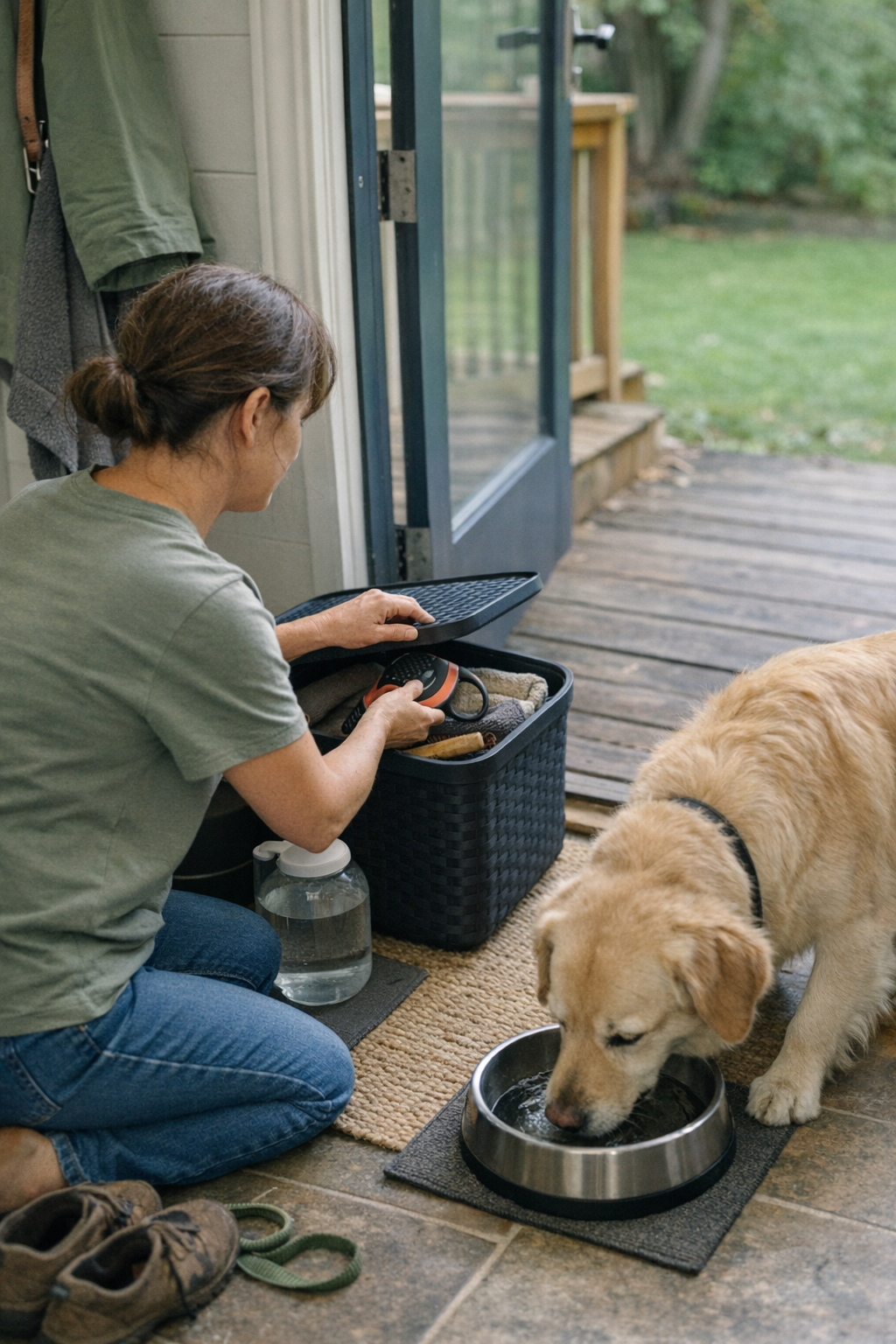
What changed was mostly physical. Adding a bin with a lid—placed by the doorway that sees the most action—made a clear difference almost immediately. Used towels dropped straight in, bottles set in the same corner, brush nested right beside them. One easy motion, no extra sorting or new system needed. The lid closed on the mess so these items stopped haunting the margins. At first it looked simple, but the difference over the following week was steady and clear. Each tool had a landing spot that quietly fit the actual rhythm of care, not just the day one plan.
It’s not about chasing invisible perfection, but about smoothing all those minor resets—making it easier in the moment to finish tasks without a second thought. Putting storage within arm’s reach of the mess turned out to really reduce effort. Routines started finishing themselves. There was less to postpone, and the quiet background tension almost faded away.
Sometimes the only change that makes a difference is where you put a basic bin. For anyone wanting less friction, the calm comes just after you close the lid—often while the rest of the house keeps moving.