When Car Spaces Speak, Chaos Quietly Retreats
Without clear car zones, clutter grows and slows routines. Defining zones for each person cuts clutter, prevents loss, and eases daily travel.
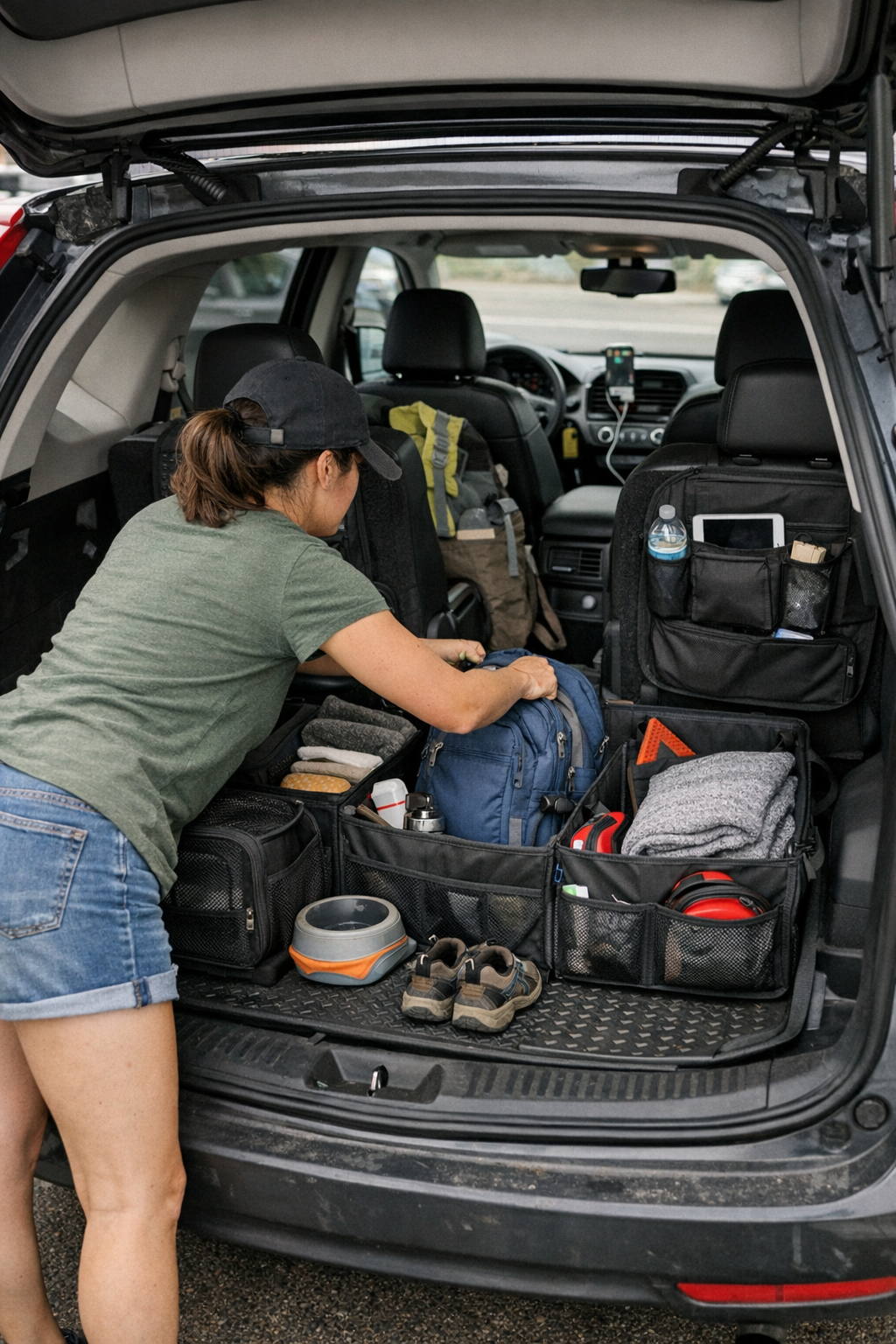
What looks like an organized car at first often only works on the surface. After just a few trips you start to notice the small annoyances: a phone charger tangled through a cupholder, snack wrappers slipping beneath the seat, an organizer pocket filling up faster than expected. Over the course of daily commutes, school pick-ups, and errands, you realize there’s a big difference between things simply being put away and being easy to access or use.
Where Clutter Hides When “Zones” Are Vague
A loose charging cord seems harmless until it ends up tangled under a passenger’s feet or has to be untwisted in a rush. Shared pockets quickly become catchalls, collecting snacks, homework, and earbuds meant for different people or routines. What felt efficient at first turns frustrating midweek when someone asks where their water bottle went, the charger disappears, and wrappers crawl just out of reach for easy cleanup.
These repeated inconveniences add up—retrieving lost items from under seats, digging through a pile of things mixing together, or awkwardly reaching for a cord caught on a backpack strap. Without clear, dedicated zones, items shift, pile up, and overlap until the car feels less like a working system and more like a slow-motion jumble that wears down repeat use.
What Changes When Each Space Has a Job
A noticeable improvement came when storage was split by person—each kid got their own seat-back pouch, and the center console was reserved strictly for communal essentials. Charging cords moved to the outer edges of seats, away from where bags and shoes catch them. Suddenly, exiting the vehicle was smoother, fewer arguments came up, and the “who had it last” guessing games stopped.
It isn’t perfect—there are still days when things stray—but the difference shows in small ways. Less time is spent searching. Less time is spent rearranging. More time is just getting in and out. Relying on a shared jumble for too long means things overlap and require constant policing. Giving each space a clear job lets your car’s system run quietly in the background.
Organization That Actually Holds Up
The unexpected lesson: what seems like an efficient setup in theory often falls apart under the stress of real, repeated use. The true test is the end of the week, after school runs, errands, gear swaps, and multiple people use the car. You remember which adjustments made getting in and out less awkward or why you stopped using the seat edge as a “temporary” drop zone for loose items.
Over time, the best sign of a working system is that the routine flows with less effort. It doesn’t feel like searching or explaining is required every time you climb into the driver’s seat. The goal shifts from chasing a perfect setup to finding what reduces friction and keeps your daily driving smoother.
If you’re working to tell the difference between a car that looks tidy and one that’s truly functional through repeated use, this is a practical place to start exploring: drivewellsupply.myshopify.com. Here you’ll find solutions designed to hold up in the real world—phone mounts that keep charging cords in place, interior organizers that prevent item drift, seat covers and floor protection that stand up to daily traffic, and thoughtful gear setups made for ongoing use and easy cleanup.