When Carry-On Chaos Creeps Into Quiet Airport Moments
A carry-on’s structure matters most during repeated airport transitions. Separating quick-access from deep storage speeds security and keeps repacking smooth.
The True Test of a Carry-On Isn’t How It Looks. It’s How It Moves With You.
There’s a certain optimism baked into every freshly packed bag—everything zipped, stacked, and sorted, just waiting for the next flight. But that neat order on my bedroom floor quickly dissolves once the airport rhythm takes over. After a few rough gate changes and one overzealous security shuffle, the promise of organization rarely survives.
You start to notice it after a few transitions. The bag that seemed so controlled at home begins demanding more effort each time. A hidden passport here, a charger slipping just out of reach there, the familiar half-sigh as you unzip the same pocket for the third time because grabbing one item always sets something else loose. What kept coming back was this: a carry-on designed purely for neatness ended up slowing me down when I needed things fast.
Friction Never Looks Like a Mess at First
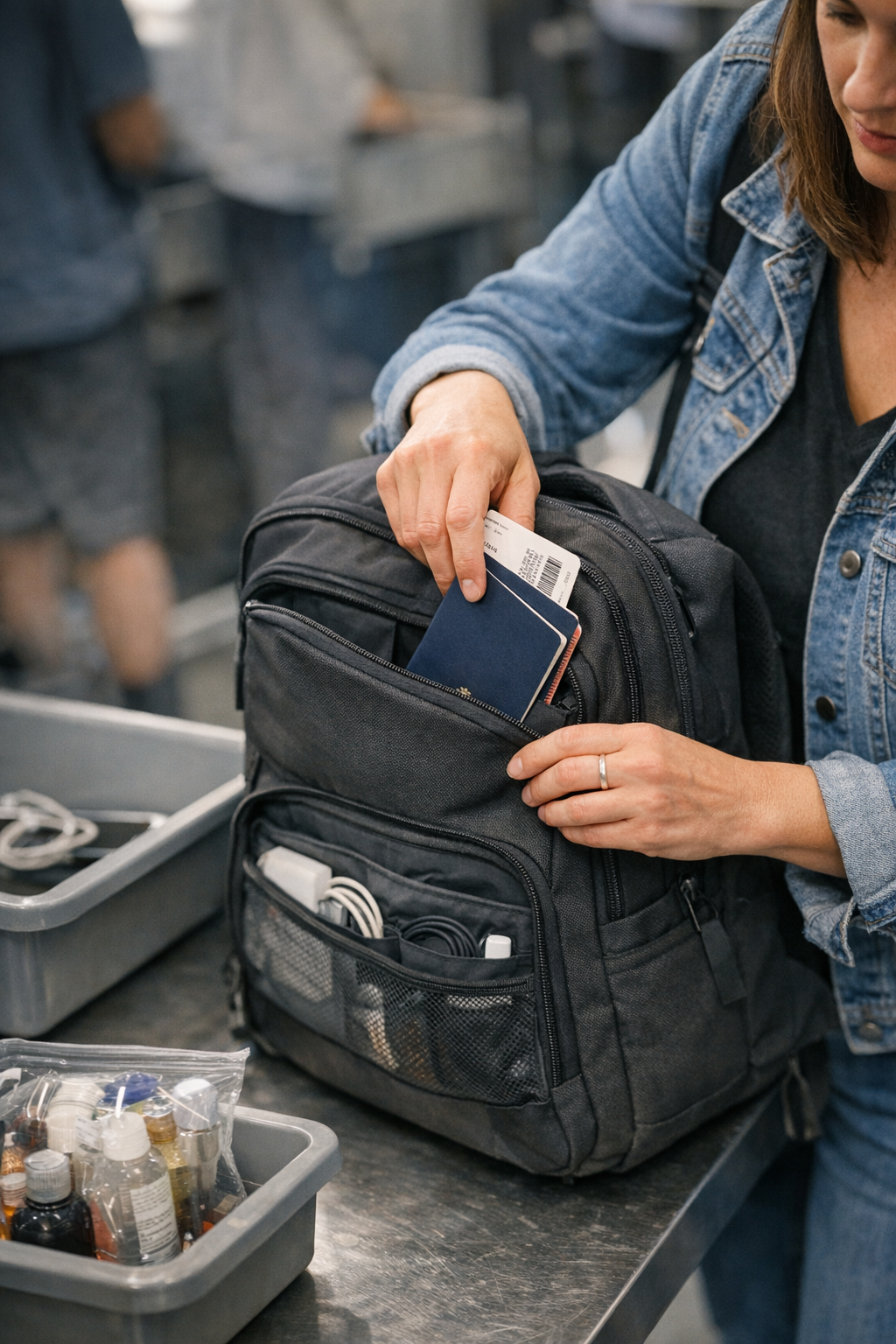
The first sign of trouble isn’t stuff spilling out. It’s the pause at security or boarding, feeling travelers glance sideways as you kneel fumbling for a boarding pass buried just beneath a tangle of cables. The bag looks tidy enough, but every checkpoint—security, boarding, sliding into the seat—reveals the same problem: the item you need is always behind or below something else, never at hand.
At first, compartments seem perfectly packed. But real use is cumulative. Those small delays—the stubborn zipper, a pouch that doesn’t fit your hand, the need to repack after grabbing gum or ID—build up in subtle, invisible ways. I realized most of my travel frustration wasn’t from packing decisions but the micro-frictions that only appear once the bag is moving with me.
Order By Access, Not Just Appearance
For a while, I tried fixing this by doubling down on organizers: more pouches, tighter packing cubes, a giant tech folio stretched edge to edge. Sure, the bag looked organized. But each retrieval turned into a ritual: dig, pause, shuffle, then close.
Things only clicked when I reserved a single outer pocket just for documents and tickets, and moved chargers into a separate smaller pouch. Suddenly, reaching for my passport didn’t disturb everything else. The quiet but significant benefit: each item went back to exactly its own place with one motion—standing in line or glancing behind me—rather than during long repacking breaks.
What Reveals Itself Across Checkpoints
Repeated transitions in travel are unforgiving. Every overlap—chargers covering tickets, toiletries hidden behind earbuds—forces split-second compromises. These feel small at the moment, but echo at every gate.
Returning to my bag, I noticed how naturally my hand reached an outer slot for my ID, or how I could slide a cable from a pouch without upending half the bag. Even putting things away became smoother—no more “I’ll deal with that later” as a growing pile got out of order through the day.
If there’s a quiet lesson here, it’s this: the right carry-on structure doesn’t just tidy your gear. It lets the bag flex with the pace of travel instead of fighting it. That’s the real value worth carrying forward.
If you want to explore practical setups and lightweight organizers that focus on real movement and quick access, I’ve gathered a few ideas quietly here: http://www.carryonsupply.myshopify.com