When Cat Care Becomes a Quiet Daily Struggle
Indoor cat mess often comes from items stored too far or crowded too close, complicating upkeep and causing recurring messes.
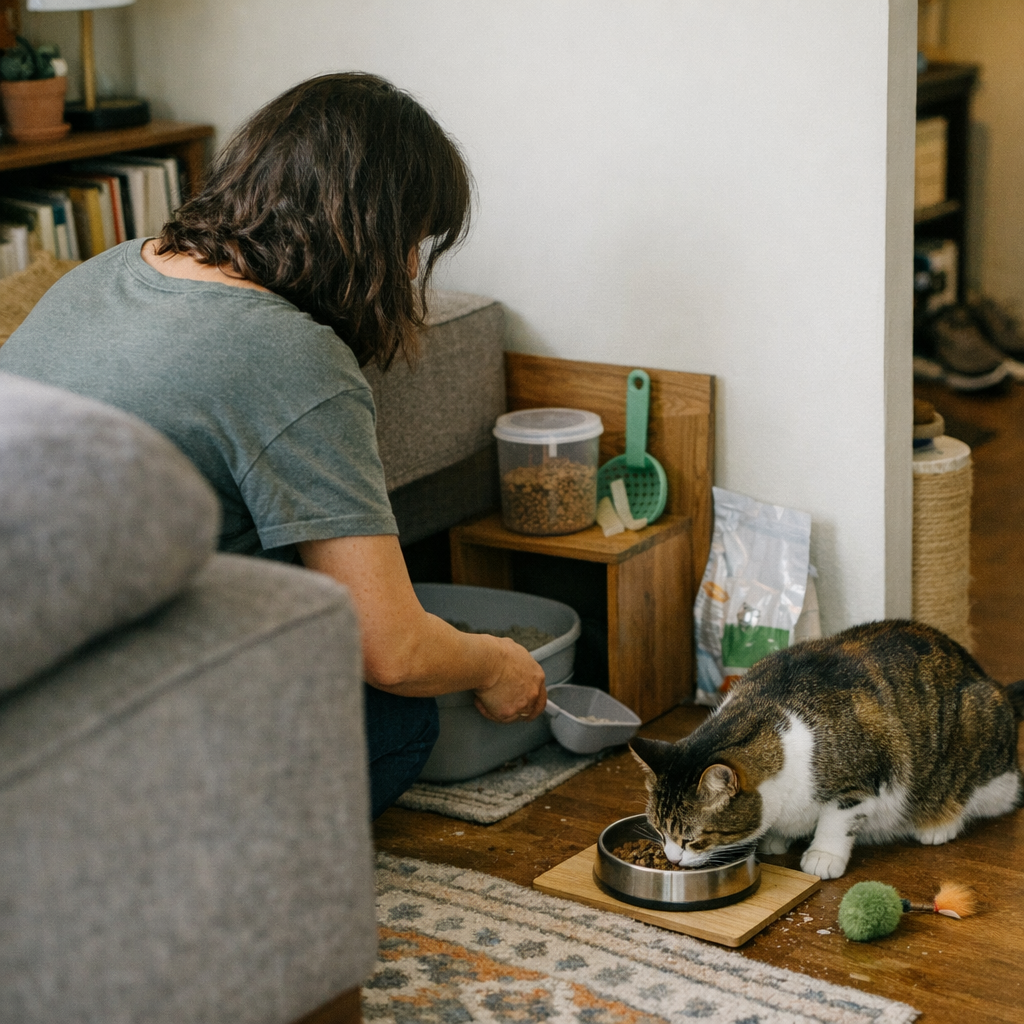
It was easy to tell when the room looked tidy, but harder to notice what kept pulling it back out of shape. Most days, I moved through my cat’s area with half my thoughts elsewhere—refilling water, nudging toys back, brushing crumbs from a mat that caught more than its share. It took a while to see what really made the routine drag: not the mess itself, but how reaching for one thing usually set off some small obstacle. That was the part that kept returning.
At first, it all seemed organized enough. Water fountain in the corner, litter box tucked several steps away, the rest stacked or stashed so surfaces felt clear for visitors. But in practice, each feeding or reset broke stride—stretching for the scoop, doubling back for wipes, pausing to gather bits from where a toy rolled out of sight. The setup looked fine at a glance, but the difference kept showing up in slow resets that never felt quite “done.”
When Setup Looks Clean but Lives Messy
It’s only after a few days of repetition that you start catching how the layout quietly pushes the work around. The clean look doesn’t last—just shifts the growing pile to sidelines. Move the food too far from the water, and a crater of crumbs appears beside the wrong mat. Store the scoop in another room, and tracked litter travels a little farther each time, quietly settling into edges before you remember to sweep.
Everything hidden away makes the room open, but invites new back-and-forth as jobs split across zones. Pile it all nearby and the routine crowding sets in—items overlapping in a small zone, slowing resets with each nudge or shuffle. It didn’t feel like a big decision either way at first, but both options turned the simplest tasks into fragments left “for later.”
You notice it after a few resets. The marks on the floor never quite fade. A toy tucked under the ottoman, water murking the spot behind the fountain—signs the setup asks a little too much.
Daily Use Finds Its Own Rhythm
What worked better never felt dramatic. The change was moving daily-use things just close enough to follow the route I already walked: wipes and scoop behind the food cabinet, toys whittled down to the favorites that traveled most. The small detail of sliding the food bowl closer to the water meant the quick wipe finally happened as part of feeding. Mess stopped slipping between steps.
The quiet insight is that essentials along your usual path get handled right away, not after piles appear. It’s less about perfection, more about softening friction points so you’re less likely to bump, detour, or watch the job pile up. A little less chasing, and the reset folds in with the rest of the day.
One corner stays a bit lived-in, but cleaning loses its edge of irritation. That’s the balance that began to matter more than how the room first looked.
No Setup Fixes Everything, but Small Changes Stay
Looking back across weeks, the difference isn’t so much spotless floors or perfect lines. It’s how often I pass through, dropping a scoop back exactly where I used it, catching a spill right after it starts, seeing fewer standoffs between the cat’s comfort and my patience. Making it easier to do what returns every day meant less dread in each round of upkeep—a better reward over time than a tidy surface that doesn’t last.
These thoughts stayed with me after trying a few different setups; if you want to see how other indoor cat spaces are arranged, I’ve quietly kept a link here: http://www.stillwhisker.myshopify.com