When Ceiling Lights Interrupt More Than They Illuminate
Linear and panel ceiling lights reduce clutter and strain with even light and low profile, improving usability in active or shared spaces.
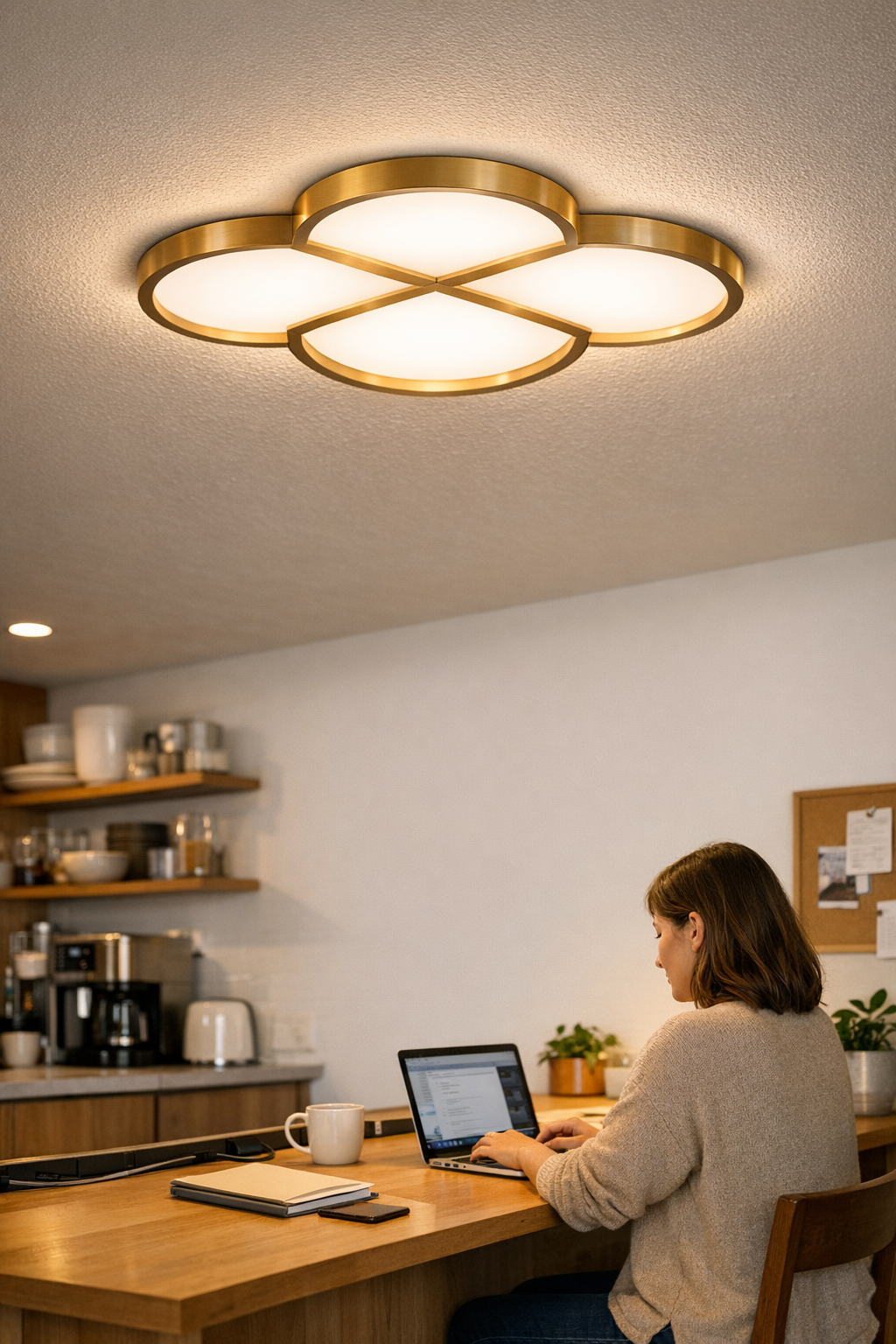
There’s a kind of comfort in lighting that’s easy to overlook until it’s gone. I first noticed it in how light settled across a room that was supposed to feel organized—until one day, it didn’t. The initial days with a new ceiling lighting setup promised less clutter, cleaner cables, surfaces framed just so. But as evenings passed and my routines settled in—a chair pulled out from the same desk, cables edging back into view—the room never quite felt as easy to use as it looked on paper.
You don’t notice it right away.
But you feel it.
The Mess We Don’t Plan For
Most ceiling lights start with hope—a slim profile or flush mount that seems almost invisible. For a while, that’s true. But what begins as a simple fixture often brings distractions: unevenly lit patches, cables creeping back into sight, or brackets catching sleeves or chair backs. This was the part I kept returning to.
It’s not only about how it looks. When part of your work surface sits in shadow or you have to tilt a lamp to avoid glare on your glasses, the friction is real. You find yourself shifting monitors, sliding notebooks closer, hunting for spots where the light actually works. Everything else becomes a quiet pileup—cords crowding your hand space, edges that never feel as crisp as the center, little pauses in every routine.
Even Light, Fewer Compromises
After weeks of juggling bright spots and dim corners, the focus shifted from how lighting fits to how it works. Switching to a LED panel fixture lined up exactly along the desk edge transformed the area like clearing a blocked path. The left side of the desk, once awkward and under-lit, became a surface I could use effortlessly.
Light spread evenly. Cables stayed tucked along the wall, well away from daily movements. What looked streamlined in the morning still worked well by evening, no need to readjust or avoid a bracket. Sometimes it’s surprising how much smoother a room feels when the lighting actually matches your workflow.
The difference shows most in routines: no shifting lamps for every task, brackets staying out of the way, soft clarity covering the entire work surface.
Where Order Starts to Settle
It’s easy to mistake a quiet ceiling for a finished room. But experience taught me that the details matter—how cables run, which sides get light, whether walking through feels simple or cluttered with obstacles.
Even a neat fixture can demand daily workarounds if it conflicts with your habits. The real benefit comes when supports and lights fall naturally in line with how you live and work, not against it.
That was the shift—a space not just organized but easier to move through, almost without thinking.
There are more thoughts for anyone who’s wrestled with cables or glare settling where they don’t belong: lightsupport.myshopify.com