When Ceiling Lights Leave Corners in Shadow
Rooms with ceiling-only lighting cause glare and dim edges; wall lighting with proper support improves visibility and reduces clutter.
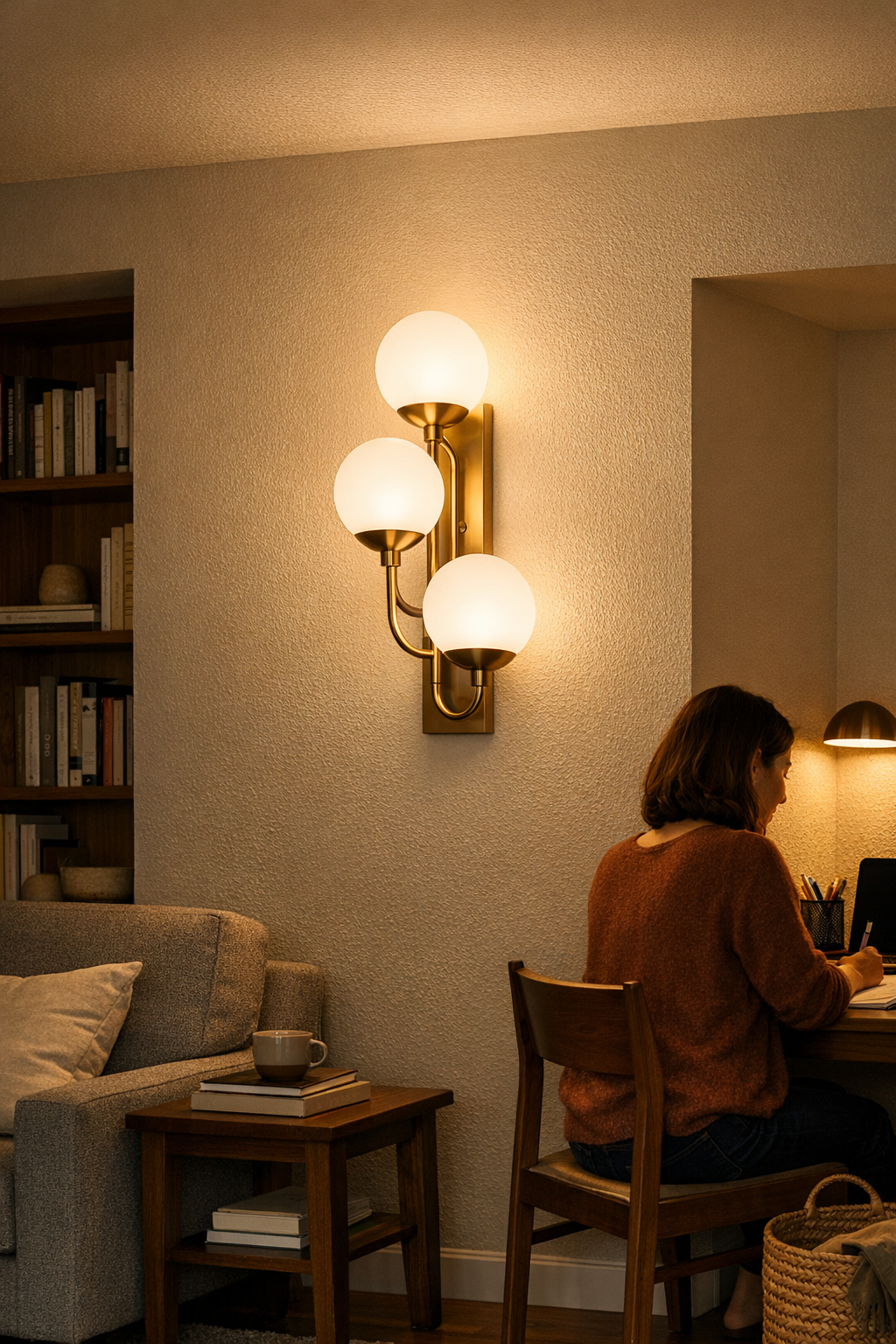
Some things you only notice after sitting in the same spot for a while. I used to settle into my small desk every evening, convinced the overhead fixture did what it needed to do—neat ceiling, no lamps cluttering the path, nothing wild about the arrangement. But as days added up, something about the space kept tugging at me. The light always hung above, unbothered, but the corners still fell away into shadow. Walk by, and you’d see a room that looked fine. Sit for an hour, and you’d feel the strain gathering at your desk’s edge, the cable knots from that extra lamp by the wall, the uneasy split between brightness above and everything else left chasing it.
The Limits of Overhead
It doesn’t feel like a problem at first.
You think a tidy ceiling means a tidy use—anonymous wires, clear floors, nothing interrupting the flow. But with time, the routines settle in. Light pours down in a strong, general wash, sweeping past the surfaces and corners where you actually need it. Books near a shelf edge get a permanent twilight; paperwork swims in a haphazard patch of brightness. Even the most disciplined setups start growing clutter—an emergency floor lamp bends awkwardly nearby, cords snake out from behind furniture in a doomed attempt to bridge the dark spots. Visual order begins to unravel the longer you work underneath it.
You don’t notice it immediately. But you feel it.
When Corners Stay Empty
Overhead lighting always looks cleaner on day one. Evenings spent at a wall-hugging desk or skimming a shelf told a different story. I caught myself dragging a table lamp across the floor, plugging it in and looping the cord awkwardly around furniture. Sometimes I’d wrestle with a clamp light that only added another angle of glare. Tasks became small negotiations with the lighting itself—not enough where I needed it, too much where I didn’t.
A moment lingered when I finally gave in and added a wall fixture—something direct but not glaring, mounted just above eye level and offset from shelves. I managed the cable with a set of stable brackets, tucked it flat along the wall so it faded from sight. With that, the daily struggle dropped away. Surfaces finally felt supported, and movement paths cleared up. Light reached the places I actually used, not just the ceiling.
What Actually Changes
Adding a wall fixture did less to decorate the room than to let it function honestly. The difference was subtle but real—a reading chair’s edges became readable, shared surfaces looked even, and the tangle of temporary lamps faded out.
It was a quiet relief to feel less forced to adjust lamps just to carve out usable light. Placement mattered; too close to the ceiling and you create new shadows, too low and the light brackets get tangled with storage or lose their spread. Getting it right depended less on how things looked at a glance, and more on how a room felt after a week of lived-in use. The burden of workaround fixes, the awkward dance of shifting plug-ins, all that noise faded. Only the light stayed.
You can find other thoughts and setups that sit with this feeling at LightSupport.